




Calif. County Approves $10M Fleet Facility
The Sonoma County Board of Supervisors has approved a new $9.95 million maintenance facility for the fleet operation that's being displaced by a new state courthouse, according to county records.
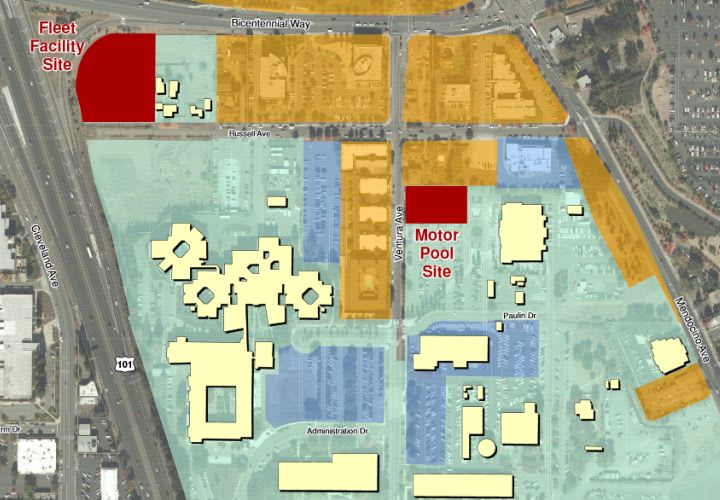
Map showing proposed locations of new fleet facilities courtesy of Sonoma County.
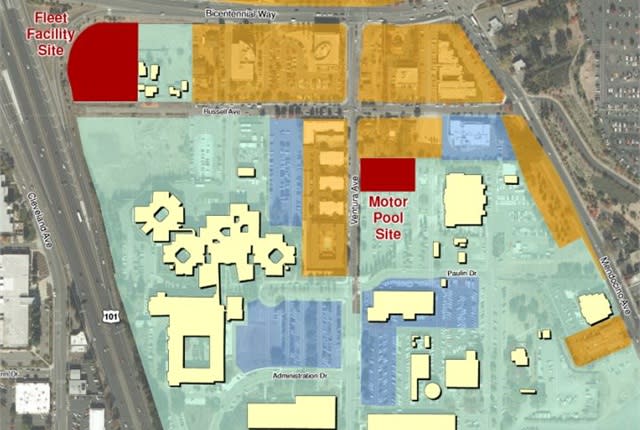
Map showing proposed locations of new fleet facilities courtesy of Sonoma County.
The Sonoma County Board of Supervisors has approved a new $9.95 million maintenance facility for the fleet operation that's being displaced by a new state courthouse, according to county records.
Supervisors kicked off the project by approving a $398,000 contract for San Francisco-based Kwan Henmi Architects to design the new facility, which would be built on a vacant 2.7-acre county-owned lot on Russell Avenue in Santa Rosa.
The new facility will be about 21,900 square feet with about 138 parking stalls. The fleet operation will maintain a separate motor pool for about 60 vehicles at a second central location at Ventura Avenue.
The county must relocate its fleet management division by April of 2016 to make room for the state's new $173 million courthouse.
The current facility houses Fleet Light Operations, Fleet Administration, and the Transportation and Public Works (TPW) Materials Lab. Fleet staff began searching for a potential relocation site in early 2011, before the state's courthouse was delayed by budget issues.
The county has identified six funding sources for the project, including $5.12 million from fleet property sales proceeds; $2.7 million from a fiscal-year 2015/2016 general fund appropriation; $900,000 in previously funded relocation monies; $328,000 in previously funded motor pool monies; and $100,000 from Fleet ACO.
More Maintenance

Freeing Technicians for Higher-Priority Repairs
Could paid interns help public fleets free up experienced technicians for more complex repairs?
Read More →
Stay ready, set and safer with verified fleet inspections
When fleet inspections aren’t verifiable, missed defects can quickly become downtime, safety risks, and service delays. This white paper shows government and municipal fleet leaders how digital inspections can improve accountability, catch issues earlier, and keep vehicles ready when they’re needed most.
Read More →
Using Oil Analysis to Help with Engine Losses
How a Texas city changed its lubrication practices and began tailoring preventive maintenance intervals after test results showed oil degradation and fuel dilution.
Read More →
Hidden in Plain Sight: Fleet Compliance Risks
Fleet compliance isn't just about having policies — it's about consistently enforcing them. This practical guide reveals six hidden compliance risks common in public sector and shared fleet operations and outlines proven strategies to improve visibility, accountability, and audit readiness.
Read More →
Is Your Fleet Garage Holding Back Your Operation? | The Fleet Breakroom
Norman Barrientos of Barrientos Design & Consulting explains how agencies can use operational data to show decision-makers why a replacement or major renovation is needed.
Read More →
Reducing Long-Term Maintenance Costs and Downtime
Downtime is rarely caused by a single surprise failure but rather by an issue that builds over time through setbacks ranging from deferred maintenance to poor replacement planning. So what's the fix?
Read More →
The Future of Government Fleet Technicians with Mike Cleary
Insight on preparing for hybrid and electric vehicle service, what fleets need to know about recruiting technicians in a competitive market, and how to make the most of limited training budgets.
Read More →
Work Orders Are More Than Records. They're a Roadmap to Fleet Availability
What if your work orders could predict failures, uncover hidden costs, and boost fleet availability? Here's how leading fleets are using the data.
Read More →
Drive More Profit with Greater Fleet Uptime
Fleet downtime costs money. JASPER helps keep vehicles on the road with quality remanufactured components, fast nationwide delivery, and reliable solutions that boost uptime and profitability.
Read More →
Smart Seasonal Maintenance Tips for Government Fleets
Government fleets carry extra weight, and routes, schedules, and public trust depend on reliability. A systematic spring checklist keeps vehicles in service when agencies need them most.
Read More →