




Similar Content: Keeping Snow and Ice Removal Equipment at the Ready
Texas City Leaders Prepare Fleet for Future Disasters
Austin city leaders identified 32 recommendations in an audit of the city’s preparedness and response to the storms. Several of them target its fleet.

Christy Grimes・Former Senior Editor
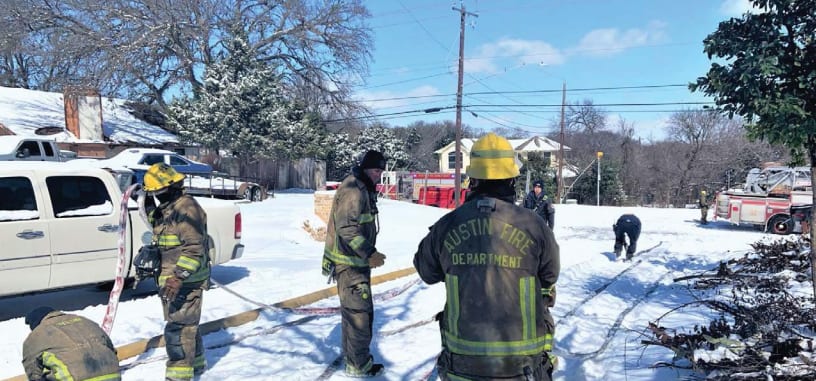
City of Austin firefighters respond to an unprecedented snowstorm in February 2021.
Photo: Austin Disaster Preparedness Audit
2 min to read
Nearly a year after the disastrous Winter Storm Uri killed more than 200 Texans and forced much of the state off the grid, the capital city is looking at ways to prepare its fleet for future winter weather — including improving its snow plow fleet and snow chain process.
The Austin City Manager provided an update on city preparedness in response to a November 2021 audit stating the city was unprepared to respond to the storm, and that the city did not adequately anticipate or plan for a severe winter storm of that magnitude.
The city has identified 32 out of a total of 132 recommendations as priorities because they provide a high benefit to the city. It is in the process of implementing them.
In one of its findings, the audit found that there was a severe lack of snowplows. Since the November audit, the Public Works Department has added snow removal from critical streets to their workflow and added streets and bridges for clearing or sanding that access Austin Water treatment plants; police, fire, and ambulance stations; hospitals; and more.
The Austin Transportation Department worked with the Fleet Service Department to purchase additional road traction devices.
The Fleet Services Department also updated critical functions and policies, creating a City-wide revised snow chain process and procedure for inventorying, order management, training, and installation. Fleet supervisors have also been issued procurement cards to expand the ability of staff to respond to emergencies.
All on-call Building Services Department vehicles will now be equipped with tire chains.
The Combined Transportation, Emergency, and Communications Center is now identified as a priority location for fuel resupply and backup generators.
The audit also found the city did not have equipment like water trucks or totes to distribute water quickly and effectively to residents during water outages.
To view the full audit and its recommendations, visit City of Austin website.
More Operations
Is Keeping Older Fleet Vehicles Really Saving Money?
Is keeping vehicles longer saving money, and what happens when a diagnostic test points to the wrong fix?
Read More →
How Smart Fleet Strategy Can Help Local Government Agencies Do More with Less
Keeping a vehicle longer may ease this year’s budget, but what does it cost the next one? A closer look at fleet decisions can reveal opportunities to reduce spending while protecting essential services.
Read More →
Connect with Government Fleet on LinkedIn
From industry news and fleet management strategies to conversations with peers, Government Fleet's LinkedIn page offers public-sector fleet professionals another way to stay informed and connected.
Read More →
Town of Queen Creek Named Most Successful Fleet Award Winner of Inaugural RTA Fleet Success Awards
Five fleets were honored at RTA Connect 2026 in Chicago for excellence across resource efficiency, intentional culture, risk management, and stakeholder satisfaction.
Read More →
Sponsored•October 14, 2026
A buyer's guide to fleet management software in 2027
Buying fleet management software in 2027 means looking beyond features and price. As fleet operations, technology and expectations evolve, this guide explores what today’s fleet professionals should consider when choosing a system that can deliver value now and adapt to what comes next.
Read More →
Hazard Alerts, Fleet Car Sales Rise and a New Shuttle Concept
Fleet car sales doubled, but the bigger picture tells a different story in this week’s roundup.
Read More →
How St. Johns County Turned Fleet Data Into Better Replacement Decisions
St. Johns County, Florida, had fleet data, but turning it into reliable decision guidance was another matter. Instead of starting over with a new fleet management system, the county connected existing tools and built a scoring system that gives managers an objective look at fleet health.
Read More →
Fleet Forward Conference Introduces One-Day Passes for 2026
New one-day registration lets fleet professionals attend Tuesday, Wednesday, or Thursday, with passes available for $249.
Read More →
ENC Unveils its ZAVIR Medium-Duty Shuttle
Two variants of the concept shuttles were revealed: a low-floor configuration and a high-floor configuration.
Read More →
Could Your Next Fleet Technician Start as an Intern?
What if your next technician hasn’t worked in a fleet shop yet? What fleets are doing to free up time.
Read More →