




7 Steps to Boost Vehicle Lift Safety
Following a detailed review of bus and truck maintenance facilities across North America, vehicle lift manufacturer Stertil-Koni has identified seven key steps to improving safety for technicians working on the shop floor.
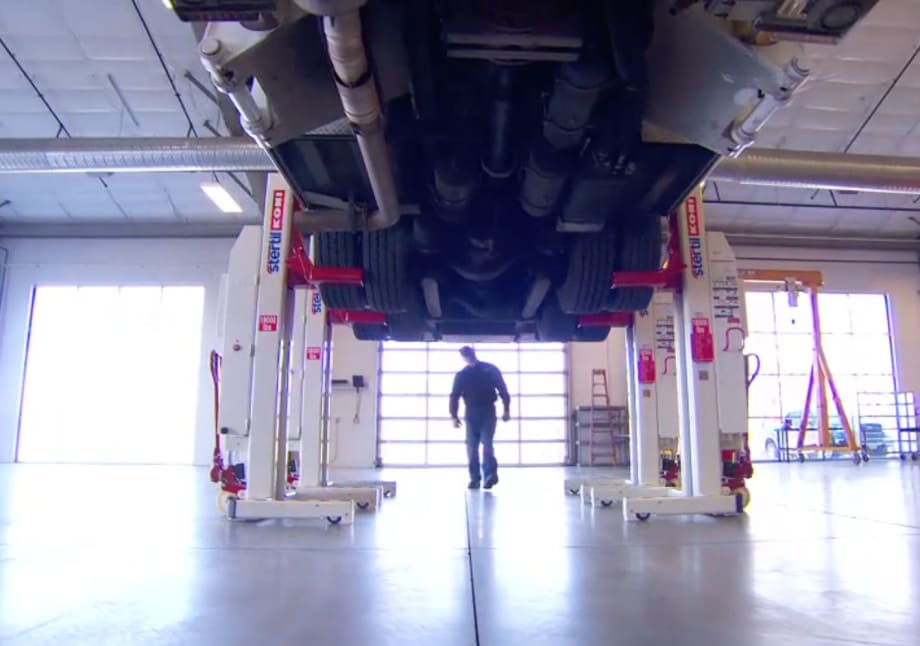
Photo courtesy of Stertil-Koni
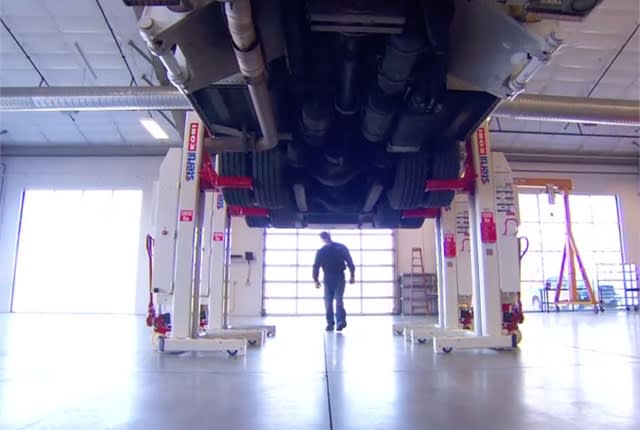
Photo courtesy of Stertil-Koni
Following a detailed review of bus and truck maintenance facilities across North America, vehicle lift manufacturer Stertil-Koni has identified seven key steps to improving safety for busy technicians working on the shop floor.
The challenges facing fleet operators of all types are significant and continue to grow. These tips are designed to boost safety and improve shop productivity.
Certification: Fleet managers should make sure that their lifts carry the “Gold Label” from the Automotive Lift Institute (ALI). The ALI Lift Certification Program has made it easy for lift buyers to choose lifts that have been third-party tested and proven to meet the safety and performance requirements outlined in the safety standard ANSI/ALI ALCTV (current edition). Lift testing includes verification of the structural integrity of all of a particular lift model’s systems and components, proper function of its controls and load-holding devices, proper lowering speeds, and overload protection.
Lift Selection:Weight and Height Matters: Fleet managers should know in advance the weight of the heaviest vehicle they intend to lift and make absolutely certain that the lift selected is certified to meet or exceed that capacity. In terms of height, always measure the height clearance of the facility prior to selecting a lifting system to ensure ample room to raise a vehicle for servicing. Further, note the height of the tallest vehicle that will be lifted and make certain there is sufficient room to raise the vehicle to a proper height that will permit a technician to work comfortably underneath the vehicle.
Vigilance During Set-Up: When preparing to operate the lift, do a full sweep of the area. Check the perimeter of the lift to confirm that nothing is obstructing its path and there are no hazards. Then, lift the vehicle no more than 12 inches off the ground, pause, and do another sweep of the area to further check that there are no impediments. Also, make sure that the vehicle being lifted is level.
Keep It Stable: Ensure that mobile column lifts are placed on a firm foundation and level ground. When lifting outdoors, be aware of wind loads. Also, make certain that all personnel are clear of the vehicle and that the wheels on the vehicle being raised are properly engaged with the forks on the mobile column lifts. For in-ground lifts, operators should check that the contact points are properly positioned. Further, select a lift with an “electronic synchronization” system. In this way, as the lift goes into motion and continues through the full-range up to its maximum height, vehicles will lift smoothly, even those with unequal weight distribution, such as fire trucks, airport tugs, and pumpers.
Technician Protection: At all times, lift vehicles to the proper height, allowing technicians to move about and work comfortably underneath the vehicle. Ensure the locking system is in place.
Maintain a Strict Maintenance Schedule: Make certain that all lifts are subject to a regular program of scheduled maintenance — in accordance with the manufacturer’s recommended schedule — and receive annual lift inspections by a certified lift inspector.
Create a Culture of Safety: Beyond choosing the right lifting system, promoting a positive culture of safety at the shop is essential. Service bulletins, safety messages, and continuously updating technicians’ skills are vital to a smooth-running maintenance facility. Accessories specifically designed to ensure technician safety and proper ergonomics are available. These include high-lift wheel dollies to allow for strain-free wheel removal and proper alignment of dual-tire assemblies and brake drums, locked control boxes to ensure only authorized personnel operate the lifts, and wireless mobile column lifts to remove the risk of tripping.
More Safety
New Partnership Aims to Expand Public Digital Hazard Alert System Statewide
The Hawai’i Department of Transportation (HDOT) is expanding advance digital hazard alerts for the public statewide.
Read More →
New York City Expands Safety Technologies Across Municipal Fleet
Executive Order 19 moves intelligent speed assistance and pedestrian alerts from pilot programs toward standard fleet equipment, offering other public fleets a look at how safety technology can be tested, measured, and scaled.
Read More →
Hidden in Plain Sight: Fleet Compliance Risks
Fleet compliance isn't just about having policies — it's about consistently enforcing them. This practical guide reveals six hidden compliance risks common in public sector and shared fleet operations and outlines proven strategies to improve visibility, accountability, and audit readiness.
Read More →
5 Days Left to Submit Your 2026 Fleet Safety Award Nomination
Know a government fleet, safety, or risk manager who deserves recognition for making fleet operations safer? Nominations are open through Aug. 15.
Read More →
How the First 24 Hours Can Shape a Fleet Crash Response
How a strong accident response process helps government fleets move from the initial report to recovery while building a clearer record for what needs to change next.
Read More →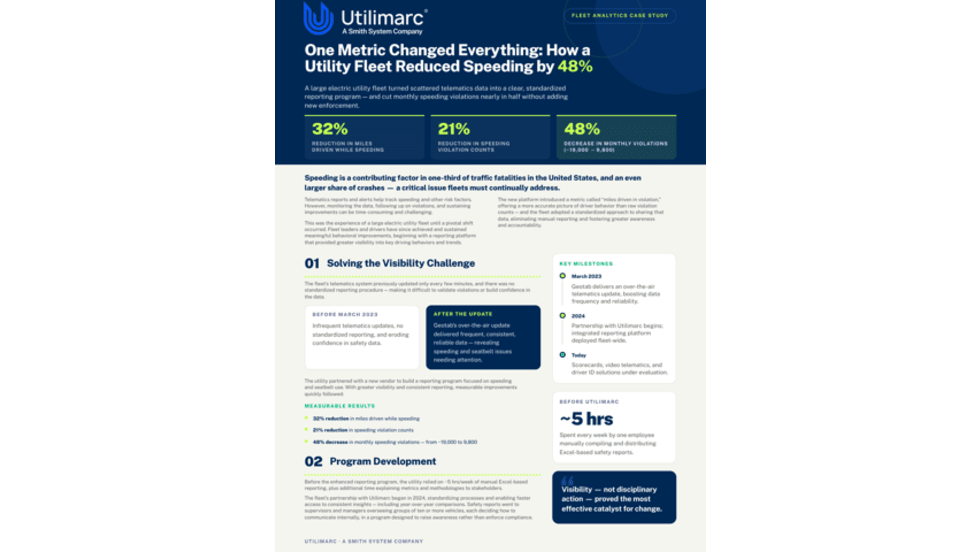
How Better Visibility Cut Speeding Violations by 48%
Fleet leaders don't need more data, they need clearer visibility into what the data is saying. This case study explores how one utility replaced speeding-event counts with a single metric — miles driven in violation — to strengthen safety and significantly reduce speeding violations.
Read More →
e-con Systems Expands AI Camera Tools for Traffic Monitoring
The systems support license plate recognition, traffic analytics, and video management for transportation agencies.
Read More →
King Township Pilot Links Driver Feedback to Reduced Speeding
How King Township, a best-in-class municipal fleet, reduced speeding by 10.9% and demonstrated a projected 349% ROI by putting safety ownership directly in drivers' hands.
Read More →
Beyond the Fireline: The Critical Role of Public Fleets in Wildfire Response
Behind every wildfire response is a complex network of vehicles, data, and decisions that must work in sync under extreme pressure. Global heating trends require strong fleet coordination and reliable communications to keep crews safe and operations running smoothly.
Read More →
How AI Is Transforming Public Fleet Safety - Part 1
AI-powered safety systems are helping public fleets tackle distracted driving by delivering real-time coaching and measurable behavior change behind the wheel. In part one of our Q&A, Nauto CEO Stefan Heck explains how agencies can improve safety, reduce costs, and navigate implementation challenges with AI-driven technology.
Read More →