News
Government Fleet Car Sales More Than Double in September
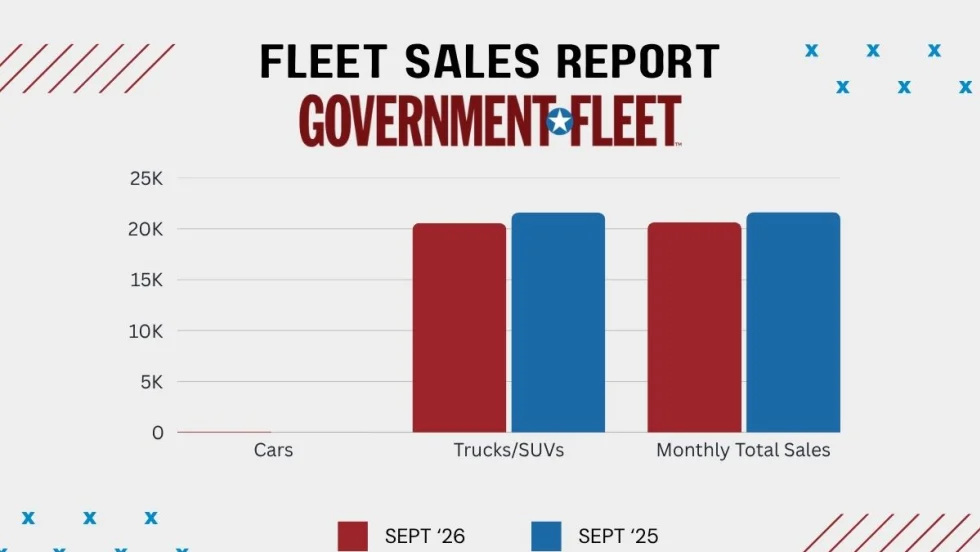
Government fleet car sales rose 112.8% year over year in September, climbing from 39 to 83 units even as total monthly sales declined 4.5%.
Read More → MENU
 SEARCH
Government fleet car sales rose 112.8% year over year in September, climbing from 39 to 83 units even as total monthly sales declined 4.5%.
Read More →
The closure of a nearby state hospital has Thomas County, Ga., officers driving longer distances to drop off individuals requiring mental health services, resulting in increased maintenance costs.

The City of Yonkers, N.Y., recently completed $400,000 of clean energy projects, including the purchase of hybrid electric city vehicles and the construction of nine charging stations.

Eight years after the Great Recession, fleets across the country are still recovering. Fleet managers share how their teams got through it and obtained the necessary funding for replacements.

Cooperative procurement can help fleets acquire vehicles quicker, for less money, and for situations such as after natural disasters.

Marine units allow coastal emergency responders to extend their services to the water. Here’s what they look for when adding boats to their fleets.

The Warren County (Miss.) Sheriff’s Office has acquired its first all-weather patrol boat that will be used for law enforcement and search and rescue.

Until now, the Charlottesville Fire Department in Virginia has relied on ambulance services from a local volunteer rescue squad. However, demand has increased since it introduced a 24-hour medic unit.

The City of Baltimore has purchased its 1,500th vehicle through its “Master Lease” vehicle replacement process, which has allowed it to modernize the fleet, reduce the replacement backlog, and reduce vehicle ownership costs.

The City of New Franklin, Ohio, is taking over plowing county and state roads and will purchase two Mack snow plow vehicles and hire two seasonal truck drivers.

The Maryland State Highway Administration has purchased nine new quad-axle trucks for snow season — these trucks can carry more than double the amount of salt and 40 more gallons of fuel than current vehicles.