




Why Cooperative Procurement Can Pay Off for Public Fleets
Cooperative buying programs, such as HGACBuy, enable public sector fleets to save on vehicle and equipment purchases.
Public sector fleets and government agencies of all levels throughout the U.S. are increasingly utilizing cooperative procurement, or consortium, tactics to purchase vehicles and equipment at the lowest possible price.
Designed to promote activity among local governments, cooperative procurement improves efficiency by granting inter-governmental contracting authority at the local level, including contracts between all political subdivisions and state agencies.
HGACBuy Cooperative Purchasing Program
Open public procurement allows a government entity to purchase items
while demonstrating fiscal responsibility with taxpayer money, offers vendors an opportunity to compete, and enables governments to obtain the best overall price, according to Bob Wooten, program manager,
cooperative purchasing, Houston-Galveston Area Council. (H-GAC).
In 1971, the cooperative procurement strategy was introduced to the state of Texas with the passing of the Interlocal Cooperation statute, which allows a city, county, state, or other government entity within the state of Texas to legally cooperate for activities such as purchasing.
“It can take 3-9 months to complete a procurement process. Soft costs include time involved in research, negotiating a contract, and attorney and staff fees,” said Wooten.
However, through HGACBuy — HGAC’s cooperative purchasing program used exclusively by governmental entities — any government agency can procure items, including cars, fire trucks, and fleet maintenance equipment. After the competitive bid process, H-GAC issues a two-year contract to the lowest responsible bidder. Minimizing cost and time, the contract allows government entities that meet legal requirements to purchase equipment, according to Wooten.
“Public fleets can obtain better pricing through the contract, leveraging the power of our membership to get the best possible pricing. The competition and size of membership usually provide better pricing than fleets would get on their own,” said Wooten.
Services Offered
As a designated purchasing agent on behalf of participating government fleets, H-GAC performs the following services for competitive bids and proposals:
Conducts research and surveys.
Develops specifications for each product or service.
Solicits vendor participation and issues specifications documents.
Conducts pre-bid and pre-proposal conferences.
Opens bid and proposal responses before evaluation.
Issues vendor contracts awarded by the H-GAC board of directors and certifies contract validity.
Let the Bidding Begin
The bid process starts with a draft bid solicitation sent to all potential bidders. After a pre-bid conference, the final bid document is created and, after evaluation, the H-GAC board of directors awards the winning vendor a contract to provide goods and services to government members.
“For example, if a city wanted to buy 10 police cars, they would look on our Web site (www.hgacbuy.org) to see which vendors we have under contract for the type of police car they want. The member would call the contractor directly to work up a quote for them based on HGACBuy’s contract pricing. The member would then purchase directly from the vendor who delivers the product or service to the member,” said Wooten.
A contracted list of aftermarket options is also available to vendors, including light bars, customized paint, etc.
In 2005, $220 million in products and services were bought through HGACBuy and about $240 million in 2006. The program has 300 vendors under contract and more than 1,700 government agency members spread across 27 U.S. states, growing by about 125 agencies each year, according to Wooten.
H-GAC is just one government-to-government co-op for procuring goods. The Mid America Regional Council (MARC) serves the Kansas City regional market in the same way H-GAC serves nationally.
Using Another State’s Contract
H-GAC’s contract terms and conditions mandate the guaranteed lowest
prices on vehicles and equipment, according to Steve Perlstein, government sales manager for Mohawk Lifts, an HGACBuy vendor and contract holder for garage lifts with Multiple Award Schedule (MAS) contracts serving 19 states, HGAC, MARC, and GSA.
For agencies that don’t have a contract, state procurement statutes (purchasing laws) allow an agency within the non-contracted state to use another state’s contract.
“For example, there are no lift companies that have a contract with the state of Colorado; however, the town of Parker, Colo., wanted to purchase a Mohawk lift and used another state’s contract, which offered four lift brands, as a contracting vehicle,” said Perlstein.
WSCA Stipulates Lowest Pricing
The Western States Contracting Alliance (WSCA), a trade organization
comprising mostly Western states, also has a contract for garage lifts and related equipment; however, any state can join this contract. Since each offer stipulates the prices are the lowest to any
government agency, if a price decreases for the private sector, or the product’s list price decreases, so does the government price, according to Perlstein.
The WSCA was a competitively bid contract, sent to all members of the Automotive Lift Institute (ALI).
For a WSCA state to become an active participant in the multi-state WSCA contract, the state signs a participation agreement attached to the WSCA contract.
Not all WSCA member states have joined the WSCA procurement, while some non-WSCA member states, such as Missouri, have joined. Participation in a WSCA contract is a state-by-state decision. However, if a state elects to participate in a WSCA contract, usage is voluntary among its local government agencies, according to Perlstein.
More Operations
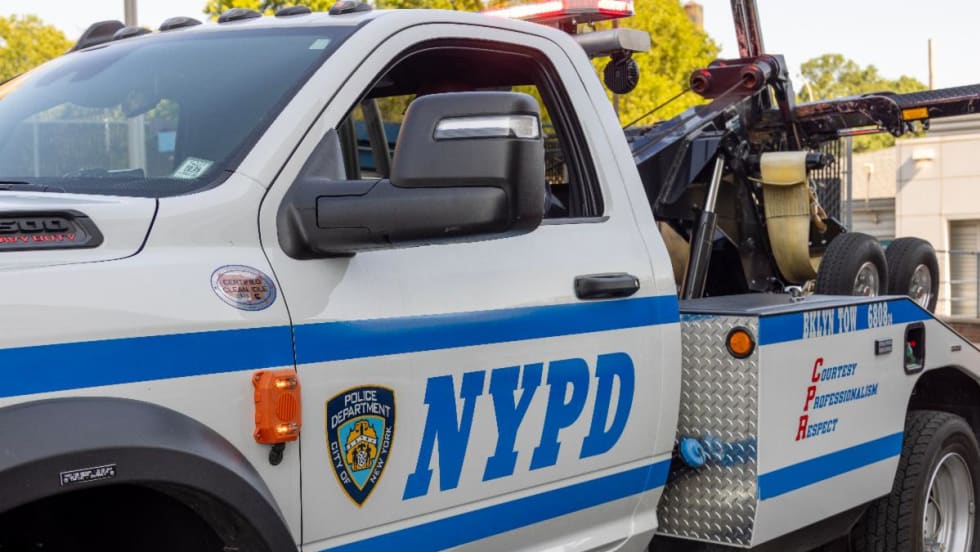
New York City Orders Safety Technology for Municipal Fleet
New York City is expanding the use of pedestrian alerts and intelligent speed assistance across its non-emergency fleet. The executive order establishes new technology requirements for future vehicle purchases while accelerating retrofits on thousands of existing municipal trucks.
Read More →
The Network Behind Better Government Fleet Decisions
A discussion on why relationships across the government fleet community have played such an important role and what shapes the leadership response.
Read More →
Ford, BlackRock, Google and Carhartt Form Skilled Trades Workforce Alliance
The alliance plans to develop a stronger pipeline between training programs and available jobs while examining workforce efforts already underway across the country.
Read More →
The Network Behind Better Government Fleet Decisions
A discussion on why relationships across the government fleet community have played such an important role and what shapes the leadership response.
Read More →
What Makes Fleet Technicians Stay? | GovCast Cheat Sheet
The technician hiring and retention discussion is not new, but the way fleets respond to it continues to matter.
Read More →
On the Road with Government Fleet: Essential Podcasts for Professionals
Let's celebrate listening! Check out a GovCast podcast and discover the insights and strategies that can transform your fleet management approach.
Read More →
How Real-World Vehicle Use Guides Replacement And Budgets
Three public fleet leaders explain how they use real-world vehicle data and long-term planning to keep aging assets in service and make more informed replacement and budgeting decisions in a high-cost environment.
Read More →
When Fleet Data Has to Actually Mean Something | GovCast Cheat Sheet
Better fleet technology only works when the information behind it can actually support decisions.
Read More →
Why Public Fleet Success Depends on More Than the Vehicles | From the Show Floor with Tim Coxwell
Fleet decisions rarely stay inside the garage. From funding pressure to emissions planning, Tim Coxwell explains what it takes to keep a sheriff’s office fleet moving while planning for what comes next.
Read More →