




Two Musts in Fleet Management: Training and Certification
Fleets profit from training by using technology to increase productivity and efficiency, which in turn, lower costs. Training employees to use new technology effectively is as important as the investment in the technology itself.
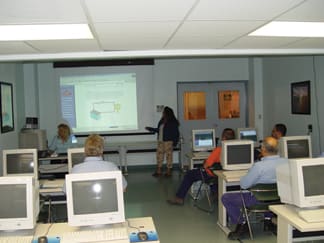
A comprehensive training and certification program will help minimize risk and liability, provide creditability to your organization, and polish your reputation. Fleets profit from training by using technology to increase productivity and efficiency, which in turn, lowers costs. Training employees to use new technology effectively is as important as the investment in the technology itself. Training helps to master the shop, vehicles, service tools, and testing and diagnostic equipment.
The advancement of technology in the workplace has occurred so rapidly that many people feel left behind and catching up seems overwhelming. New technology means change and change to most is scary and unwelcome. Training provides employees with the education and confidence to deploy technology, new or old.
Training can be conducted through several means. OEMs offer a wide range of training programs, as do suppliers and vendors. Operator and maintenance training requirements should be specified in vehicle and equipment purchases.
Cross-training, team-training, Internet, and computer-based training are other available instruction avenues.
Liability and Risk Issues
Risk management must go beyond buying insurance. Every time a vehicle is repaired and leaves your shop a potential liability risk arises.
Were the repairs made properly using the prescribed procedures? Were the correct parts and materials used? Is the vehicle safe? By bringing together safety measures and efficiencies required for fleet management, you exercise more control over the risk.
Good effective training can minimize if not eliminate this liability/risk. Training that certifies technicians in specific skills and knowledge can prove competency in any legal arena.
Maintaining a Good Reputation
The Automotive Maintenance and Repair Association (AMRA) was formed in 1994 by a group of service providers, manufacturers, associations, and others concerned about the reputation of the automotive repair industry. Its major activity, the Motorist Assurance Program (MAP) was established to promote communication, education, and cooperation among consumers, the automotive industry, and government.
As vehicles become more complex and repairs more expensive, industry leaders have recognized that customers increasingly want an assurance of quality service based on solid standards. Customers also want a method to achieve satisfaction when those standards are not met.
Government fleets and most private fleets don’t prescribe to AMRA because customers are internal and are not billed. Nevertheless, we still owe our customers the same consideration and respect. We must prove our competency through training and certification, displaying and advertising that competency.
New Vehicle/Equipment Training
One of the methods we use at the Las Vegas Valley Water District (LVVWD) for new vehicle/equipment training is to require the supplier to provide adequate operator and maintenance training as part of vehicle bid specifications. For example, a successful bidder must demonstrate to LVVWD employees the safe and productive operation of truck, tank, and auxiliary equipment.
Operations and maintenance videos or publications must be provided upon delivery of the vehicle.
Cross-Training
Cross-training harnesses the expertise of individuals and spreads it throughout your organization. Cross-training also builds stronger employee relationships and more effective problem-solving skills. Usually a recognizable increase in morale occurs when employees learn and share with peers.
The more areas of technical expertise an employee has, the wider range of job assignments he can be given. For example, one of your technicians might be more experienced in electrical system repair and diagnostics than others. Take advantage of those strengths; partner technicians together to share skills and knowledge.
Team-Training
Technical team-training can be a spin-off of the Total Quality Management (TQM) concept. According to one textbook definition, “TQM is an approach that stresses continuous improvement in internal processes as a way of increasing customer satisfaction that new technologies and work practices require.” The key here is new technologies.
Every new vehicle, regardless of make, model, or year, normally comes with new technology. Training for this new technology must be accomplished on a larger scale. Organized team-training is one way to perform such training. Obviously you cannot take your whole shop out of production for team-training. Organize a select group of diverse personnel. Draw on OEMs or industry experts to provide this team with the required training.
After the selected team is trained, you can use the cross/partner concept to drill the training down to the last individual. Of course, team-training is not only a good idea for new technology; it is good practice for routine and refresher training. It's amazing how much can be learned by sharing experiences, skills, and knowledge in a team environment.
Computer-Based Training
At LVVWD, computer workstations are strategically placed throughout the facility allowing technician access to Internet training in the break room, training room, and tech library.
We also maintain an extensive library of CDs and videos for technical training. Numerous sources of computer software can be obtained to train your technicians; much of this training material is free. For example, battery suppliers, electrical components, and brakes system components all offer free training materials or CDs.
ASE Certification
Everybody knows that M.D. following an individual's name means medical doctor. And most people know that C.P.A. signifies certified public accountant. Associations and professions use certification to recognize qualified and competent individuals. The certification process is one of the single-most important steps in career development.
The Automotive Service Excellence Institute (ASE) best identifies the importance of certifications. Here are the top 10 reasons an automotive professional should consider becoming ASE-certified.
Certification grants professional credentials. Since it recognizes individual accomplishments, ASEÕs certification serves as an impartial, third-party endorsement of knowledge and experience on a national, even international basis.
Certification demonstrates commitment to the automotive service and repair profession. Receiving ASE certification shows peers, supervisors, and in turn the general public, commitment to a chosen career and an ability to perform to set standards.
Certification enhances the profession’s image. ASE’s certification program seeks to grow, promote, and develop certified professionals who stand “out in front” as examples of excellence in the automotive service and repair industry.
Certification reflects achievement. ASE certification is a reflection of personal achievement because the individual has displayed excellence in his or her field by meeting standards and requirements established by the entire automotive industry.
Certification builds self-esteem. ASE certification is a step toward defining yourself beyond a job description or academic degree while gaining a sense of personal satisfaction.
Certification can improve career opportunities and advancement. ASE certification can give you the “edge” when being considered for a promotion or other career opportunities. ASE certification clearly identifies an employee who has demonstrated competency in specific technical specialty areas based on accepted industry standards.
Certification may provide greater earnings potential. Many automotive professionals who have become ASE certified experience salary and wage increases based on their certification status. ASE-certified professionals are in high demand throughout North America.
Certification improves skills and knowledge. Typically, achieving ASE certification requires training, study, and “keeping up” with changing technology. ASE certification showcases individual competence by confirming proficiency and knowledge.
Certification prepares employees for greater on-the-job responsibilities, since ASE certification is a clear indicator of a person’s willingness to invest in professional development. Certified professionals are aware of the constantly changing technology and environment in their profession and possess the desire to anticipate and respond to change.
Certification offers greater recognition from peers. An ASE-certified professional can expect increased recognition from peers for taking that extra step in professional development.
More Operations

Is Keeping Older Fleet Vehicles Really Saving Money?
Is keeping vehicles longer saving money, and what happens when a diagnostic test points to the wrong fix?
Read More →
How Smart Fleet Strategy Can Help Local Government Agencies Do More with Less
Keeping a vehicle longer may ease this year’s budget, but what does it cost the next one? A closer look at fleet decisions can reveal opportunities to reduce spending while protecting essential services.
Read More →
Connect with Government Fleet on LinkedIn
From industry news and fleet management strategies to conversations with peers, Government Fleet's LinkedIn page offers public-sector fleet professionals another way to stay informed and connected.
Read More →
Town of Queen Creek Named Most Successful Fleet Award Winner of Inaugural RTA Fleet Success Awards
Five fleets were honored at RTA Connect 2026 in Chicago for excellence across resource efficiency, intentional culture, risk management, and stakeholder satisfaction.
Read More →
A buyer's guide to fleet management software in 2027
Buying fleet management software in 2027 means looking beyond features and price. As fleet operations, technology and expectations evolve, this guide explores what today’s fleet professionals should consider when choosing a system that can deliver value now and adapt to what comes next.
Read More →
Hazard Alerts, Fleet Car Sales Rise and a New Shuttle Concept
Fleet car sales doubled, but the bigger picture tells a different story in this week’s roundup.
Read More →
How St. Johns County Turned Fleet Data Into Better Replacement Decisions
St. Johns County, Florida, had fleet data, but turning it into reliable decision guidance was another matter. Instead of starting over with a new fleet management system, the county connected existing tools and built a scoring system that gives managers an objective look at fleet health.
Read More →
Fleet Forward Conference Introduces One-Day Passes for 2026
New one-day registration lets fleet professionals attend Tuesday, Wednesday, or Thursday, with passes available for $249.
Read More →
ENC Unveils its ZAVIR Medium-Duty Shuttle
Two variants of the concept shuttles were revealed: a low-floor configuration and a high-floor configuration.
Read More →
Could Your Next Fleet Technician Start as an Intern?
What if your next technician hasn’t worked in a fleet shop yet? What fleets are doing to free up time.
Read More →