The City of West Palm Beach, Fla., has made a significant fleet turnaround with the help of a new fleet manager, new fleet management system, and a newly created replacement fund.
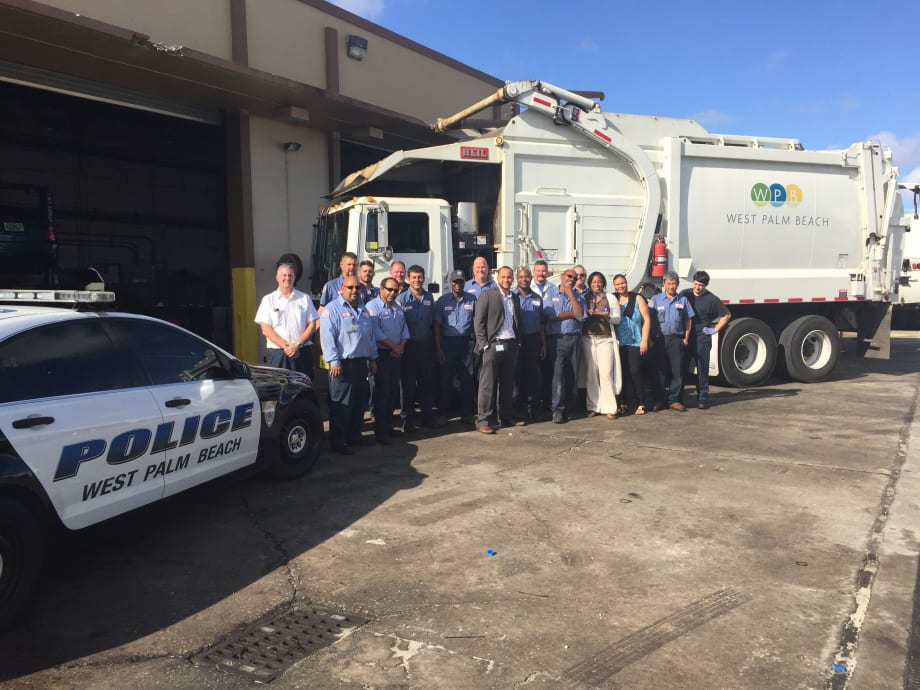
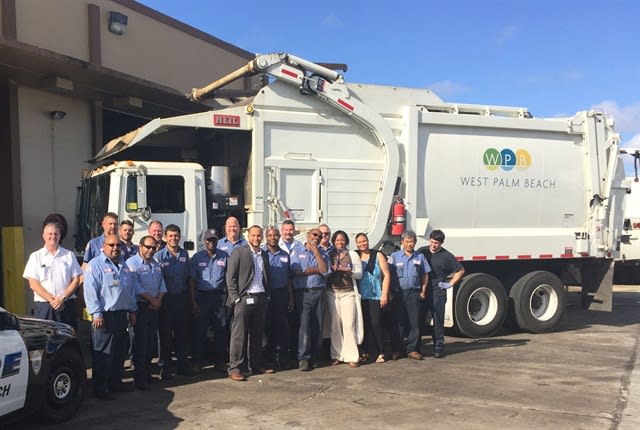
In 2015, fleet staff received the City of West Palm Beach’s Team of the Year award. Photo courtesy of City of West Palm Beach
6 min to read
In 2015, fleet staff received the City of West Palm Beach’s Team of the Year award. Photo courtesy of City of West Palm Beach
At a Glance
Changes at the City of West Palm Beach fleet include:
A renewed focus on preventive maintenance
A new fleet management system that will improve reporting and automate previously manual tasks
Outsourced parts management and generator services while bringing other services in house.
In early 2014, the City of West Palm Beach, Fla., fleet was floundering. With 2,400 units, many of which were aging, and a fleet manager position that had been vacant for two years following a retirement, the city was considering outsourcing fleet management. Following the recommendation of a fleet audit that suggested hiring a fleet manager to turn the fleet around, city officials did so in mid-2014. The changes so far have been dramatic.
Centralizing Fleet & Creating a Replacement Fund
Mario Guzman, CAFM, the city’s general services manager, previously worked at the Palm Beach County fleet before taking a fleet manager position in another city. Given the chance to move to a larger fleet — the county seat and its largest city — he was enthusiastic and came on board with ideas about how to improve the operation.
Ad Loading...
One of the major problems he had to tackle was an aging fleet.
“I think because of the economic downturn, vehicles weren’t funded,” Guzman said. Aging vehicles meant more work for the fleet’s 10 technicians, which increased overtime, but technicians still weren’t able to keep up with maintenance and repair. Eventually, this led to excessive downtime and unhappy user departments.
The fleet audit from Management Partners said the city needed to hire 26 additional technicians to work on the aging fleet vehicles. Guzman had another idea:
“You can hire me 26 technicians to keep up with these vehicles breaking down — or let’s just focus these efforts on new equipment,” he told officials.
With a decentralized fleet, user departments would individually go to the budget department and ask for the money they needed for new vehicles. This led to numerous types of vehicles procured and no common replacement policy. Decentralization had other disadvantages: Most departments used city fleet technicians for maintenance, but some didn’t. Departments spec’ed their own vehicles, which usually meant someone unfamiliar with vehicle specs was working on it, Guzman said.
Ad Loading...
He asked the budget department to allow fleet to have the final approval on vehicle purchases and began giving recommendations to the budget department on replacements based on maintenance data. This gave fleet more control over vehicle purchasing and replacements.
To start the replacement fund, he recommended any equipment purchased in the past year or two to be pre-funded. Fleet would pay for the vehicles departments were getting, but fleet would also begin collecting money for its replacement immediately. Previously, Guzman believes some fleets would put money away, but it wasn’t uniform or a mandatory policy.
In the first year that he has been able to create the budget — fiscal-year 2015-16 — he’s been able to add $700,000 to the new replacement fund. By growing the replacement fund each year, he hopes the city will complete its catch-up of vehicle replacements within four to five years.
One boost that’s allowing the city to replace its vehicles faster is a $3.7 million bond allocated to replacements. That’s considerably more than the approximately $1 million dedicated to replacements each year. Still, in order to replace vehicles faster, Guzman wants to lease about 65 vehicles, mostly police vehicles and garbage trucks.
“It stretches your dollar out more. Instead of having to pay $38,000 for one police car, we can lease four cars,” he explained.
Ad Loading...
Guzman added that the city would choose the vehicles off the state contract and is only bidding out the financial aspect of it.
This temporary strategy would decrease maintenance costs immediately, and user departments would still need to pre-fund the replacements, Guzman explained. When the vehicles come off lease, the replacements should be fully funded.
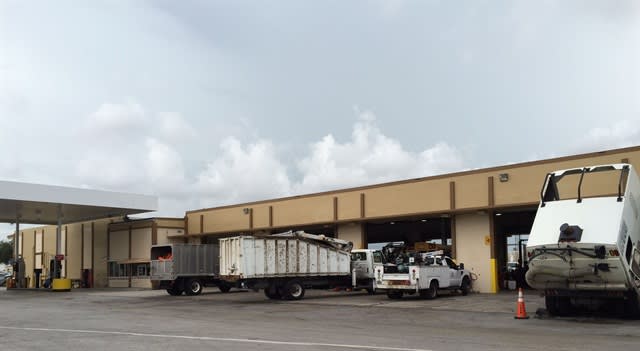
The city recently created a fleet replacement policy and fund in order to reduce the average age of its vehicles. Photo courtesy of City of West Palm Beach
Switching Up Outsourced Services
When Guzman started, the outsourcing budget was $1.2 million, and the overtime budget was zero. Guzman brought some of this work back in house, increasing overtime and decreasing outsourced work.
“You boost employee morale, but also, the cost of outsourcing is high for our particular business, especially with garbage trucks and with the age of the equipment,” he explained.
This shift allowed the fleet to save $432,000 in fiscal-year 2014-15 and also hire four additional technicians to increase turnaround time, bringing the total technician count to 14.
Ad Loading...
Although he’s bringing back some work, Guzman is outsourcing other aspects of fleet: parts management and generator services.
The fleet has been using NAPA IBS for about a year, which has improved parts availability, Guzman reported. As for generator service, he explained that one technician was servicing the 80 generators located throughout the city. When he was out on vacation or not working, it was hard to get backup. The fleet switched to a company that provides 24/7 generator service and assigned the fleet technician back to the shop.
Both changes have led to greater efficiencies rather than savings, Guzman said. Generators run sewage and water flow systems — essential services for the community — and repairs need to be done promptly. Outsourcing the parts room eliminates the need to get multiple bids to award a contract. Guzman said his parts budget has increased, but he attributes that to more preventive maintenance (PM) services being done.
Updating Fleet Software & Focusing on PM
Also new is a newly purchased fleet management information system from AssetWorks, which Guzman hopes to have fully implemented in April.
“It will bring more transparency and more customer support,” he said. For example, drivers or user departments can log in online to check the status of their vehicle instead of calling the shop. It will also allow for easier reporting on fuel usage, maintenance costs, key performance indicators, and employee productivity, Guzman said.
Ad Loading...
A new billing structure ensures more accurate billing for user departments, which were previously billed by cost per mile to cover fuel and maintenance. This was a cumbersome process that wasn’t accurate, Guzman said.
“Many departments didn’t know how they were billed. [They asked us] ‘why are we getting billed so much?’ ” he said.
He changed shop billing to a flat cost, using established standard service time estimates, much like how billing works at a dealership. He separated fuel costs and billed user departments for actual fuel used, which the city’s fuel management software tracks. Guzman took three years of historical billing data to provide an estimate of how much user departments should budget for maintenance and fuel, but departments will only be billed for specific services and fuel pumped.
Guzman is working on a few more projects that will affect technicians: making sure they get the training they need, creating apprenticeship training with a nearby high school, and starting an incentive pay program for certifications from the National Institute for Automotive Service Excellence (ASE).
Additionally, he’s ensuring they focus more on PM. If a vehicle is in the shop, technicians now make sure it gets a full PM service and gets everything it needs, rather than patching up just one problem and sending the vehicle back out. While it’s a change for technicians, Guzman said he also has to educate customers on this new focus on PM by letting them know that a full PM service may take longer and cost more, but the vehicle won’t run into problems at a later date. The change has resulted in a slowdown of vehicle turnaround time, but Guzman believes it’s better in the long run.
Ad Loading...
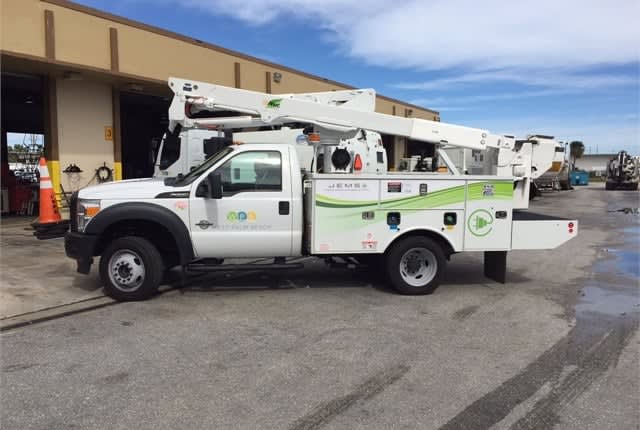
A new focus on alternative-fuel vehicles led to the purchase of various hybrid and plug-in electric vehicles, including this plug-in hybrid bucket truck. Photo courtesy of City of West Palm Beach
Another change is a recent focus on clean vehicles. The mayor made a commitment to reduce greenhouse gas emissions, leading the city to make some vehicle purchasing changes.
“This is the first year I think that at least 70% of everything we purchased is hybrid,” Guzman said. This includes 24 Ford Fusion hybrid vehicles, two Ford C-Max electric vehicles, and a plug-in hybrid bucket truck.
In the year and a half he’s been at the city, Guzman has been able to make changes that could take years at other fleets. He admits he couldn’t have made such significant changes without the support of the administration and his team.
“They knew there were big issues here,” he said. “I wasn’t hired to keep the status quo.”
Keeping a vehicle longer may ease this year’s budget, but what does it cost the next one? A closer look at fleet decisions can reveal opportunities to reduce spending while protecting essential services.
From industry news and fleet management strategies to conversations with peers, Government Fleet's LinkedIn page offers public-sector fleet professionals another way to stay informed and connected.
Five fleets were honored at RTA Connect 2026 in Chicago for excellence across resource efficiency, intentional culture, risk management, and stakeholder satisfaction.
Buying fleet management software in 2027 means looking beyond features and price. As fleet operations, technology and expectations evolve, this guide explores what today’s fleet professionals should consider when choosing a system that can deliver value now and adapt to what comes next.
St. Johns County, Florida, had fleet data, but turning it into reliable decision guidance was another matter. Instead of starting over with a new fleet management system, the county connected existing tools and built a scoring system that gives managers an objective look at fleet health.