




The Top 5 Issues Facing Public Sector Fleet Managers
The key challenges ...

test caption
test credit
1. Managing With Limited Resources
For the past several years, political subdivisions have been experiencing a shortfall in general tax revenues. For fleet operations, this has meant an ongoing shortage of vehicle replacement money, which has caused fleet and equipment inventory to steadily age and maintenance resources to be stretched thin. Government fleets are being forced to make tough decisions as to what to repair and how much to spend as they find it difficult to replace vehicles in a timely and predictable manner.
These budgetary difficulties were ex-acerbated this year as fleets were forced to stretch already tight budgets to compensate for the higher cost of fuel and the increased cost of steel, which has raised the cost of truck bodies and other upfits. While fleet managers are forced to keep costs down, end user departments are demanding higher levels of service. Fleet managers are forced to balance the need to maintain or enhance customer service levels and control costs, which are often in conflict with one another.
2. Recruiting & Retirement of Technicians
Not only is there a severe shortage of new technicians entering the work force, but there is also an impending exodus of veteran technicians; who are nearing retirement age. One fleet reports that 38 percent of its technicians will retire in the next five years. This is not an isolated situation. The coming deluge of retirements will result in a tremendous loss of institutional knowledge that will be difficult to replace with new hires.
The tax revenue shortfalls have impacted operating budgets, resulting in hiring freezes, salary freezes, and the elimination of vacant positions in maintenance operations. Salary freezes, in particular, are helping auto dealers lure away many of the more qualified mechanics with better wages and more comparable compensation packages. In response to the technician shortage, public sector fleets are struggling to improve mechanic productivity by redoing technician job descriptions and basing promotions and pay increases on performance and not seniority.
3. Keeping Pace With Vehicle Technology
With new-vehicle technological changes occurring each model year, it is becoming harder for public sector fleets to keep pace with more complex repair issues and diagnostics. New-vehicle technology requires continual technician training, but fleet managers find that there is limited budget to do so. This promises to become a greater issue in coming years as newer technologies such as 42-volt systems, hybrid powertrains, and more advanced electronics become widespread in mainstream fleet vehicles. Budget constraints mean that only the base minimum is being spent on updating diagnostic tools, making it hard to stay up-to-date.
4. Privatization & the Role of Fleet managers
The threat of privation is ongoing and ever present. Fleet managers are constantly being required by their management to show that they are competitive with private sector suppliers.
One factor driving privatization considerations are aging fleet operations facilities and the neglected investment in infrastructure. Budget limitations give consideration to outsourcing as a way to avoid major capital expenditures for new facilities or upgrade.
There is also a perception that the role of the public sector fleet manager is diminishing. Several fleet managers have told me that the power they have to influence the future of their fleets is eroding. One fleet manager offers an anecdotal illustration by saying his section used to be called Fleet Management but it is now called Fleet Operations. He says it is a sign of the times and that a growing number of fleet managers feel they have less input as to how their fleets are managed.
As governments seek to flatten their organizations, there is a trend to consolidate fleet manager functions. Whereas in the past, you may have had a police department fleet manager, a fire department fleet manager, and a public works fleet manager, there is a trend to consolidate those functions to a single municipal fleet manager, who manages all fleet operations. One benefit is that some fleet managers are assuming additional operational responsibilities, such as capital improvement management, sanitary/sewer operations, and facilities management.
5. Difficulty Complying With EPACT Mandates
A key difficulty is OEM withdrawal from certain alt-fuel segments, such as CNG and electric vehicle production, while hybrids are ineligible for EPACT credits. Many governments invested large sums to create an electric of CNG refueling infrastructure, which may now be under-utilized.
More Operations

How St. Johns County Turned Fleet Data Into Better Replacement Decisions
St. Johns County, Florida, had fleet data, but turning it into reliable decision guidance was another matter. Instead of starting over with a new fleet management system, the county connected existing tools and built a scoring system that gives managers an objective look at fleet health.
Read More →
Fleet Forward Conference Introduces One-Day Passes for 2026
New one-day registration lets fleet professionals attend Tuesday, Wednesday, or Thursday, with passes available for $249.
Read More →
ENC Unveils its ZAVIR Medium-Duty Shuttle
Two variants of the concept shuttles were revealed: a low-floor configuration and a high-floor configuration.
Read More →
Could Your Next Fleet Technician Start as an Intern?
What if your next technician hasn’t worked in a fleet shop yet? What fleets are doing to free up time.
Read More →
How Phoenix Is Building Its Next Generation of Fleet Technicians
With more than 8,000 vehicles and pieces of equipment to maintain, the City of Phoenix could not afford to wait for fully trained technicians to walk through the door. Instead, they revamped their entire workforce strategy and showed how public fleets can create their own talent pipeline while preparing existing employees for increasingly complex vehicles.
Read More →
What’s Slowing Your Fleet Down?
Could a change in how work gets done help your fleet return vehicles to service sooner?
Read More →
Can Public Fleets Trust the Data Driving Their Decisions?
Public fleets have more data than ever, but inconsistent records and missing information can still undermine maintenance, replacement, and cost decisions.
Read More →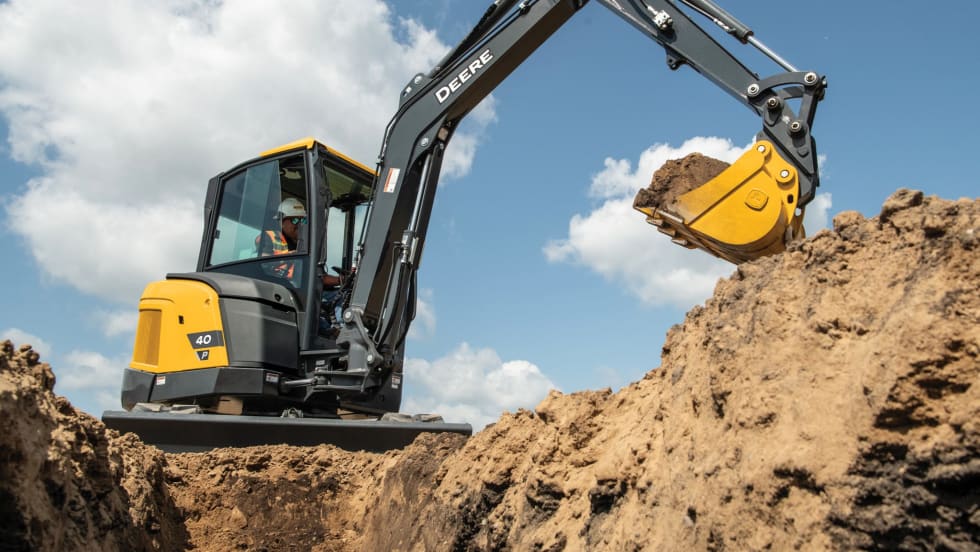
John Deere Introduces 40 P-Tier Compact Excavator
John Deere is adding a compact excavator designed for crews that need to move equipment between jobsites and handle multiple types of work with one machine. The 40 P-Tier weighs less than 10,000 pounds and offers configurable hydraulics, attachment options, and connected fleet-management capabilities.
Read More →
How Leading Fleets Improve and Why Business Plans Matter
This week, we look at what past Leading Fleet winners can teach us about making progress, plus how to build a business plan your fleet will actually use.
Read More →
Nominate a Fleet Leader for the 2027 Public Fleet Hall of Fame
Do you know a fleet leader who has made a lasting impact on the industry? Nominate this fleet professional for the 2027 Public Fleet Hall of Fame.
Read More →