




Related: Will Technology Save Fleets From Distracted Driving?
Follow the 4 Principles of Safe Driving
With more heavy traffic and increased road risk, now is the time to remind drivers of LLLC—the four principles of driving safely that help reduce crashes and protect lives.
by John Kuder, Avatar Fleet
July 4, 2025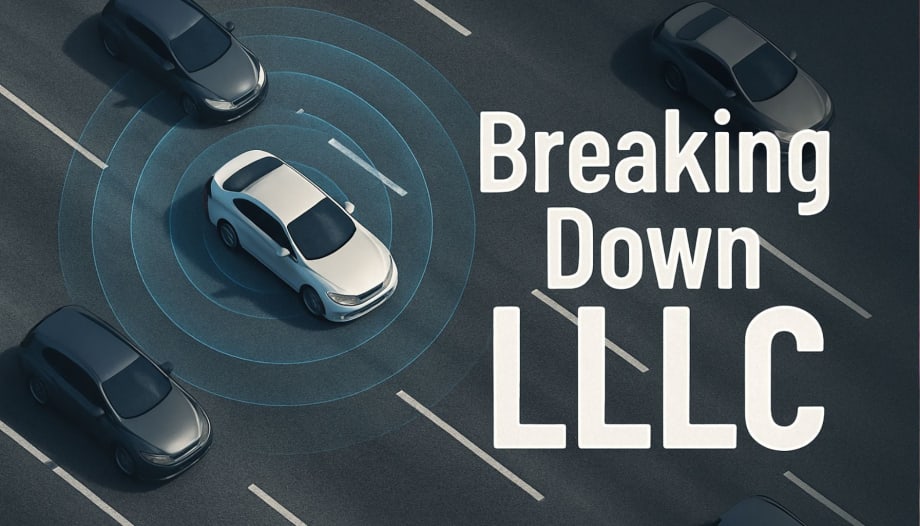
A defensive driving program can help train government and public sector fleet drivers to be safer while on the road.
Photo: This utilizes an AI-generated image. Refer to our Terms of Use.
4 min to read
Driving is the riskiest thing many employees do. Whether they’re linemen at the electric department, picking up solid waste, or patching holes on the highway, they face the most risk while behind the wheel.
Defensive Driving and Other Safe Driving Behaviors
This is true regardless of their vehicle type or the fleet they work for as well. Non-CDL drivers face as much risk as a truck driver when it comes to traffic crashes and other accidents.
That’s why driver safety training is essential. Safe drivers don't simply wear a seat belt, they drive defensively, which means they drive safely and are aware to avoid distractions.
And defensive driving simply means being prepared. They see and react to risk, such as car accidents or bad weather, ahead of time.
They stay away from everyone and everything that could cause them problems. Most importantly, they take responsibility for protecting the people on the road with them.
Defensive driving courses can help train government and public sector fleet drivers to be safer while on the road.
But, if that’s not an option, they can learn LLLC, or the four principles of safe driving. Check out these safe driving habits and safety tips!
Breaking Down LLLC When it Comes to Safe Driving
What, exactly, is the meaning of LLLC when it comes to driving safety best practices? LLLC stands for look ahead, look around, leave room, and communicate.
These four principles encompass all safe driving techniques, and best of all, these safe driving tips are easy to memorize and teach.
1. Look Ahead
Drivers need to be prepared for what’s ahead of them. Your drivers need to look ahead with an eye-lead time of 15 seconds. This lets them see traffic slowing down, pedestrians, or changes in traffic flow or the speed limit before they become a problem.
2. Look Around
The information your drivers need to prevent accidents isn’t just happening ahead of them — it’s happening all around them. That’s why drivers need to look around.
Drivers should look around by changing their point of focus every 2 to 3 seconds and checking their mirrors every 5 to 8. This kind of defensive driving ensures that they take in their entire driving environment on the road ahead.
3. Leave Room
Look ahead and look around are all about seeing risk. Leave room is what you do with that information.
Leave room gives you the time and space you need to react to risk and avoid collisions. Drivers need to leave room on all six sides of their vehicle:
In front
Behind
To the left
To the right
Above
Below
The most important place to leave room is to the front. Drivers own that space in front of them. If they want to prevent accidents, they need to always leave room by maintaining a minimum safe following distance.
For light-duty vehicles such as cars, light trucks, and vans, that’s 3 seconds in normal and dry conditions.
Leaving room in front of you is one of the easiest ways to keep yourself and others safe.
4. Communicate
The last principle is communicate. The first three principles are all about seeing what other people are doing and reacting to it. Driver communication is how you let other people know what you’re going to do.
Behind the wheel, drivers need to communicate with their headlights, horn, turn signals, four-way flashes, and tail lights. They need to give at least 3 to 5 flashes of their turn signal before taking any action, such as when you need to change lanes.
They need to use their brake lights to communicate to other drivers that they’re stopping. And they need to use their headlights in low visibility conditions so other drivers see them.
There’s no guarantee that the people in other vehicles are paying attention, but communicating gives you a chance to avoid any surprises.
Are Your Professional Drivers Safe Professional Drivers?
If your employees drive to complete job functions, they’re professional drivers. However, that doesn’t mean they’re safe. When you put employees out on the road, your organization faces liability. More importantly, employees face risk of injury and have lives in their hands.
Start the process of developing your fleet of safe professional drivers today by teaching them the basics of safety and LLLC: The Four Principles to Driving Safely. It could be the perfect driver and road safety topic for your next meetings!
About the Author: John Kuder is VP of Marketing & Development at Avatar Fleet, the creators of the non-CDL safety training course, The Fleet Safety Course.
Editor's Note: This article was originally published in April 2023, but was reviewed for continued relevance and accuracy as of July 2025.
Subscribe to Our Newsletter
More Safety
New Partnership Aims to Expand Public Digital Hazard Alert System Statewide
The Hawai’i Department of Transportation (HDOT) is expanding advance digital hazard alerts for the public statewide.
Read More →
New York City Expands Safety Technologies Across Municipal Fleet
Executive Order 19 moves intelligent speed assistance and pedestrian alerts from pilot programs toward standard fleet equipment, offering other public fleets a look at how safety technology can be tested, measured, and scaled.
Read More →
Sponsored•August 10, 2026
Hidden in Plain Sight: Fleet Compliance Risks
Fleet compliance isn't just about having policies — it's about consistently enforcing them. This practical guide reveals six hidden compliance risks common in public sector and shared fleet operations and outlines proven strategies to improve visibility, accountability, and audit readiness.
Read More →
5 Days Left to Submit Your 2026 Fleet Safety Award Nomination
Know a government fleet, safety, or risk manager who deserves recognition for making fleet operations safer? Nominations are open through Aug. 15.
Read More →
How the First 24 Hours Can Shape a Fleet Crash Response
How a strong accident response process helps government fleets move from the initial report to recovery while building a clearer record for what needs to change next.
Read More →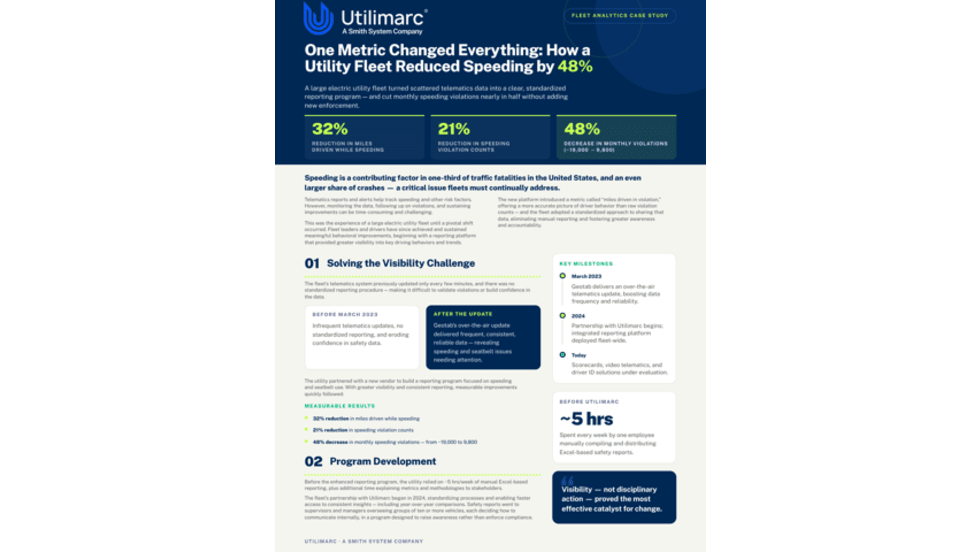
Sponsored•July 17, 2026
How Better Visibility Cut Speeding Violations by 48%
Fleet leaders don't need more data, they need clearer visibility into what the data is saying. This case study explores how one utility replaced speeding-event counts with a single metric — miles driven in violation — to strengthen safety and significantly reduce speeding violations.
Read More →
e-con Systems Expands AI Camera Tools for Traffic Monitoring
The systems support license plate recognition, traffic analytics, and video management for transportation agencies.
Read More →
King Township Pilot Links Driver Feedback to Reduced Speeding
How King Township, a best-in-class municipal fleet, reduced speeding by 10.9% and demonstrated a projected 349% ROI by putting safety ownership directly in drivers' hands.
Read More →
Beyond the Fireline: The Critical Role of Public Fleets in Wildfire Response
Behind every wildfire response is a complex network of vehicles, data, and decisions that must work in sync under extreme pressure. Global heating trends require strong fleet coordination and reliable communications to keep crews safe and operations running smoothly.
Read More →
How AI Is Transforming Public Fleet Safety - Part 1
AI-powered safety systems are helping public fleets tackle distracted driving by delivering real-time coaching and measurable behavior change behind the wheel. In part one of our Q&A, Nauto CEO Stefan Heck explains how agencies can improve safety, reduce costs, and navigate implementation challenges with AI-driven technology.
Read More →