




Highlighting Innovation and Safety: Check Out this FFC and FSC Photo Gallery.
8 Takeaways from the 2023 Fleet Forward and Fleet Safety Conferences
Among the biggest takeaways from this year's event: utilizing external resources can lead to safer fleets, data analysis can lead to better fleet operator and vehicle management, and compliance does not always equal safety.

Christy Grimes・Former Senior Editor

The Fleet Forward and Fleet Safety Conferences are designed to deliver fleets solutions on technology and safety.
Photo: Lauren Brooks, Monclay Media
7 min to read
Hundreds of fleet professionals descended upon Silicon Valley for the 2023 Fleet Forward and Fleet Safety Conferences, where they were met with a wealth of educational sessions, networking opportunities, and chances to share ideas about moving their fleets forward and fostering safety through innovative solutions.
During the Fleet Forward Conference (FFC), attendees learned from their peers about alternative fuels, IoT, connected vehicles, autonomous technology, the state of the fleet industry from the perspective of fleet managers and other industry experts, and more.
At the Fleet Safety Conference (FSC), a separate and comprehensive part of the FFC schedule, fleet professionals shared about the cutting-edge solutions they are implementing within their fleets to make fleet operators, other drivers, and vulnerable road users safer.
Here are some takeaways from the conferences.
1. The enemy of fleet management is complacency and resisting change.
In the Fleet Forward Conference opening keynote, a panel of fleet professionals engaged in a fleet industry S.W.O.T. analysis, diving into the industry's strengths, weaknesses, opportunities, and threats. The biggest threats to the industry, Automotive Fleet Associate Publisher Chris Brown said, are complacency and resisting change. Especially when you consider your fleet's environmental footprint.
"We cannot abandon the mandate of urgency in our efforts. Complacency is easy until it's too late," Brown urged.
Mike Hauge, fleet manager for Ecolab, recommends fleet leaders take inventory of where they are having the most environmental impact and starting there. He stressed the importance of bringing stakeholders onboard in the process.
"If you don't have buy-in from a financial standpoint or from a leadership standpoint, from the top of the house, it's not going to happen," Hauge said.
2. Compliance does not always equal safety.
Simply having a fleet that meets the bare minimum safety requirements through an industry compliance standard does not mean you have a safe fleet. At its core, a safe fleet starts from the top, with good leadership that encourages safe behavior. This was the message from Brian Fielkow of Acrisure in the opening keynote for the Fleet Safety Conference.
"Safety goes way beyond compliance. Just because you're compliant doesn't mean you're safe," Fielkow said. "The key is behavior. And I'll take the key over regulatory compliance. While compliance is important to drive safety, at the end of the day...safety must be leader-driven."
3. Data analysis is the key to a more informed electric vehicle fleet management.
Using data collected by telematics devices or other technology tells you a lot about a vehicle. The data these devices collects can help you better manage your electric vehicles, say Arun Rajagopalan of Motorq, Hair Nayar of Merchants Fleet, and Amy Dobrikova of Rexel Energy Solutions.
One of the most expensive components of an EV is the battery that powers it. Poor driver and charging behaviors can negatively affect the battery's life. This can have a substantial impact on the vehicle's resale value, leading to higher costs. Data can help you identify who may need better training on both driving and charging.
Vehicle usage data from your ICE vehicles can also help you determine whether switching to EVs is practical, based on vehicle application and usage.
4. Telematics devices both protect fleets from litigation, and make them safer.
Data from telematics devices can be used to make your fleet safer as a whole. Santa Clara County Fleet Manager David Worthington has been using telematics devices for fleet vehicles in his fleets since around 2008.
The data gathered from these devices can reveal which vehicle operators engage in unsafe behavior like hard braking and sudden stops, rapid acceleration and deceleration, hard turns, and more. Fleet managers can use these insights to curb this behavior.
While you may see pushback when adding telematics devices to your fleet vehicles, they can be invaluable. Worthington had to explain this to stakeholders when he first began the installation process for them 15 years ago.
"There's only two paths forward with this technology as I see it. One is we embrace it, learn about it early, and adapt to the technology and information provided to us and how we react to that if we do get subpoenaed for information. Or you bury your head and wait for a nuclear verdict," Worthington said.
The devices can also help in another way: by exonerating employees who are accused of causing crashes.
"It exonerates employees more times than it ever brings the question of employee behavior," Worthington added.
In some cases, citizens may blame crashes or vehicle damage on fleet vehicles. Telematics data can be used to disprove that. Sometimes, the data even reveals that the fleet vehicle that was blamed was not even in the location the citizen said it was in at the time.
5. Utilizing both internal and external resources can make your fleet safer.
Fleet safety involves multiple strategies and stakeholders, — both internal and external — to truly be successful and sustainable. Eric Richardson, Deputy Chief Fleet Management Officer for the Department of Citywide Administrative Services (DCAS) for the City of New York, has been working with Together for Safer Roads (TSR) for several years on fleet safety initiatives.
The city's partnership with TSR has led to tangible changes to make its vehicles safer for both operators and for vulnerable road users. One solution the organization has worked with the city on is the "Truck of the Future" vehicle safety solution. In a pilot program with TSR, DCAS-managed vehicles have received and tested technology and upfits in an effort to make them safer.
It's partnerships like this that can lead to a safer fleet and fewer deaths on roadways across America.
6. The Big 3 have more inventory today than they did pre-strike.
Tyson Jominy of J.D. Power gave an update on the state of the auto industry from the fleet perspective using independent data. Jominy noted that the automakers have more supply today than they did before the UAW strike. This is because so little of their production was impacted by the early days of the strikes, Jominy said. If you remember, it when the strikers began closing down plants for some of the automakers' biggest sellers that they beefed up their negotiations.
Fleet sales are also picking back up as a whole. Compared to pre-pandemic numbers from 2019, fleet sales are only down 400,000 units.
In another observation vehicle sales, Jominy noted that the only segment of the industry that is continuing to shift toward bigger vehicles — think sedans to SUVs — is fleet. On the retail side, consumers are again leaning more toward sedans and smaller vehicles. This may lead to a smaller availability of sedans for fleets, something Jominy urged fleets to consider.
7. Fleet operator behavior can attract bad actors.
About two vehicles are stolen every minute in the United States, according to the National Insurance Crime Bureau. Fleet operators can fall victim if they're not careful, say Phil Moser and Kristin Leary of Syneos Health. There are certain steps fleet operators can take to avoid making themselves a target.
Some of those steps include never leaving the key fob in the vehicle (this may seem like a given, but it's easy to do when you have a keyless ignition), taking valuables out of their vehicle, always having their head on a swivel, and other safety practices.
When fleet managers in the room were asked whether they had ever had a fleet vehicle stolen, almost half of the attendees raised their hands. While some bad actors are determined to steal a vehicle and may not be deterred by anything, it's still important to urge fleet drivers to take steps for their own safety.
8. Recruiting new employees requires an outside-the-box approach.
In the closing keynote for the Fleet Forward and Fleet Safety Conferences, fleet managers representing various segments of the industry shared about challenges they're facing. Among those was, of course, labor shortages and attracting new workers as many longtime fleet managers and employees retire.
When recruiting new talent, fleet managers encouraged attendees to think outside the box. An applicant may not have the perfect resume, but they may carry skills that can translate to the fleet industry.
"Look for someone outside the box, right? You don't necessarily have to look for someone who's doing maintenance or even fleet. I don't think there's anyone here who [can say] "I went to school to be a fleet manager," SuYvonne Bell of Gilead Sciences said. "You kind of you kind of roll into this, and if you love it, you stay...So from that perspective, I'm looking for that individual that is passionate, dedicated, and detail-orientated. And I don't care what industry they're in. I just need those qualities."
Couldn't make it to Santa Clara this year? Join us for the Fleet Forward and Fleet Safety Conferences in San Diego in 2024.
Subscribe to Our Newsletter
More Operations

Fleet Forward Conference Introduces One-Day Passes for 2026
New one-day registration lets fleet professionals attend Tuesday, Wednesday, or Thursday, with passes available for $249.
Read More →
ENC Unveils its ZAVIR Medium-Duty Shuttle
Two variants of the concept shuttles were revealed: a low-floor configuration and a high-floor configuration.
Read More →
Could Your Next Fleet Technician Start as an Intern?
What if your next technician hasn’t worked in a fleet shop yet? What fleets are doing to free up time.
Read More →
How Phoenix Is Building Its Next Generation of Fleet Technicians
With more than 8,000 vehicles and pieces of equipment to maintain, the City of Phoenix could not afford to wait for fully trained technicians to walk through the door. Instead, they revamped their entire workforce strategy and showed how public fleets can create their own talent pipeline while preparing existing employees for increasingly complex vehicles.
Read More →
What’s Slowing Your Fleet Down?
Could a change in how work gets done help your fleet return vehicles to service sooner?
Read More →
Can Public Fleets Trust the Data Driving Their Decisions?
Public fleets have more data than ever, but inconsistent records and missing information can still undermine maintenance, replacement, and cost decisions.
Read More →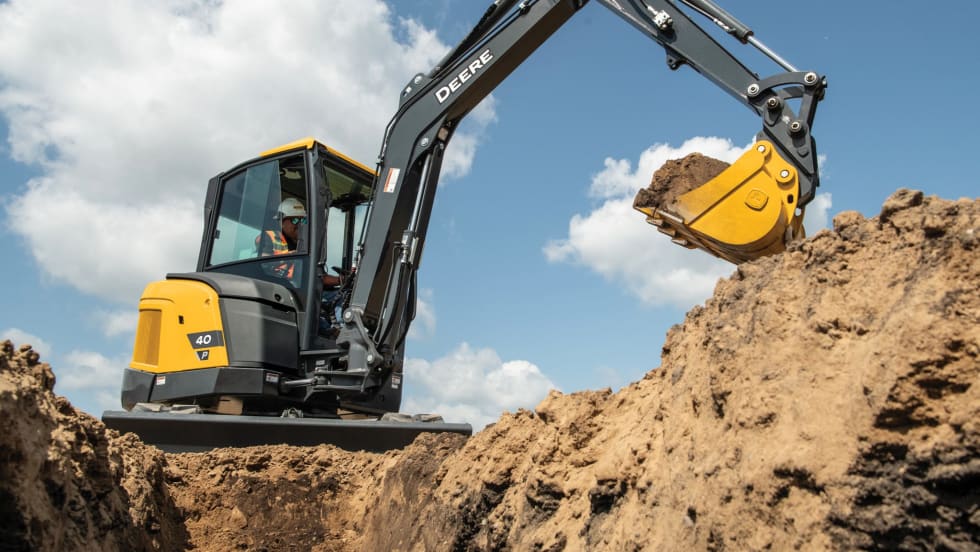
John Deere Introduces 40 P-Tier Compact Excavator
John Deere is adding a compact excavator designed for crews that need to move equipment between jobsites and handle multiple types of work with one machine. The 40 P-Tier weighs less than 10,000 pounds and offers configurable hydraulics, attachment options, and connected fleet-management capabilities.
Read More →
How Leading Fleets Improve and Why Business Plans Matter
This week, we look at what past Leading Fleet winners can teach us about making progress, plus how to build a business plan your fleet will actually use.
Read More →
Nominate a Fleet Leader for the 2027 Public Fleet Hall of Fame
Do you know a fleet leader who has made a lasting impact on the industry? Nominate this fleet professional for the 2027 Public Fleet Hall of Fame.
Read More →
Why Fleet Business Plans Need Three Perspectives
A fleet business plan should help agency leaders understand the fleet’s value, give the organization a clear direction, and establish shared expectations with customer departments.
Read More →