


At a Glance
When a violent attack occurs, fleets are tasked to:
Get units out of the shop and on the road
Secure the location with barricades
Keep vehicles and generators fueled.
 MENU
MENU SEARCH
When tragedy strikes, government fleet assets are put to the test as first responders are tasked to respond quickly and effectively. Behind them, fleet teams work to keep those assets running.


When tragedy strikes, government fleet assets are put to the test as first responders are tasked to respond quickly and effectively. Behind them, fleet teams work to keep those assets running.
Photo: Getty Images
Patriots’ Day 2013 started out like any other day, with the Boston Marathon beginning the same way it always did, according to William Coughlin, director of central fleet management for the city, who served as the foreman on duty that day. Heavy equipment such as snow spreaders, loaders, and dump trucks were loaded with sand and strategically placed along the route to prevent access, and additional equipment was lined up for post-race cleanup — with street sweepers and trash packers ready to go.
But nearly three hours after the first runner crossed the finish line, two homemade bombs were set off on Boylston Street.
“Once the bombing occurred, our world stood still for a moment. Post-race cleanup crews were ordered to stand down as the possibility of additional devices hidden in trash receptacles hadn’t been ruled out,” Coughlin said.
When tragedy strikes, police and fire departments must respond quickly. Behind them, fleets work to keep assets moving and functional through what comes next.
Within a city or county, fleet may or may not have a seat at the table during an emergency.
At the City of Charleston, S.C., fleet is a part of emergency protocol, regardless of the situation. Whether it’s a shooting or a hurricane, Scott Newsome, director of police and city fleet operations, must report to Charleston’s municipal emergency operations center (MEOC).
“Fleet’s always at the table at command staff functions and in the MEOC,” Newsome said. “Especially in natural disasters, fleet plays a big role.”
When a gunman opened fire at the Emanuel African Methodist Episcopal Church in 2015, Newsome said emergency protocol kicked in from the time of the shooting to the final funeral. The city took a hands-on approach, with city leadership reaching out to the church and families of the victims to ensure all of their needs were met and they were made as comfortable as possible.
Emergencies could happen anywhere. In December 2015, 14 people, including 13 county employees, died after a gunman opened fire at the San Bernardino Inland Regional Center in California. The county fleet supported first responders and transported vehicles, equipment, and people during the week after the incident. The event deeply affected fleet management, who were unable to speak to Government Fleet about the incident.
In June 2016, a gunman opened fire at Pulse, a nightclub in Orlando, Fla. David Dunn, CFM, fleet and facilities division manager, got a city alert, but he did not plan on coming in because fleet management does not always play a role in emergency response.
“When a tragedy like this occurs, particularly one that’s going to be dealt with primarily by law enforcement and/or fire support, we normally wouldn’t be engaged and involved on a weekend,” he said. “On a weekday, we would already be on the property working, but on the weekend we normally wouldn’t be involved other than watching the news.”
But the city’s chief financial officer called Dunn in — the city needed every fleet, police, and fire unit out of the shop — so Dunn called in enough personnel to finish the repairs.
There was no protocol for calling in personnel, so Dunn took guidance from his department’s hurricane protocol.

Although out of the public eye, fleet is often working behind the scenes to support emergency response efforts.
Photo: Getty Images
During the day, two facilities were activated to support law enforcement and support services personnel, and fleet staff organized transportation to deliver water and other supplies around the city. Later in the day, mechanics were sent around to refuel the generators powering mobile command centers.
The city also benefited from a Lenco BearCat armored vehicle, which was added weeks before the incident.
“It replaced an old vehicle that had been modified into a SWAT unit, so having this specific tool designed for that kind of work really made a difference. When they went up and rammed the wall [of the nightclub], the wall gave and the Bearcat barely got a scratch on it. The people were able to exit that wall once it was opened up,” Dunn explained.
When an incident occurs, an important step is closing the area with barricades or fencing. This may require thinking on your feet, but Coughlin from Boston noted that it’s mostly important to employ common sense.
“Remove vending boxes along the routes (newspaper boxes), secure manholes, block access with Jersey barriers or equipment,” Coughlin said.
Generally, the City of Charleston keeps barricades pre-staged or on trailers, ready to be deployed as needed. The city hosts community events nearly every month, so setting up barricades is a regular occurrence. Plus, barricades are deployed any time flooding occurs.
“We flood down here all the time when we have heavy rain and high tides that occur simultaneously. So we have a lot of barricades pre-staged, and the ones that are not pre-staged are in a warehouse in trailers,” Newsome explained.
When Dunn was called after the shooting in Orlando, one of his first tasks was to contact the city’s fencing contractor and secure the area. The fencing remained up for weeks.

When an emergency occurs, fleets are often tasked with securing the area with barriers.
Photo: Getty Images
All the fleet managers interviewed agreed that a clear emergency protocol is the best preparation for the worst, regardless of the situation. Several of the fleets we spoke to are in the Southeast and have a policy in place due to a yearly hurricane season.
The City of Orlando hosts emergency exercises on a quarterly basis that are attended by all senior staff and some assistant managers. The exercises are usually based on storms, since those occur most often, but the most recent one simulated a terrorist attack.
The City of Charleston follows incident comment system (ICS) protocol in the event of an emergency, and Newsome suggested that all fleets cross-train employees in that protocol.
“Regardless of geographic location or jurisdiction, at some point you are going to have a natural disaster or major incident,” Newsome said. “I think it is wise to cross-train fleet personnel in the ICS process, because they learn about different roles in the incident command structure. It’s important to determine which employee is the best fit in a specific emergency function. This training adds great value to the entire organization.”
Dunn noted the importance of knowing who is available and when. When Hurricane Irma hit the City of Orlando, two of his supervisors were out of town. His wife was also out of town, so Dunn would have to make periodic stops at home to make sure his pets were fed. If he wasn’t available at the time of the Pulse shooting, the city would have had to call his assistant.
Practice also helps. Many cities host quarterly or annual emergency training with key stakeholders.
At least once a year, the City of Charleston hosts a tabletop exercise, where department heads meet and create a plan for a designated emergency. But Newsome said the city has been hit with a storm or hurricane for the last four years, so there has not been as much of a need for a department-wide emergency drill.
When any emergency occurs, communication is one of the most important factors.
In September 2018, the City of Orlando implemented a SAFE alert system (short for “Safety Awareness for Everyone”) to notify all city employees via text message in the event of a dangerous or life-threatening emergency. The initiative was pursued after the Pulse shooting and Hurricane Irma. In addition, the Orlando Police Department began conducting voluntary active shooter awareness training for city employees.
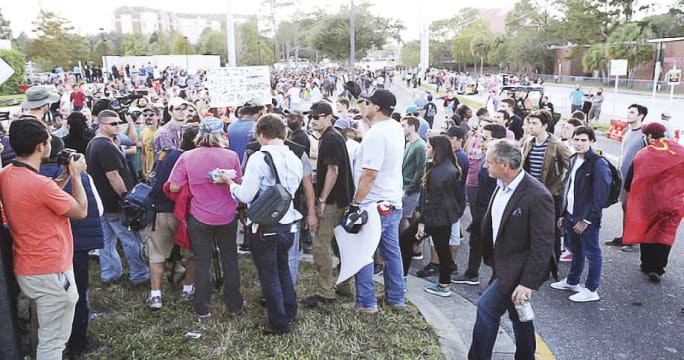
When a controversial speaker visited the University of Florida, the City of Gainesville worked to keep the peace.
Photo courtesy of Doug Weichman
In some cases, cities and counties may have time to prepare for large public events.
When a controversial speaker was scheduled to visit the University of Florida, the City of Gainesville began preparations for the inevitable crowds and protests it was bound to attract. Richard Spencer, a prominent figure of the alt-right (and coined the term) first requested to speak at the university in September 2017, two weeks after a Unite the Right rally in Charlottesville, Va., resulted in three deaths and numerous injuries.
The plans began six weeks before the event, before the university rejected (and then approved) it. The city prepared for up to 30,000 visitors. Florida Governor Rick Scott declared a state of emergency in the county and activated the state’s National Guard to be called as needed. Florida Highway Patrol and other neighboring police agencies provided support — more than 1,000 officers were brought in.
Public Works trucks and equipment blocked roads, and streets were shut down the morning of the speech.
The Police Department switched from three shifts a day to two to keep more officers out at a time. Doug Weichman, CAFM, director of fleet management, said public works drivers were sent out in groups of two and equipped with gas masks, protective suits, emergency kits, and food for their eight-hour shifts. Just like a hurricane (which is much more common for the region), fuel was a concern.
Overall, turnout was lower than expected and the Police Department kept crowds contained. About one of every 20 attendees was a supporter, and most others were peaceful protesters. Weichman cited thorough planning on the part of the city as a factor for the safe event.

New one-day registration lets fleet professionals attend Tuesday, Wednesday, or Thursday, with passes available for $249.
Read More →
Two variants of the concept shuttles were revealed: a low-floor configuration and a high-floor configuration.
Read More →
What if your next technician hasn’t worked in a fleet shop yet? What fleets are doing to free up time.
Read More →
With more than 8,000 vehicles and pieces of equipment to maintain, the City of Phoenix could not afford to wait for fully trained technicians to walk through the door. Instead, they revamped their entire workforce strategy and showed how public fleets can create their own talent pipeline while preparing existing employees for increasingly complex vehicles.
Read More →
Could a change in how work gets done help your fleet return vehicles to service sooner?
Read More →
Public fleets have more data than ever, but inconsistent records and missing information can still undermine maintenance, replacement, and cost decisions.
Read More →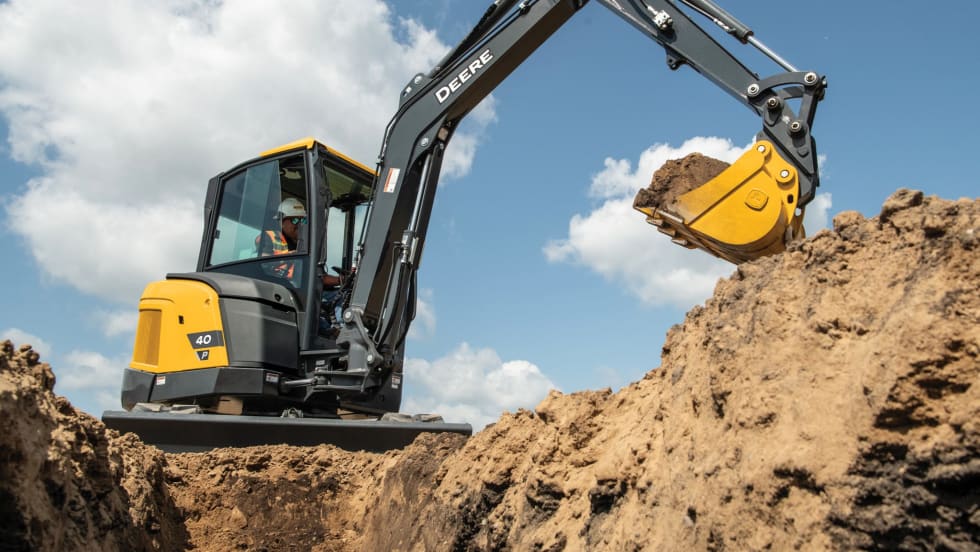
John Deere is adding a compact excavator designed for crews that need to move equipment between jobsites and handle multiple types of work with one machine. The 40 P-Tier weighs less than 10,000 pounds and offers configurable hydraulics, attachment options, and connected fleet-management capabilities.
Read More →
This week, we look at what past Leading Fleet winners can teach us about making progress, plus how to build a business plan your fleet will actually use.
Read More →
Do you know a fleet leader who has made a lasting impact on the industry? Nominate this fleet professional for the 2027 Public Fleet Hall of Fame.
Read More →
A fleet business plan should help agency leaders understand the fleet’s value, give the organization a clear direction, and establish shared expectations with customer departments.
Read More →