





Keep Reading: Defining a Leading Culture with Sarasota County Fleet Services
Servant Leadership in Fleet Management
A fleet manager breaks down what it means to be a servant leader within the fleet and for the community.
June 6, 2024
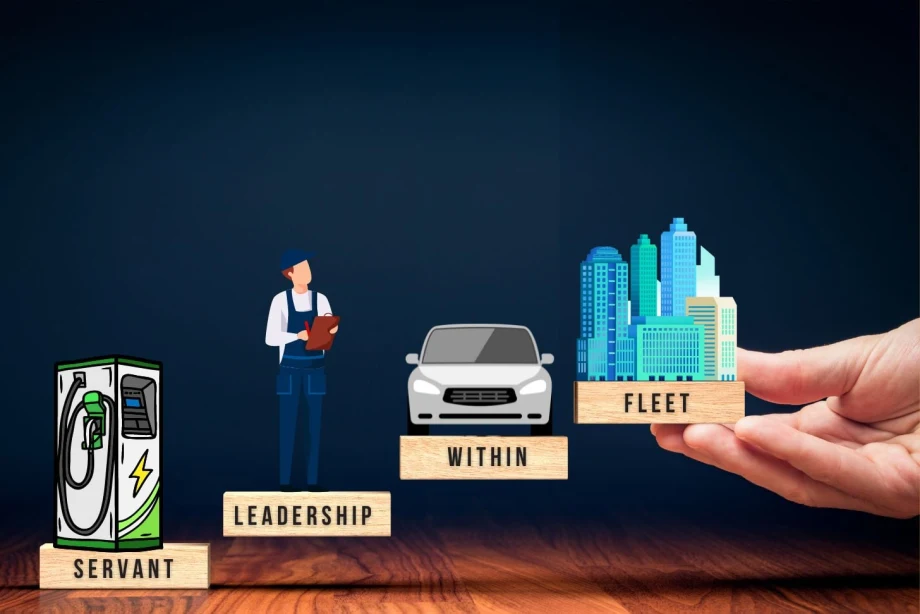
What does servant leadership look like and how can fleet managers implement this into daily operations?
Photo: Government Fleet
4 min to read
Leading a fleet is more than just managing vehicles and schedules; it involves time and commitment to guide a team toward success. But what does servant leadership look like in this context?
During GFX 2024, Kelly Reagan, fleet administrator for the city of Columbus, Ohio, fleet management division, shared insights on how a servant leadership style fosters collaboration, trust, and a strong sense of community within the fleet industry. Reagan brought his own experience to highlight the transformative impact of prioritizing the team's needs, ultimately driving better outcomes for the entire organization.
The Concept of Servant Leadership in Fleet Management
Before discussing servant leadership, Reagan discussed fleet managers' responsibilities as public servants, including those to the general public, municipal leaders, and the individuals who work on the floor. "We're in an industry where you have the ability to affect change," Reagan emphasized.
According to Reagan, fleet managers should focus on being solution-conscious and not problem-focused.
Using an analogy, Reagan compared fleet managers to sausage makers. "Who here has ever seen it made?" he asked. "You are the sausage maker, and your administration doesn't want to see how you make sausage…They want results."
Reagan pointed out that this analogy highlights the behind-the-scenes work that has to be done in fleet management in order to deliver outcomes efficiently.

Kelly Reagan, fleet administrator for the city of Columbus, Ohio, fleet management division, speaks during GFX 2024.
Photo: Elizabeth Stewart Photography
Responsibilities and Impact of Fleet Managers as Public Servants
Reagan shared a story about John King, a long-time colleague who exemplified servant leadership. Starting as a technician in Columbus, King rose through the ranks to become the assistant fleet administrator and later, the fleet director for Collier County.
Despite his demanding career, King also served his community as an ordained pastor, helping those in need and supporting his colleagues through personal hardships like the COVID-19 pandemic.
"That's what servant leadership looks like—doing without being asked," Reagan said.
This also applies within a fleet manager’s operation. Fleet managers need to be prepared for what is ahead and doing the extra work to know the fleet inside and out is critical for success.
He recounted an interaction with a local school district seeking to buy fuel without knowing their consumption or potential savings. "If you don't understand your business, someone else will come in and tell you how to run it," Reagan warned.
The lesson learned was that fleet managers must be proactive, knowledgeable, and ready to provide solutions based on solid data.
Seeking Guidance and Collaboration from Experienced Peers
Reagan noted that part of servant leadership is knowing when to ask for help so that the operation can succeed. He stressed the importance of not only getting help but learning from experienced peers within the industry. And by fostering mentorship and collaboration, veteran fleet managers can pass on invaluable insights to newer members.
But it all starts with reaching out to other fleet managers.
“There isn't anything here that you'll experience that somebody hasn't already gone through,” Reagan said. “Get to know [other fleet managers]. Pick up the phone and call.”
Reagan recalled his own experience seeking out advice during several turning points for Columbus’ fleet. Planning to transition to compressed natural gas (CNG) for the fleet, Reagan turned to Paul Condran, the then-fleet services manager for the Fleet Services-Facilities Manager City of Culver City, California. This initiative began in 2010 and required building the necessary fueling infrastructure from scratch.
With Condran’s help, the Columbus fleet was able to put together a plan for what they needed to accomplish the incorporation of CNG. Condran and his team showed them the essential questions that needed to be asked, such as “Should they own or lease the station?” and “Should they have a third party take care of the station or did they want to take care of the station themsleves?”
They also helped the Columbus fleet create PM checklists and set them up so that they could teach their own team more about curve compressed natural gas. According to Reagan, they leaned on the other fleet’s knowledge for several years as they made the transition.
When Columbus became a Smart City recipient, Reagan turned to David Worthington, fleet manager for the County of Santa Clara, California, to help with electrification. Worthington, who was the Sonoma County, California, fleet operations manager at the time, had already made considerable strides with his own fleet’s electrification and was able to give Reagan ideas on how to move forward in their own electrification journey.
Reagan urged fleet managers to seek counsel from their peers and leverage the collective knowledge within the industry.
"There isn't anything we can't accomplish if we listen to our peers and work with our colleagues," he said, concluding that by adopting a servant leadership approach, fleet managers can foster a supportive, collaborative, and innovative environment, ultimately benefiting their teams, organizations, and communities.
Subscribe to Our Newsletter
More Operations

Is Keeping Older Fleet Vehicles Really Saving Money?
Is keeping vehicles longer saving money, and what happens when a diagnostic test points to the wrong fix?
Read More →
How Smart Fleet Strategy Can Help Local Government Agencies Do More with Less
Keeping a vehicle longer may ease this year’s budget, but what does it cost the next one? A closer look at fleet decisions can reveal opportunities to reduce spending while protecting essential services.
Read More →
Connect with Government Fleet on LinkedIn
From industry news and fleet management strategies to conversations with peers, Government Fleet's LinkedIn page offers public-sector fleet professionals another way to stay informed and connected.
Read More →
Town of Queen Creek Named Most Successful Fleet Award Winner of Inaugural RTA Fleet Success Awards
Five fleets were honored at RTA Connect 2026 in Chicago for excellence across resource efficiency, intentional culture, risk management, and stakeholder satisfaction.
Read More →
Sponsored•October 14, 2026
A buyer's guide to fleet management software in 2027
Buying fleet management software in 2027 means looking beyond features and price. As fleet operations, technology and expectations evolve, this guide explores what today’s fleet professionals should consider when choosing a system that can deliver value now and adapt to what comes next.
Read More →
Hazard Alerts, Fleet Car Sales Rise and a New Shuttle Concept
Fleet car sales doubled, but the bigger picture tells a different story in this week’s roundup.
Read More →
How St. Johns County Turned Fleet Data Into Better Replacement Decisions
St. Johns County, Florida, had fleet data, but turning it into reliable decision guidance was another matter. Instead of starting over with a new fleet management system, the county connected existing tools and built a scoring system that gives managers an objective look at fleet health.
Read More →
Fleet Forward Conference Introduces One-Day Passes for 2026
New one-day registration lets fleet professionals attend Tuesday, Wednesday, or Thursday, with passes available for $249.
Read More →
ENC Unveils its ZAVIR Medium-Duty Shuttle
Two variants of the concept shuttles were revealed: a low-floor configuration and a high-floor configuration.
Read More →
Could Your Next Fleet Technician Start as an Intern?
What if your next technician hasn’t worked in a fleet shop yet? What fleets are doing to free up time.
Read More →