




Public Forum:Develop Service Level Agreements
The majority of public sector fleets do not employ service level agreements between the fleet department and internal customer departments. Although these types of agreements are relatively commonplace between commercial fleets and fleet service providers, only in the past 10 years have they begun to emerge in the public sector.

The majority of public sector fleets do not employ service level agreements between the fleet department and internal customer departments. Although these types of agreements are relatively commonplace between commercial fleets and fleet service providers, only in the past 10 years have they begun to emerge in the public sector. One reason for their emergence among government fleets was a response to the fleet privatization initiatives, in which outsourcing companies made firm performance and cost guarantees to public officials. Those fleets that do employ service level agreements usually have multiple agreements with different user departments. Service level agreements are most commonly made with fire, solid waste, police, public works, and street maintenance departments.
Servicing the Squeaky Wheel
The first inclination is to initiate a service agreement with your largest customer. However, Jim Wright, president of Fleet Counselor Services, recommends starting with the “squeaky-wheel” department. “It
is usually not your largest customer, rather a small department complaining about high downtime or cost.”
The first step in implementing a service agreement is identifying end-user issues. “You need to document downtime, cost issues, and customer-perceived lack of performance,” said Wright.
Collecting this information over one completed financial period, typically a month, is recommended.“When collecting this information, always ask the customer department to provide documentation regarding such issues as high cost, poor performance, or higher-than-normal downtime.Ask them to substantiate whatever they can in writing,”said Wright. Conduct a work order analysis to determine the validity of these issues.“ More often than not, these allegations are valid,” added Wright.
Rather than reinventing the wheel, seek to acquire similar service agreements from other fleet managers, upon which you can model your agreement. Another alternative is to contact companies such as Fleet Counselor Services, which has a 13-page document that covers all service-related contingencies.
A service agreement is not a one-sided document. “For instance, a customer department may cite high downtime with snow equipment during snowstorms. However, a work order analysis may determine that 30 percent of the repairs performed during snow emergencies are caused by operator abuse,” said Wright. “Based on this information, a service agreement may require the customer department to provide operator training and internal certification on snow equipment.”
Service level agreements should be reevaluated every budget preparation season. Service level agreements are living documents that evolve over time. “These agreements will change and vary by customer department, because they are driven each year by budget considerations,” said Wright. “In situations where disputes may arise, there also needs to be a binding arbitration clause incorporated in a service level agreement,” added Wright.
Three Mistakes Made by Fleet Managers
Three common mistakes are made in developing a service agreement. The first mistake is when the fleet manager overpromises to the customer department.
The second mistake is not involving your staff in developing service level agreements. A fleet manager should involve his or her staff in service level agreement negotiations throughout the entire process up to the creation of the final document. The fleet department team should be comprised of representatives from the shop floor, parts department supervisor, financial, and obviously the fleet operation management.
“Many service level agreements fail because the fleet manager didn’t involve the day-to-day supervisory management staff that has to meet these performance standards. Sometimes, downtime standards are guaranteed to the customer department that the shop simply can’t deliver,” said Wright.
The third pitfall is creating an issue out of a non-issue. If downtime is not an issue, don’t make it an issue. Don’t make it part of the service level agreement. “When developing a service level agreement, only address those areas where a deficit exists and there is need for improvement,” said Wright.
Benefits of Service Agreements
Are service level agreements worth the time and effort? According to Wright, the main benefits of a service agreement are:
More Operations

ENC Unveils its ZAVIR Medium-Duty Shuttle
Two variants of the concept shuttles were revealed: a low-floor configuration and a high-floor configuration.
Read More →
Could Your Next Fleet Technician Start as an Intern?
What if your next technician hasn’t worked in a fleet shop yet? What fleets are doing to free up time.
Read More →
How Phoenix Is Building Its Next Generation of Fleet Technicians
With more than 8,000 vehicles and pieces of equipment to maintain, the City of Phoenix could not afford to wait for fully trained technicians to walk through the door. Instead, they revamped their entire workforce strategy and showed how public fleets can create their own talent pipeline while preparing existing employees for increasingly complex vehicles.
Read More →
What’s Slowing Your Fleet Down?
Could a change in how work gets done help your fleet return vehicles to service sooner?
Read More →
Can Public Fleets Trust the Data Driving Their Decisions?
Public fleets have more data than ever, but inconsistent records and missing information can still undermine maintenance, replacement, and cost decisions.
Read More →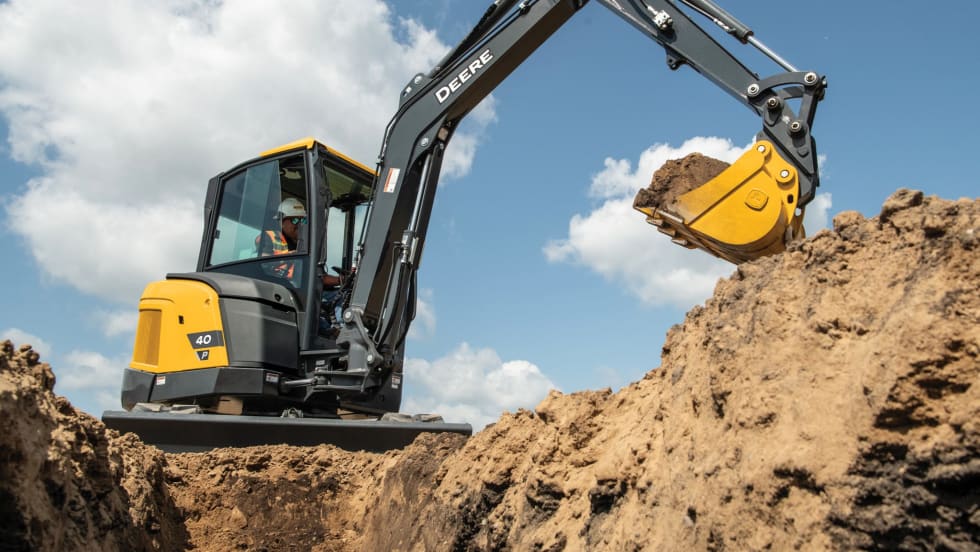
John Deere Introduces 40 P-Tier Compact Excavator
John Deere is adding a compact excavator designed for crews that need to move equipment between jobsites and handle multiple types of work with one machine. The 40 P-Tier weighs less than 10,000 pounds and offers configurable hydraulics, attachment options, and connected fleet-management capabilities.
Read More →
How Leading Fleets Improve and Why Business Plans Matter
This week, we look at what past Leading Fleet winners can teach us about making progress, plus how to build a business plan your fleet will actually use.
Read More →
Nominate a Fleet Leader for the 2027 Public Fleet Hall of Fame
Do you know a fleet leader who has made a lasting impact on the industry? Nominate this fleet professional for the 2027 Public Fleet Hall of Fame.
Read More →
Why Fleet Business Plans Need Three Perspectives
A fleet business plan should help agency leaders understand the fleet’s value, give the organization a clear direction, and establish shared expectations with customer departments.
Read More →
How Oil Analysis, Safety Technology, and Fleet Awards Drive Improvement
What happens when fleets let measured results guide their next decision?
Read More →