




Read More: Should You Be Doing Warranty Repairs?
Pitching Technician Positions in Positive Ways
In a time when interest in technician roles is waning, Walter Ederle believes it’s time to start appealing to the ambitions of the generations of the future.

Lexi Tucker・Senior Editor
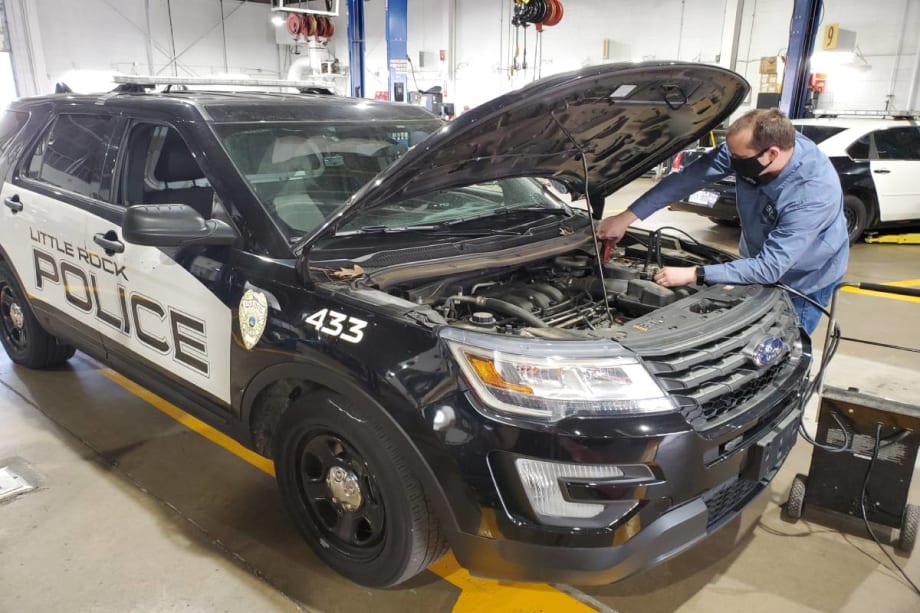
A City of Little Rock technician works on a police car.
Photo: City of Little Rock
5 min to read
Walter Ederle, CAFM, senior fleet manager for City of Little Rock, Arkansas, has heard the position of fleet manager be described as being able to juggle 16 running chainsaws at once. Fleet managers must deal with numerous issues from so many sides of the business, and plans made today can change over the course of a few hours. Here, he talks about how he’s planning to take on current challenges and ensure the future of his fleet remains bright despite any obstacles thrown his way.
The Science of Fleet Maintenance
Ederle believes the industry is currently going through a transition, with technology advancing faster than ever before. The technicians of today were brought up in a different time, and are not always as tech savvy as the new generations of technicians fresh out of their trade school days.
“Recruiting people who want to do what we do in general has been a challenge,” he said.
The average age of his group of technicians is 55, and the work they are doing will only continue to get more difficult on their bodies. As more of them start to retire, the question becomes how to attract newer workers who will want to stay on the team rather than hop around from shop to shop. While pay is an important factor, changing the perception of the profession will play the biggest role in helping to draw in a new crowd.
“It’s no longer just about turning wrenches; it’s a STEM job now. Many modern vehicles have up to 80 control modules which increases the complexity and sophistication, leading to a more challenging and complex diagnostics process. Maybe if we started pitching the industry as being more in the STEM field, we might see an uptick in interest," Ederle said.
He also thinks striving to increase technician diversity will expose people to different ideas and potentially help reveal better ways to fix vehicles.
Developing a Place Technicians Want to Work In
Creating a thriving work environment can play a large part in getting technicians to remain interested and realize they are being properly cared for. Ensuring your shop is laid out in a way that makes sense and actually spending time with them to ask if they have everything they need will make a difference.
“We're in the process of remodeling our shops, and I'm making sure the environment where the technicians work is up to modern standards: providing healthy air quality with efficient heating systems, high gloss white walls to reflect the new LED lights that make the work area feel brighter, and updated diagnostic scan tools and shop equipment are all factors we are taking into consideration," he said.

Walter Ederle
Eliminating clutter and maintaining a minimalist mentality will also streamline work processes and ensure productivity. While keeping a focus on key performance indicators (KPIs) is important, good fleet managers are those that see their operation from all different sides, not just the data-driven factors.
Building Extra Funding Opportunities
The fleet management department has become an in-house Ford warranty center, which has opened up more doors for the operation.
Now, when the automaker has a recall, the team no longer has to drive the vehicle 30 minutes to the dealer and wait for three days because they are backed up. This saves a lot of logistic operational time.
On top of this, Ford will reimburse the department for technicians’ time.
“We’ve become a profit center for the city because they pay us for the work our employees do. I submit a request electronically and then I get a check," he said.
For those interested in pursuing Ford’s in house warranty approval, he warns it’s a bit of a lengthy application process, including meeting Ford’s recommended technical training programs.
Streamlining Between Departments
The fleet department is implementing a new fleet management module called Enterprise Asset Management (EAM), an enterprise resource planning (ERP) module application by Infor. The city uses accounting software built by the same company, which will enable it to tie in with the purchasing department’s invoicing, purchase orders, and other functions with the fleet department. Staff members will be able to process purchase orders, invoices, and more without having to go through several extra steps.
“We’re excited to see how that will help make our whole department more efficient. People spend a lot of time paying those bills. The contract management function makes it so I won't have to bid work out as much because it'll be in the module. Right now, there are many silos between departments, with different sections working with different software for their operations. This will enable the modules to work with each other," Ederle said.
Seeing the Good During Rough Times
As a department and even the city as a whole, Ederle said he’s noticed that having to deal with the pandemic has made everyone more compassionate. People have slowed down and taken more time to listen and absorb ways they can be of better assistance to others.
“I think we've become closer as a department, showing concern for not only the people who work here, but all our families, friends, and even vendors as well," he said.
Fleet management has prepared emergency plans for tornadoes, floods, and even terrorist attacks, but Ederle never thought he’d need to figure out contingency plans in the case of a pandemic. The emergence of COVID-19 has permanently changed the way many fleet managers think because of the possibility of an outbreak at their shop. What happens if one person catches it and puts the entire staff at risk? With a choked supply chain, what happens if you can’t get a part you are in dire need of? These are the kinds of questions he has had to consider.
Efficiency is Everything
For fleet managers just breaking into the business, Ederle said try to not get too caught up in the details.
“You'll lose your overall focus. Build a great team that will enable you to delegate various responsibilities so you don’t become overburdened. There's so much data and technology out there you can’t do it all yourself," he said. "Don’t lose focus on what you're really supposed to be doing, which is fixing broken cars in an efficient manner.”
Subscribe to Our Newsletter
More Operations

Fleet Forward Conference Introduces One-Day Passes for 2026
New one-day registration lets fleet professionals attend Tuesday, Wednesday, or Thursday, with passes available for $249.
Read More →
ENC Unveils its ZAVIR Medium-Duty Shuttle
Two variants of the concept shuttles were revealed: a low-floor configuration and a high-floor configuration.
Read More →
Could Your Next Fleet Technician Start as an Intern?
What if your next technician hasn’t worked in a fleet shop yet? What fleets are doing to free up time.
Read More →
How Phoenix Is Building Its Next Generation of Fleet Technicians
With more than 8,000 vehicles and pieces of equipment to maintain, the City of Phoenix could not afford to wait for fully trained technicians to walk through the door. Instead, they revamped their entire workforce strategy and showed how public fleets can create their own talent pipeline while preparing existing employees for increasingly complex vehicles.
Read More →
What’s Slowing Your Fleet Down?
Could a change in how work gets done help your fleet return vehicles to service sooner?
Read More →
Can Public Fleets Trust the Data Driving Their Decisions?
Public fleets have more data than ever, but inconsistent records and missing information can still undermine maintenance, replacement, and cost decisions.
Read More →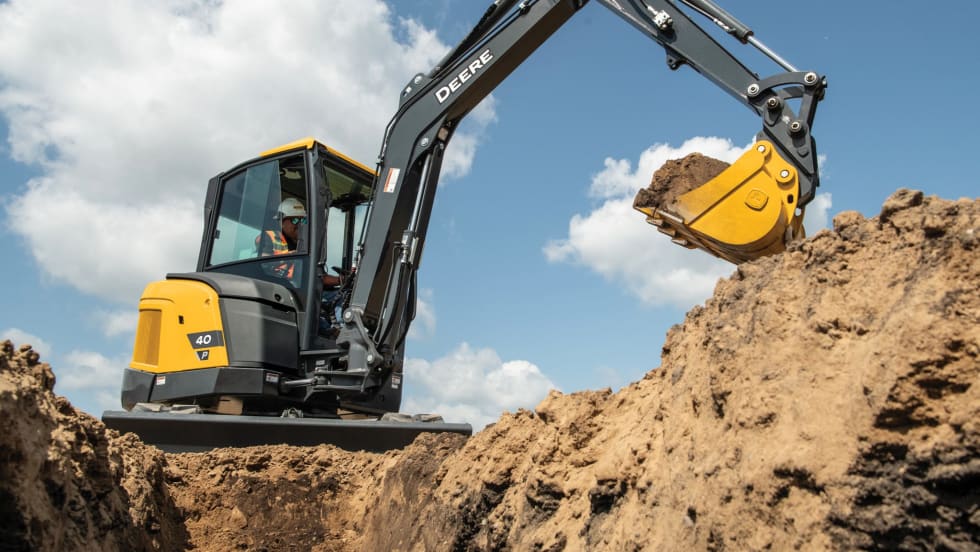
John Deere Introduces 40 P-Tier Compact Excavator
John Deere is adding a compact excavator designed for crews that need to move equipment between jobsites and handle multiple types of work with one machine. The 40 P-Tier weighs less than 10,000 pounds and offers configurable hydraulics, attachment options, and connected fleet-management capabilities.
Read More →
How Leading Fleets Improve and Why Business Plans Matter
This week, we look at what past Leading Fleet winners can teach us about making progress, plus how to build a business plan your fleet will actually use.
Read More →
Nominate a Fleet Leader for the 2027 Public Fleet Hall of Fame
Do you know a fleet leader who has made a lasting impact on the industry? Nominate this fleet professional for the 2027 Public Fleet Hall of Fame.
Read More →
Why Fleet Business Plans Need Three Perspectives
A fleet business plan should help agency leaders understand the fleet’s value, give the organization a clear direction, and establish shared expectations with customer departments.
Read More →