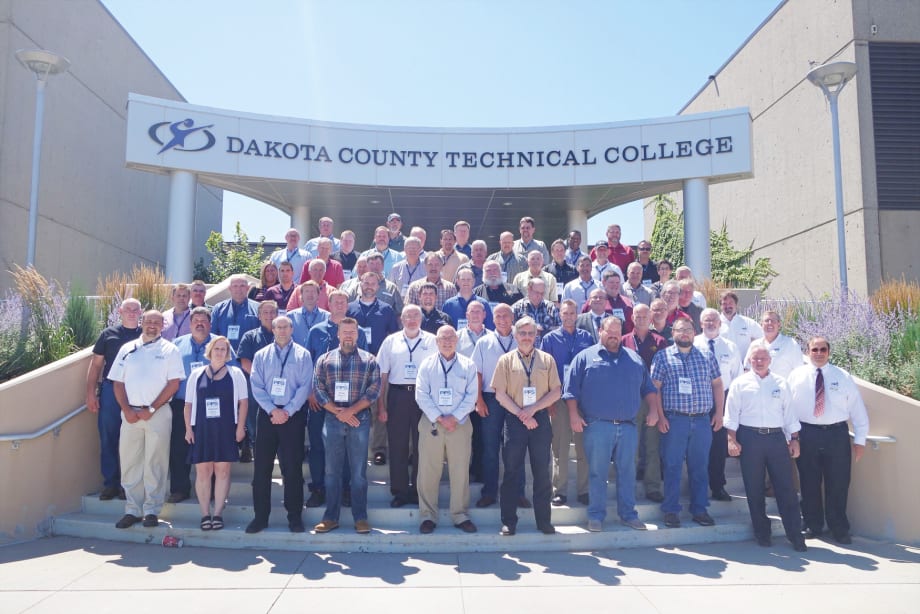
A sold-out Public Fleet Summit in Minnesota gave fleet and public works professionals an opportunity to connect with nearby agencies and learn from nationally recognized fleet professionals.
by Staff
October 12, 2015
Attendees of the Minnesota Public Fleet Summit were able to learn from leading fleet professionals as well as local ones.
3 min to read
Attendees of the Minnesota Public Fleet Summit were able to learn from leading fleet professionals as well as local ones.
Public Fleet Summits (PFS) conducted its first two-day fleet management educational summit of the year on July 29-30 at the Dakota County Technical College in Rosemont, Minn. The event was attended by 53 fleet and public works professionals and represented 32 state, county, city, and university fleets within Minnesota, North Dakota, and Iowa. Dakota County Fleet Management, a nationally recognized leader in both green fleet and fleet management operations, hosted the sold-out Minnesota PFS.
PFS was created in 2013 after recognizing that often fleet and public works professionals lack the fleet management education and resources necessary to effectively manage fleet financial, business, and maintenance operations in today’s demanding environment. The two-day summits are designed for public employees in the government fleet industry and focus on their professional growth and improving operations.
Ad Loading...
PFS was formed by Greg Haglin, president of Government Solutions Team, and Dave Seavey, former fleet director for the City of Seattle, in partnership with Government Fleet magazine. Its principal speakers include nationally recognized fleet managers.
A Cost-Effective Learning Opportunity
Attendees of the Minnesota PFS spanned the entire spectrum of current and emerging fleet and public works leadership including fleet managers, supervisors, technicians, administrators, public works directors, and superintendents. The regional educational events provide local fleets a cost-effective opportunity to learn best industry practices, work closely with other regional fleet professionals to solve local issues, and directly network with top government fleet managers and vendors without having to travel to costly national conferences and events.
Educational sessions are designed to not only teach the latest fleet management best industry practices, but also to provide practical road maps and strategies to implement them. Featured Minnesota PFS session topics included: 10 Essential Non-Fleet Related Skills for Successful Fleet Managers and How to Attain Them; Why Does a PM at Fleet Cost $100 When the Same Service at Jiffy Lube Costs $19.95?; and How to Convince Your Organization to Hire New Staff.
Kevin Schlangen, Dakota County’s fleet manager and host of the Minnesota PFS event, presented on how the county’s implementation of telematics, coupled with computerized calibration equipment on plow trucks, reduced its usage of snow-event material by 25%.
Roundtable discussions and emerging technology sessions provide an opportunity for fleet professionals and vendors to discuss and solve issues associated with fuel management, technician recruitment and retention, procurement, providing quality technical training, selling a fleet project to public agency leadership, fleet management information systems, and compressed natural gas (CNG) operations.
Ad Loading...
During the two-day event, attendees had an opportunity to participate in a tour of Dakota County’s fleet management facility, led by the award-winning fleet management team.
Two remaining PFS events this year take place in Denver Oct. 13 and 14 and in Fort Wayne, Ind., Nov. 4 and 5.
To learn more about the schedule and agendas or to host an event in your region, visit www.publicfleetsummits.com.
What Attendees Said
“I would highly recommend attending this summit whether you are new or experienced in fleet management. Being new to fleet management myself, this summit was an excellent opportunity to learn from very experienced and professional fleet managers. Also, the opportunity to network with local fleet professionals was extremely beneficial. I’m looking forward to the next time this summit is in Minnesota.”
— Chuck Autio, Building/Equipment Services Superintendent, City of Hopkins, Minn.
“This was the best fleet-specific, two-day training session I’ve been exposed to in a long time. The speakers were awesome. We all came away with fleet-specific education that was spot on. We were provided real-world solutions and networking opportunities.”
— Dan Solheid CAFM, Fleet Supervisor, City of Woodbury, Minn.
Keeping a vehicle longer may ease this year’s budget, but what does it cost the next one? A closer look at fleet decisions can reveal opportunities to reduce spending while protecting essential services.
From industry news and fleet management strategies to conversations with peers, Government Fleet's LinkedIn page offers public-sector fleet professionals another way to stay informed and connected.
Five fleets were honored at RTA Connect 2026 in Chicago for excellence across resource efficiency, intentional culture, risk management, and stakeholder satisfaction.
Buying fleet management software in 2027 means looking beyond features and price. As fleet operations, technology and expectations evolve, this guide explores what today’s fleet professionals should consider when choosing a system that can deliver value now and adapt to what comes next.
St. Johns County, Florida, had fleet data, but turning it into reliable decision guidance was another matter. Instead of starting over with a new fleet management system, the county connected existing tools and built a scoring system that gives managers an objective look at fleet health.