




Related: How Targeting Inefficient Fleets Leads to Big Gains
Making a Case for EVs in Fleets
Dave Head was the Sonoma County Fleet manager for 26 years but as an advocate for electric vehicles in fleets, he sees the new technology as a potential game changer, both for the environment and the bottom line.
August 5, 2015
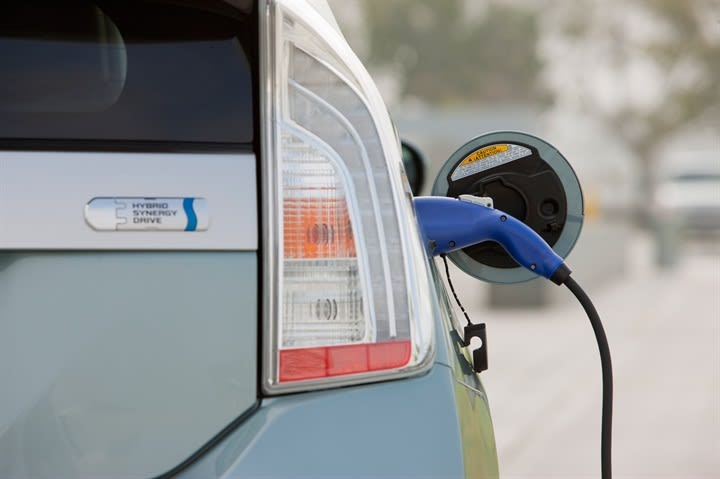
Photo via Toyota
8 min to read
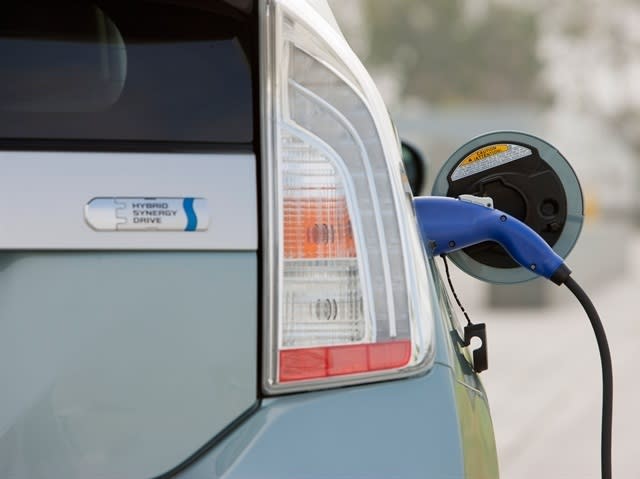
Photo via Toyota
Dave Head was the Sonoma County fleet manager for 26 years and an early adopter of hybrids and plug-in electric vehicles, including trucks. These days he recently co-authored a guide for fleets interested in adding EV’s with the Bay Area Climate Collaborative.
Head will be holding a session on his reference guide, "Ready, Set, Charge – The Fleet Manager’s Guide to Deploying Electric Vehicles" at the 2015 Fleet Technology Expo, held Aug. 24-26 in Long Beach, Calif. As part of the automotive fleet industry for over 45 years, Head has seen a lot of changes, but he tells us that hybrids and EVs might be the biggest game changer.
What is the biggest benefit to putting EVs in a fleet?
It really depends on the fleet. Different fleets are going to see different benefits. The key benefits are reduction in use of fossil fuels and second is putting in charging station costs a whole lot less than putting in a gas station. So you can put in regional refueling sites for a lot less money.
A third benefit is that in California and in many states, electrical power is cheaper and cleaner than gasoline or diesel fuel. You go on to other things like the cost of maintenance is less, the warranties on the vehicles are better. So as a fleet vehicle, depending on which of those factors or all of those factors that meet your needs, there could be a huge benefit to putting in an electric vehicle.
You ran the public fleet in Sonoma County for 26 years, when did you first implement EVs?
Well we have to take a step back. When I talk about electric vehicles I go back a little bit further than the Nissan Leaf or the Ford Focus. I go back to the battery-supported hybrid systems were produced in the early 2000's. We put our first hybrid vehicle in our fleet in 2002.
We put four of them in the fleet and we compared them against conventional vehicles that we bought that year. There was a positive return on investment. They were cheaper to maintain and cheaper to operate and they have better fuel economy. So the next year we put more in and the next year we put more in and by 2006 we made the decision that all vehicles in the fleet that could be supported by an electric-type drive vehicle would be replaced with an electric-type drive vehicle.
When plug-in hybrids started to become available in 2009 we converted 9 of our Prius’s to plug-in electric and we saw similar results with better fuel economy. When the Nissan Leaf came along we were one of the first fleets in California to put a Leaf in a fleet.
What prompted the movement towards hybrid and then EV vehicles in your fleet?
We started doing it because in 2002 and 2003 it was new technology and we wanted to learn about it. We thought this was a potential game-changer for fleets as hybrid vehicles were starting to move into the market.
But in 2006, Sonoma County was one of the first counties in the nation, certainly in California, to publish a climate protection plan. It was adopted by the board of supervisors that established mandatory reductions in carbon emissions in three areas — one was facilities, another was fleet and the third area was commute. So in that protection plan we had specific goals that we needed to meet.
We realized that the only way we were going to meet this was to get in some type of alternative fuel right away. After evaluating all the systems that were available to us in Sonoma County, we decided that the fastest way to make an impact was to go toward hybrid and electrification.
When you speak at FTX you will also be speaking to private fleets, what is the selling point for them?
Well it’s the savings and that’s the selling point for everybody. When we wrote the EV Fleet Deployment Strategies guide we wrote it specifically not to focus on government fleets but on all fleets because the same factors are there.
There’s fuel savings and reduced cost of maintenance but the other thing is that there is political value. When you’re in government, if the constituency sees you driving an environmentally friendly vehicle there is political value in that. Well, the same thing applies to business.
If a business is driving a Leaf or Focus or plug-in hybrid and they’ve got their logo on the side, you can use that to show the public that you’re doing the right thing. It could sway somebody who is saying ‘well there’s two businesses and business A is trying to do the right thing for the climate so I’m going to take my business there.’ There are things like that where it’s hard to put a dollar value on them but they do exist. So it has to be part of your consideration on how and where you deploy your vehicles so people know what you’re doing.
Because the technology is new, does that scare fleets from getting into it in the first place?
A lot of fleets have an operating process that is adverse to new technologies. They want to see it proven across a broader spectrum before they’re going to dive in. I’ve talked to people within the last year who are considering putting hybrid vehicles in their fleet. Well, hybrid vehicles have been around for 15 years and have proven themselves, they’re everywhere. But they’re still only considering it because it's a new technology.
It’s going to take time for fleets across the country to adopt the technology. In Sonoma County we’ve been in it long enough that we’ve done full lifecycles on the vehicles and at least in our fleet we’ve been able to prove through total cost of ownership that it was cheaper for us to own a hybrid vehicle.
Even though it costs more initially, the total lifecycle cost was less than a conventional vehicle bought that same year. The fuel costs and maintenance costs were less and the residual value was higher when we sold the vehicle. When you’ve put it all together at the end of life, we ran those 2002 hybrids for 7 years and they cost us about $2,000 less to own than a conventional vehicle.
Are there still difficulties related to infrastructure costs?
Infrastructure is a challenge. The cost of infrastructure varies greatly and there are a lot of factors to consider when you choose where to put infrastructure. Every municipal agency that does permitting and code enforcement seems to look at things differently. So until you’re ready to start developing the final plans and get a handle of the costs, its difficult to know how much an individual charging station or site is going to cost you to install.
One of the ways to mitigate that is pick sites where you can put in more charging stations so the cost per site goes down. All the development costs and permitting costs can be distributed over more charging stations. Sometimes you can do that, sometimes you can’t. I think as more agencies become familiar with the process — and it’s really not a whole lot more difficult than putting in any electrical circuit — then some of these things will negate themselves.
What about maintenance?
With cost of maintenance and total cost of ownership, we don’t have a hard number on cost yet because - especially in the case of EVs — we don’t have a full lifecycle complete yet. You can see that fuel costs are lower because you’re paying for electricity instead of fuel. The maintenance costs have also been lowered because you’re not having to do brakes as often or a tune up or oil change.
Suspension parts and tires is all you really have to worry about. The whole drivetrain is under a warranty, so if you have a problem, the dealer will take care of it. So maintenance costs are lower. But we don’t know what the resale value is going to be yet because we haven’t sold one.
Among industry experts you get varying opinions on whether resale value is going to be high or low. So until we start see EVs in the resale market we won’t be able to answer that part of the equation. That keeps some people out of the market because they don’t know and don’t want to take the chance.
And that’s what you explain in your guide?
In Sonoma County we proved it for ourselves but every fleet has to do their own experiment and see if it works in their application. That goes for all alternative fuels, although this book is focused on plug-in type vehicles, the same evaluation and analysis has to be done no matter what type of fuel you use.
Using the guidelines we talk about in the reference book you have to compare all of your different fuels and decide which ones work best in the application.
When you were with Sonoma you were an early adopter and now you’re bringing others along. Is this time in your career different because of all the innovations?
It’s very exciting. My opinion is that the switch to EVs and plug-in type vehicles is probably the most significant thing that has happen to the industry since, maybe, the automatic transmission. Certainly electric is another one of those major game changers.
It’s exciting to be upfront and to be talking to people that are doing these things or are interested in moving in that direction. It was a fun way to end my career as a fleet manager.
Do you have any advice for people who are going to the Fleet Technology Expo to hear you speak?
Come with an open mind and download a copy of the guide if you can before you come because I’m going to be going through it to hit the high points of the booklet. We wrote it as a working document so you are supposed to mark it up and put sticky notes on it and bend the pages as a reference. It’s not one you sit down to read before you go to bed.
Subscribe to Our Newsletter
More Articles

Is Keeping Older Fleet Vehicles Really Saving Money?
Is keeping vehicles longer saving money, and what happens when a diagnostic test points to the wrong fix?
Read More →
How Smart Fleet Strategy Can Help Local Government Agencies Do More with Less
Keeping a vehicle longer may ease this year’s budget, but what does it cost the next one? A closer look at fleet decisions can reveal opportunities to reduce spending while protecting essential services.
Read More →
Connect with Government Fleet on LinkedIn
From industry news and fleet management strategies to conversations with peers, Government Fleet's LinkedIn page offers public-sector fleet professionals another way to stay informed and connected.
Read More →
Now What Should We Do? Looking Beyond the Pinpoint Test
When a pinpoint test leads to a replacement that doesn’t fix the problem, technicians need to look beyond the instructions.
Read More →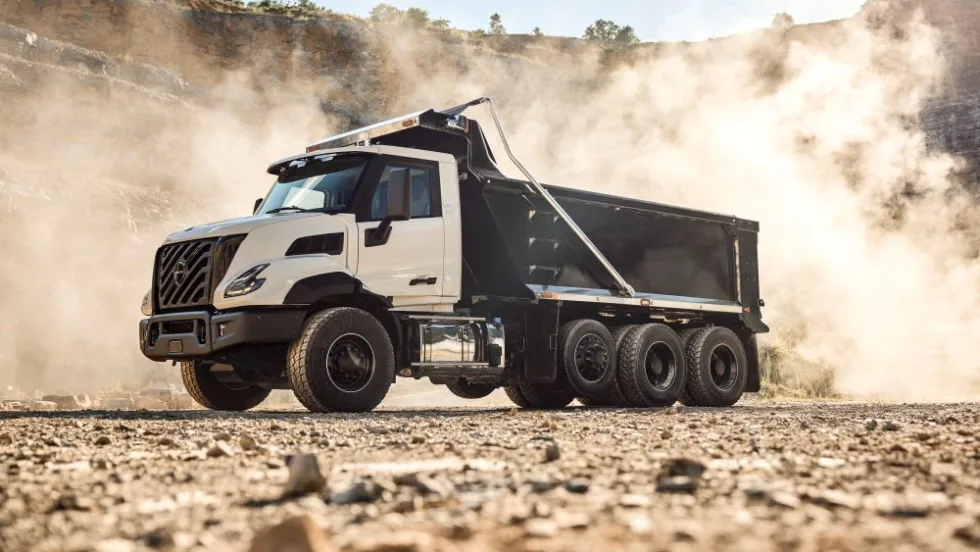
Volvo Trucks Unveils New Volvo VNX, a Vocational and Heavy-Haul Truck
The Volvo VNX features standard forward pedestrian detection that continuously scans for people in the truck's path, and optional blind-spot detection, now available on both sides.
Read More →
Town of Queen Creek Named Most Successful Fleet Award Winner of Inaugural RTA Fleet Success Awards
Five fleets were honored at RTA Connect 2026 in Chicago for excellence across resource efficiency, intentional culture, risk management, and stakeholder satisfaction.
Read More →
Sponsored•October 14, 2026
A buyer's guide to fleet management software in 2027
Buying fleet management software in 2027 means looking beyond features and price. As fleet operations, technology and expectations evolve, this guide explores what today’s fleet professionals should consider when choosing a system that can deliver value now and adapt to what comes next.
Read More →
Hazard Alerts, Fleet Car Sales Rise and a New Shuttle Concept
Fleet car sales doubled, but the bigger picture tells a different story in this week’s roundup.
Read More →
New Partnership Aims to Expand Public Digital Hazard Alert System Statewide
The Hawai’i Department of Transportation (HDOT) is expanding advance digital hazard alerts for the public statewide.
Read More →
How St. Johns County Turned Fleet Data Into Better Replacement Decisions
St. Johns County, Florida, had fleet data, but turning it into reliable decision guidance was another matter. Instead of starting over with a new fleet management system, the county connected existing tools and built a scoring system that gives managers an objective look at fleet health.
Read More →