




Use a Fleet Report to Brag About Your Operation
Use a ‘State of the Fleet’ report to promote your organization. Here’s what to include.

A "State of the Fleet" report allows fleets to tell others about their operations and accomplishments.
Image: Getty
As a fleet management advisory firm, many of our engagements are initiated because the fleet organization has historically done a poor job of communicating what it does and how well it does it. During a project kickoff meeting, it is not uncommon to hear that the organization brought in a fleet consultant because it didn’t know if the fleet operation was doing a good job. In these cases, the fleet department has done a poor job of communicating the value of the services it has provided and the accomplishments and contributions it has made to the overall organization.
At a Glance |
A fleet report can help:
|
Tell Your Customers What You Do
As an internal support organization, most fleet programs do not receive a lot of attention. When fleet customers are receiving quality service at an affordable price, they tend to appreciate the service in silence. It is only when repairs lag, quality is poor, or costs are high that the spotlight is brought on the fleet organization. Then the light shines on fleet with great intensity until the issue has been addressed and resolved, no matter how incidental, how elementary, or how complex.
Additionally, many do not understand or appreciate the complexity of fleet management. It is up to the fleet department to educate customers and others as to the many activities and business disciplines that are required to manage a fleet.
What to Include in a Fleet Report
One of the best ways to promote your fleet program is to develop an annual State of the Fleet report. Even in the age of instant information, these reports are a powerful promotion tool. It is an effective means of highlighting the vital role of the fleet organization. Used correctly, these reports can give your fleet program credibility and a higher degree of professionalism.
The State of Fleet report should, at a minimum, include information on recent performance, current issues and ongoing actions, and future initiatives.
Metrics to Include in Your Report |
|---|
|
Recent Performance
Provide the reader with facts and figures to demonstrate the performance of your fleet operation. Fleet customers these days can be exceedingly skeptical, so it is important to back up the information in your report with well-supported data that is clear and concise. Include key performance indicators for a wide variety of activities and your progress over time. Illustrate, for example, that fleet availability has improved each year for the past five years or compare your performance to industry standards and benchmarks.
Some activities that you may want to highlight include the total number of work orders completed, technician productivity, fleet availability rates by department or vehicle class, compliance with preventive maintenance schedules, average maintenance and repair turn-around times, the number of repeat work orders (comebacks), etc.
People who work in fleet management are skilled, hardworking, and goal oriented. Once a task or project is completed, they simply move on to the next problem. Commendable, of course, but many of these accomplishments are not visible to the casual observer or impact only a small portion of the customer base. Take time to document these accomplishments, whether it was implementing a new fuel management system, upgrading diagnostic tools in the shop, achieving personal or shop certifications, increasing the percentage of environmentally friendly vehicles in the fleet, or transitioning to an online parts ordering system.
Current Issues and Ongoing Actions
Let your customers know what is going on in the shop right now. Are there any major issues impacting operations? Are there special projects going on that strain operations? Are there instances of less-than-acceptable vendor performance? Is parts availability an issue?
Also, communicate major changes that have impacted the fleet organization, such as increasing the size of the fleet by 5% due to new initiatives by one of your customer departments or switching to a new fuel management system. Identify the impact on the fleet organization, technicians, and the fleet maintenance facility.
Future Initiatives
Make sure to inform customers and others about key initiatives planned for the upcoming year. These may include adding plug-in electric vehicles to the fleet and developing the charging infrastructure to support the new vehicles; developing a new fleet utilization policy that will require users to justify retention of low-mileage vehicles; or implementing a fleet advisory committee to help steer major fleet decisions in the future.
Think About Presentation
Remember, the value in developing an annual State of the Fleet report is to get the right information to the right people. While the content of the report tells the story, do not lose sight of how the information is presented. Data visualization is important to keep the reader engaged. Use charts and graphics to demonstrate your performance over time. This is a great way to portray large sets of data at a glance. Include tables to present information as opposed to wordy paragraphs. Use color to highlight important facts and figures. Include pictures, not just of vehicles but of the people maintaining the assets. This brings the human element to the report and provides a sense of community.
And don’t be afraid to have some fun with the report. Include interesting information about the fleet organization, the fleet industry, and people who work for the fleet organization.
A State of the Fleet report does not have to be a 20-page report that looks and feels like a research paper. Keep it short. For the best impact, hit the reader with the most important information first. This will grab his or her attention, and the person is more likely to read the entire report.
One final thought: While you should have the report professionally printed, make sure it is also available on your website and can be read on a mobile device. Include links to important information such as fleet policies, requests for service, frequently asked questions, etc.
About the Author:
Tony Yankovich is a senior manager at Mercury Associates, a fleet management consulting firm.
Related: Federal vs. State & Local Fleets
More Operations

How St. Johns County Turned Fleet Data Into Better Replacement Decisions
St. Johns County, Florida, had fleet data, but turning it into reliable decision guidance was another matter. Instead of starting over with a new fleet management system, the county connected existing tools and built a scoring system that gives managers an objective look at fleet health.
Read More →
Fleet Forward Conference Introduces One-Day Passes for 2026
New one-day registration lets fleet professionals attend Tuesday, Wednesday, or Thursday, with passes available for $249.
Read More →
ENC Unveils its ZAVIR Medium-Duty Shuttle
Two variants of the concept shuttles were revealed: a low-floor configuration and a high-floor configuration.
Read More →
Could Your Next Fleet Technician Start as an Intern?
What if your next technician hasn’t worked in a fleet shop yet? What fleets are doing to free up time.
Read More →
How Phoenix Is Building Its Next Generation of Fleet Technicians
With more than 8,000 vehicles and pieces of equipment to maintain, the City of Phoenix could not afford to wait for fully trained technicians to walk through the door. Instead, they revamped their entire workforce strategy and showed how public fleets can create their own talent pipeline while preparing existing employees for increasingly complex vehicles.
Read More →
What’s Slowing Your Fleet Down?
Could a change in how work gets done help your fleet return vehicles to service sooner?
Read More →
Can Public Fleets Trust the Data Driving Their Decisions?
Public fleets have more data than ever, but inconsistent records and missing information can still undermine maintenance, replacement, and cost decisions.
Read More →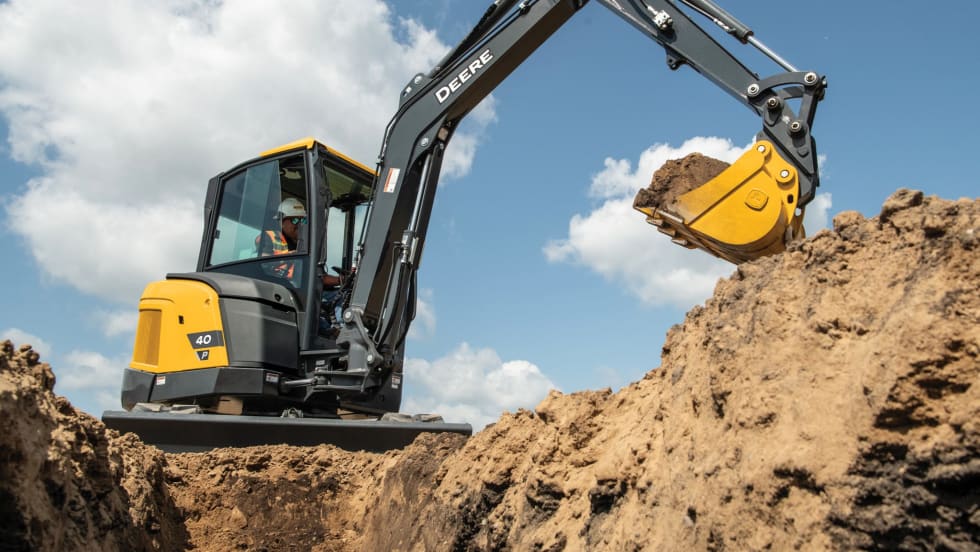
John Deere Introduces 40 P-Tier Compact Excavator
John Deere is adding a compact excavator designed for crews that need to move equipment between jobsites and handle multiple types of work with one machine. The 40 P-Tier weighs less than 10,000 pounds and offers configurable hydraulics, attachment options, and connected fleet-management capabilities.
Read More →
How Leading Fleets Improve and Why Business Plans Matter
This week, we look at what past Leading Fleet winners can teach us about making progress, plus how to build a business plan your fleet will actually use.
Read More →
Nominate a Fleet Leader for the 2027 Public Fleet Hall of Fame
Do you know a fleet leader who has made a lasting impact on the industry? Nominate this fleet professional for the 2027 Public Fleet Hall of Fame.
Read More →