





Each year Government Fleet invites public-sector fleet management professionals to nominate their peers for our Public Fleet Manager of the Year award, given at Government Fleet Expo and Conference.
Lessons Learned from 2023 Award Winner, Sara Burnam
Burnam, who was named the 2023 Fleet Manager of the Year, discusses her journey to the public sector, challenges in the industry, and plans for the fleet's future.
June 23, 2023
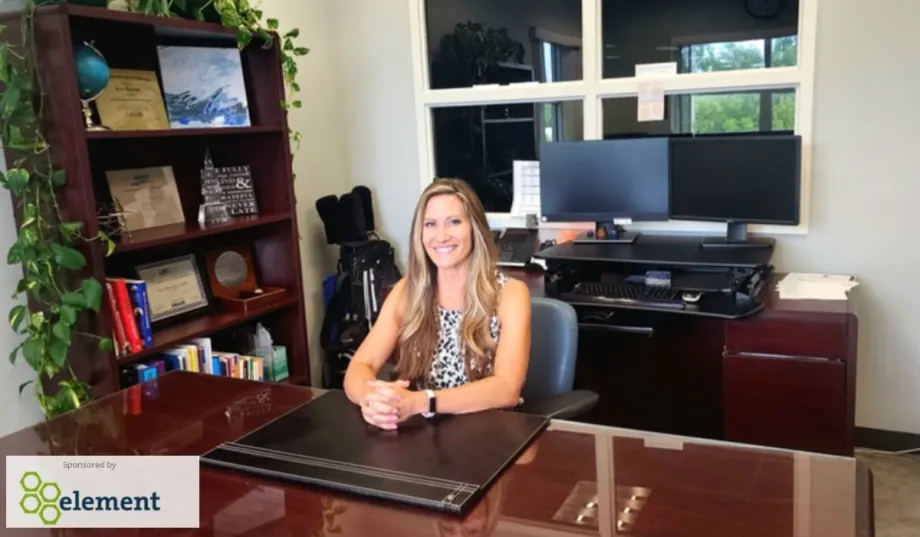
Sara Burnam, fleet management director for Palm Beach County, Florida, was named the 2023 Public Sector Fleet Manager of the Year.
Photo: Palm Beach County
6 min to read
Every fleet manager's story is unique to them. The industry a fleet manager operates in plays a crucial role in shaping their path. External factors such as technological advancements, evolving vehicle trends, and environmental concerns continually reshape the path, requiring fleet managers to adapt and innovate.
It's the ability to navigate these challenges and develop a successful path for the fleet that makes a Fleet Manager of the Year.
Industry Profile: Fleet Management Director Sara Burnam
We caught up with this year's winner, Sara Burnam, MSL, CAFM, fleet management director for Palm Beach County, Florida, to break down her journey in fleet.
Tell us about your journey into fleet and what first set you down this career path.
I started working at a Goodyear Auto Service Center all through college. Through that opportunity, I had built relationships with fleet personnel who worked for companies that outsourced their maintenance to us, and I became interested in working in fleet. I watched for a fleet management position to become open, and obtained a position with the Ohio State Highway Patrol as the office supervisor.
The fleet manager and assistant fleet manager were retiring within the next five years and they wanted to train someone to take over their roles as they moved on. Through that opportunity, I instantly fell in love with fleet, as it is highly data and analytics-driven.
What has been the biggest challenge in your role and how have you worked to overcome this?
My biggest challenge so far has been myself. In 2015, I was hired as the assistant director of fleet management for Palm Beach County. I moved across the country to Florida, alone, not knowing anyone. The previous director was well-known in the industry and had established a nationally recognized program. I was feeling a bit of Imposter Syndrome and found myself questioning my ability to make a program better than what had already been established.
In 2017, I was promoted to director of fleet management, after the director had left. I felt an enormous sense of responsibility and wasn't going to let my self-doubt stand in the way. I then began meeting with all of our team members to obtain feedback on our strengths and weaknesses, learning about our different processes, and looking at what we do with a fresh perspective. Through this process, areas to make impactful changes were identified.
Some of those changes we implemented were lowering some of our cost recovery rates for our customers by changing the rate structure, completely changing the way we operate with the elimination of paperwork orders and information system enhancements, simplifying processes for customers by creating electronic work requests and providing a centralized location for all things fleet, creating a lifecycle cost analysis system for every asset, increasing tool allowances and ASE Certification incentive rates, and the development of an employee recognition program.
I learned that not all companies, programs, or teams are perfect, and there are always ways to improve, exceed goals, reduce costs, or be more efficient. That is what is so exciting about fleet, process improvement is never-ending.
What is your message to other women who might be interested in this career? What should they do first if they want to follow a similar fleet path?
My favorite quote is “Life begins at the end of your comfort zone,” Neale Donald Walsh. So if you’re interested in a similar career, find a way to get your foot in the door through any of the many aspects of the industry (purchasing, finance, analytics, repair and maintenance, administration, etc.).
If you love it, take one step at a time to learn about the field as much as you can, be a go-to problem solver (the kind that will find the answer, even if you don’t have it), obtain relevant certifications, be open to and seek constructive criticism, continue to learn throughout your career (get involved in the industry and attend events), make connections with other industry managers, and develop a support system.
Also, finding a mentor is key. During my career at the Ohio State Highway Patrol, one of the first female civilians to get promoted as a manager took me under her wing, and was instrumental in my professional development.
What are your future goals for your fleet and how are you accomplishing that?
The technician shortage will continue to be a challenge, and we are often finding ourselves hiring those less experienced and training them up. In addition, the technology going into vehicles is changing rapidly and certain team members were skilled in one area but lacked in another.
To combat this, we created an assessment and training coordinator position. This position will be responsible for assisting in assessing individual training needs to prescribe a personal development plan for each technician. Our goal is to train our staff to be proficient in all technical areas pertaining to the areas that they work in, so that everyone is as productive as possible. By creating the improvement programs, all team members will be able to reach their full potential and something to strive for in the future.
What do you enjoy most about working with your team?
Everyone comes from varying cultures, backgrounds, generations, and experiences; and with that, comes different ideas for improvement and viewpoints to help us improve as a team. Ideas for change, should not be just coming from the leader, and his or her limited viewpoint and experiences.
How do you manage your leadership role? (i.e. staying on top of what needs to be done, communication, employee feedback, etc.)
Managing competing priorities is a complex task but that’s part of what makes working in fleet management fulfilling. Every day I am pulled in several different directions and keep a log of everything that needs to be accomplished at my level. Early in my career, I attempted to do everything myself. If there was an issue I needed to solve it!
At one point, as the fleet office supervisor, I was filling the roles of three people (the fleet manager, the assistant fleet manager, and the shop manager), who all happened to have retired at the same time. I wanted to prove myself and felt like I had to do it all, as I hadn’t yet established a rapport with the managers above fleet and wanted to get be chosen for a promotion. Through that process, I learned that I can’t do everything myself, and that delegation is key.
Not only is it necessary, but it helps your team grow and develop in their own roles. As a leader, I have to decide what is necessary for me to handle, and what should be handled by our team members. I also love to find new projects or opportunities to challenge team members that might be just outside their comfort zone and watch them grow.
What do you think are the biggest challenges for fleets overall and what needs to happen for fleets to be able to overcome that challenge?
I think vehicle delivery delays are going to continue to be a challenge. Fleets need to be creative and revisit how they purchase their vehicles. You should be looking at your purchase processes and how they need to change to accommodate.
Should you change when you place the order and look at long-term plans based on manufacturer lead times? Should you look at fleet management companies or other suppliers that may have better access to vehicles? Should you consider buying used vehicles? Is leasing an option? Is your fleet right-sized to begin with (do you have too many or can you go to pool vehicles)?
I am not suggesting any of these ideas are the right answers, but these types of things should be reviewed to see if they are right for your fleet.
Subscribe to Our Newsletter
More Operations
Could Your Next Fleet Technician Start as an Intern?
What if your next technician hasn’t worked in a fleet shop yet? What fleets are doing to free up time.
Read More →
What’s Slowing Your Fleet Down?
Could a change in how work gets done help your fleet return vehicles to service sooner?
Read More →
Can Public Fleets Trust the Data Driving Their Decisions?
Public fleets have more data than ever, but inconsistent records and missing information can still undermine maintenance, replacement, and cost decisions.
Read More →
How Phoenix Is Building Its Next Generation of Fleet Technicians
With more than 8,000 vehicles and pieces of equipment to maintain, the City of Phoenix could not afford to wait for fully trained technicians to walk through the door. Instead, they revamped their entire workforce strategy and showed how public fleets can create their own talent pipeline while preparing existing employees for increasingly complex vehicles.
Read More →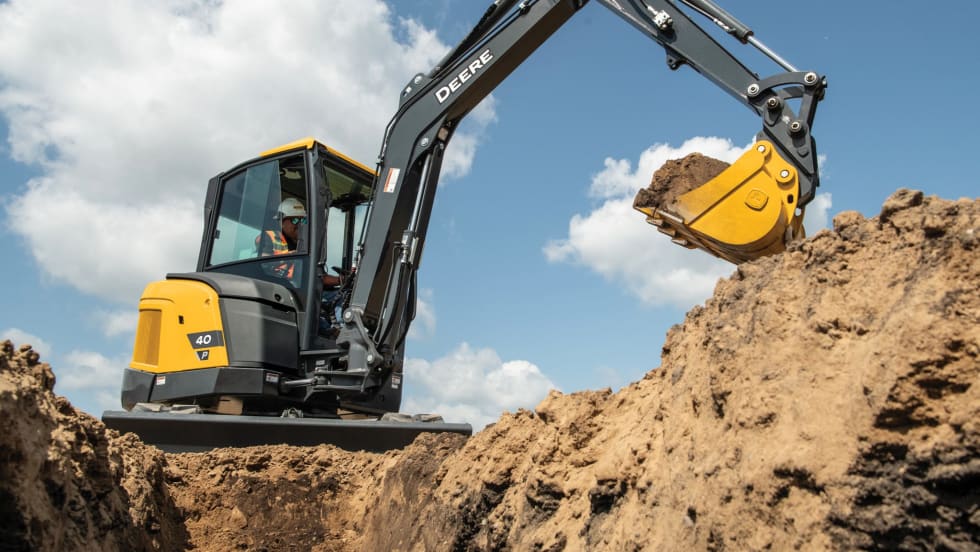
John Deere Introduces 40 P-Tier Compact Excavator
John Deere is adding a compact excavator designed for crews that need to move equipment between jobsites and handle multiple types of work with one machine. The 40 P-Tier weighs less than 10,000 pounds and offers configurable hydraulics, attachment options, and connected fleet-management capabilities.
Read More →
How Leading Fleets Improve and Why Business Plans Matter
This week, we look at what past Leading Fleet winners can teach us about making progress, plus how to build a business plan your fleet will actually use.
Read More →
Nominate a Fleet Leader for the 2027 Public Fleet Hall of Fame
Do you know a fleet leader who has made a lasting impact on the industry? Nominate this fleet professional for the 2027 Public Fleet Hall of Fame.
Read More →
Why Fleet Business Plans Need Three Perspectives
A fleet business plan should help agency leaders understand the fleet’s value, give the organization a clear direction, and establish shared expectations with customer departments.
Read More →
How Oil Analysis, Safety Technology, and Fleet Awards Drive Improvement
What happens when fleets let measured results guide their next decision?
Read More →
Emergency Response, Fleet Sales and New Technology
This week’s fleet news covers emergency preparedness, shifting vehicle sales, electric truck investments, and new tools for monitoring road conditions.
Read More →