Better data use, better parts management, and better technician training and advancement programs are some of the improvements the City of San Jose, Calif., has made in the past few years.
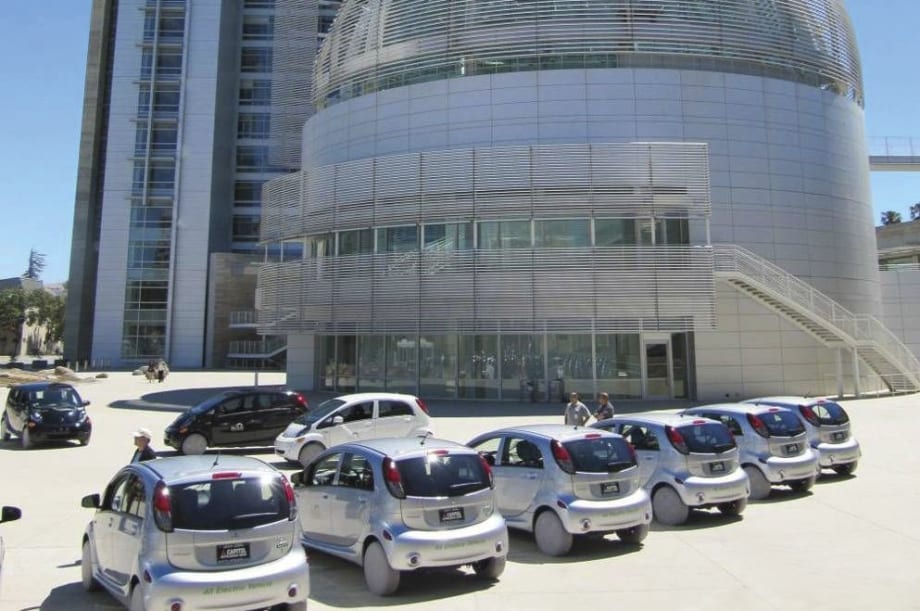
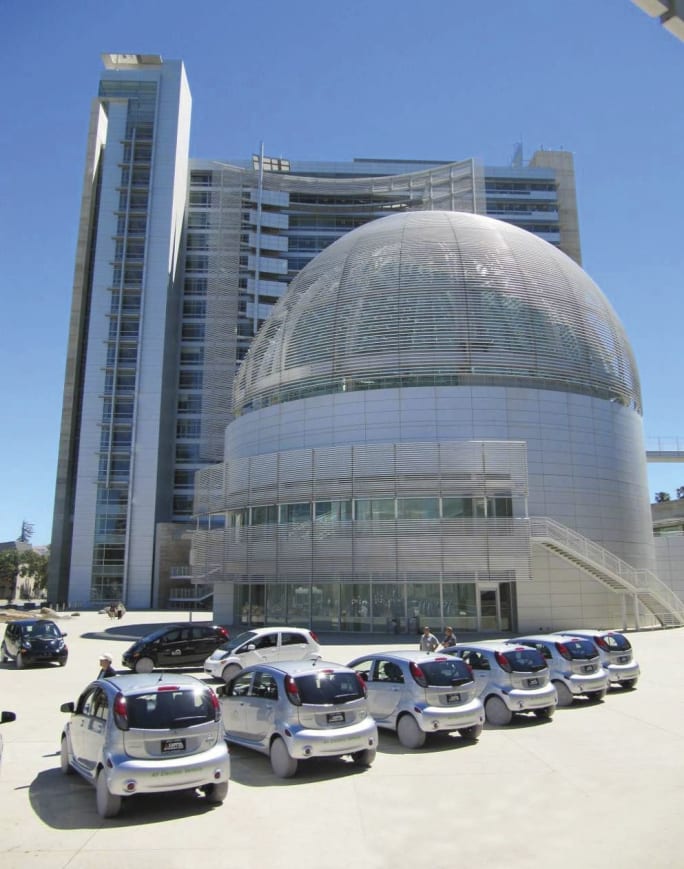
About half of San Jose’s fleet uses some form of alternative fuel, including its fleet of electric vehicles.
Photo courtesy of City of San Jose
The City of San Jose sits at the heart of Silicon Valley in Northern California. It’s the Santa Clara County seat, one of the most affluent counties in the United States. But that doesn’t mean it wasn’t affected by the Great Recession.
Fleet Manager Dan Sunseri talks about how the fleet is recovering, and the steps fleet management has taken since then to rebuild staffing, utilize data more effectively, improve its parts operation, and use telematics.
Ad Loading...
At a Glance
Fleet staff at the City of San Jose, Calif., has improved operations by:
Revamping the parts operation
Making data more accessible to staff and user departments
Continuing an apprenticeship program that helps with hiring technicians
Using telematics to study utilization, safety, and idling data.
Apprenticeship Program Keeps the Fleet Staffed
Sunseri attributes the fleet’s improved mechanic retention to its “fantastic” apprenticeship program. The program is a collaboration between the community college, the city, the state’s Department of Industrial Relations, and the local union.
Nearly all mechanics start at the city as mechanic assistants, even if they have prior experience elsewhere. Mechanic assistants can apply for apprentice mechanic positions. The four-year apprenticeship program provides 6,000 hours of on-the-job training and a full curriculum of more than 20 classes. Graduates get a certificate from the union, a journey-level mechanic card from the state, and a promotion within the fleet department.
“When the economy took a dip, there were pay cuts across the board. It was a big hit for a lot of people,” Sunseri said. “It was a good thing we had the program.”
The program allowed equipment maintenance supervisors David Mesa and Steven Brasil to continue recruiting people at entry-level positions, which was especially important as mechanics left for other opportunities or retired.
While the current program has worked well and will continue, fleet management is working to reclassify mechanic positions to provide more paths for advancement, offer greater career opportunities, and continue to stabilize staffing levels.
In recent years, fleet management set a goal to improve its multi-facility parts operation, which included exploring outsourcing options. Although this has worked for other organizations, fleet management instead improved its parts program through staffing changes and innovation.
Under the leadership of Mario Razo, then mechanical parts supervisor, fleet management expanded parts staff from three people to five, hiring parts professionals from the private sector. They locked down the parts room, made sure all transactions were captured, and instituted a parts request module that’s integrated with the AssetWorks fleet management information system (FMIS). The system allows technicians to order parts directly from their workspaces, and it notifies technicians when those parts are available, or parts staff will bring the parts out to them, Sunseri said. In addition, using data to analyze and set min/max levels and have quality parts suppliers with sound agreements in place improved fill rates.
“Every year, we do an annual physical inventory. We would pull staff from the floor to help with that process, taking away productivity from [technicians] working on vehicles,” Sunseri added. “The system and the parts rooms are so organized that Mario is able to have his staff do inventory in far less time than the previous process and not lose productivity on the shop floor.”
One of the performance indicators fleet management tracks is shrinkage, and this year, the parts room recorded 0% shrinkage.
KEY STATS
2,750 assets managed/maintained
7 fleet facilities
62 full-time employees
$17.6 million operating budget
1.4 million gallons of fuel dispensed annually at its fuel sites
$120/hour fully burdened labor rate
Using Data Effectively
Sunseri said having two IT staff members in fleet has been essential. These two staff members, Uyiosa Oviawe and Jonathan Pham, worked with the city’s IT department to create different tools using the FMIS.
Ad Loading...
One of these is the police parking dashboard. Patrol vehicles are assigned certain beats, rather than with officers. Each vehicle has an assigned parking space, and the virtual dashboard allows officers to see how many and which vehicles are available for them to use. The data is captured and updated in real time through shop work orders and vehicle telematics. Once a work order is opened or if a vehicle is off-site, the dashboard shows the vehicle as not available.
“Fleet staff used to manually log that activity and assign those cars. Resources are redirected to do more work on the shop floor,” Sunseri said. This program is an interface of more than three information technologies — FMIS, telematics, and a display software — and is an example of staff innovation to create operational efficiency, he added.
The virtual whiteboard is another dashboard that replaces a traditional physical whiteboard staff members had to update manually with dry-erase pens. It shows vehicles that are in the shop, how many days it has been in the shop, the technician working on the vehicle, and its status. And as in the case of PD parking, the virtual whiteboard is updated automatically as work orders are open, work finished, or closed.
Other dashboards include a central command dashboard and a lifecycle costing dashboard that shows where vehicles are in their lifecycle in terms of optimal replacement points.
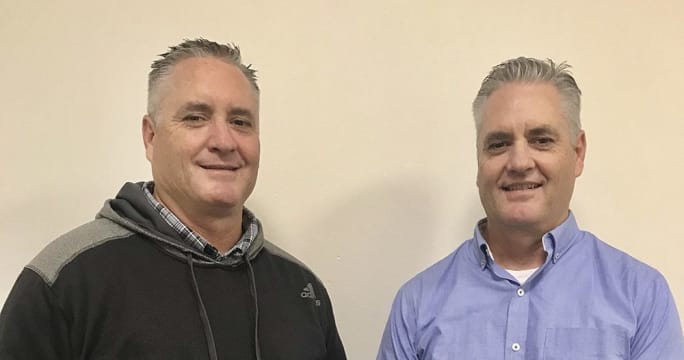
In the family: Dan Sunseri (right) worked with his twin brother until this year. Don Sunseri (left) was the fleet’s senior automotive equipment specialist. The brothers both reported to the deputy director of public works, and Don retired in August.
Photo courtesy of Dan Sunseri
Expanding Telematics Use
San Jose has Verizon Connect telematics installed in 500 fleet vehicles. Dan Sunseri, fleet manager, said the information provided by telematics has allowed fleet management to measure idling, accurately track utilization, monitor vehicle performance, and view safety trends.
Ad Loading...
“Let’s say a department has 80 vehicles, and it wants to add five more. It gives you the ability to look at the existing fleet size and how often the vehicles are used, and with data make much better decisions [based] on the true need,” he said.
Telematics allows fleet management to avoid doing smog checks on the vehicles with the devices installed. San Jose is participating in the California Bureau of Automotive Repair’s (BAR) Continuous Testing Program. The devices continually send smog information to the BAR, and these vehicles don’t have to be tested. Location tracking has also proved to be useful. Recently, the city recovered a stolen truck trailer and mower with its telematics devices.
“We want to roll it out on the entire fleet. Our goal would be to put it on everything,” Sunseri said. “I think it’s the only way for us to accurately track fleet activity and effectively manage the fleet.”
St. Johns County, Florida, had fleet data, but turning it into reliable decision guidance was another matter. Instead of starting over with a new fleet management system, the county connected existing tools and built a scoring system that gives managers an objective look at fleet health.
With more than 8,000 vehicles and pieces of equipment to maintain, the City of Phoenix could not afford to wait for fully trained technicians to walk through the door. Instead, they revamped their entire workforce strategy and showed how public fleets can create their own talent pipeline while preparing existing employees for increasingly complex vehicles.
Public fleets have more data than ever, but inconsistent records and missing information can still undermine maintenance, replacement, and cost decisions.
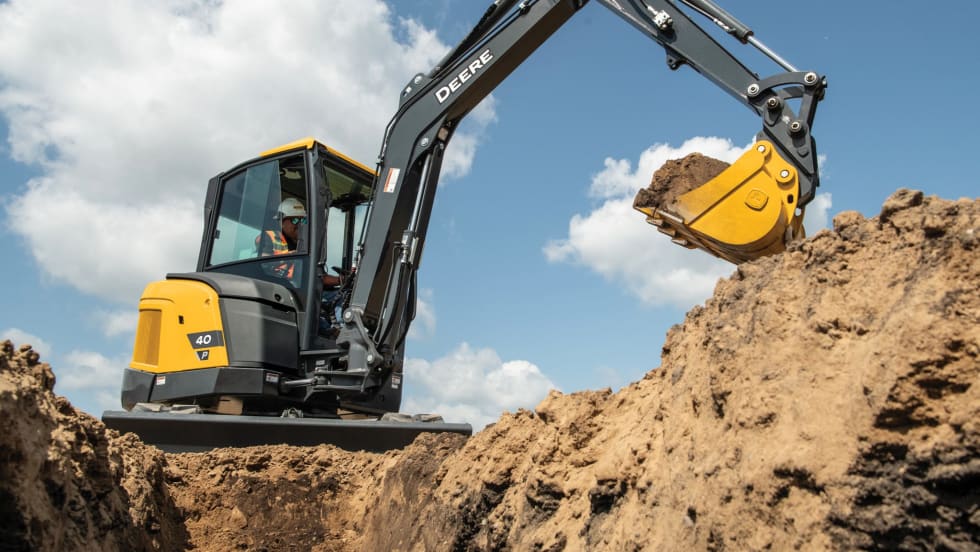
John Deere is adding a compact excavator designed for crews that need to move equipment between jobsites and handle multiple types of work with one machine. The 40 P-Tier weighs less than 10,000 pounds and offers configurable hydraulics, attachment options, and connected fleet-management capabilities.
This week, we look at what past Leading Fleet winners can teach us about making progress, plus how to build a business plan your fleet will actually use.