


At a glance
New York City’s fleet mobility program allows employees to:
Rent cars from a private company for short-term use
Rent cars from the city fleet, which is important when branded vehicles are needed
Rethink the way they use city vehicles.
 MENU
MENU SEARCH
New York City is redefining the role of fleet, with programs that encourage rental for short-term use and intermittent projects instead of permanent assigned vehicles.


New York City is redefining the role of fleet, with programs that encourage rental for short-term use and intermittent projects instead of permanent assigned vehicles.
Photo: Getty Images
What’s the role of fleet in government? Is it as a procurer and distributor of cars or is it a supplier of transportation solutions? As the auto industry as a whole evolves to embrace mobility, New York City is doing the same, with a goal of moving toward being a transportation solution.
Since 2012, the city’s Department of Citywide Administrative Services (DCAS) has found success in its Car Share and Fleet Share programs, which allow city employees to rent vehicles for short-term use or intermittent projects instead of requesting a permanent fleet vehicle.
By making vehicles available when needed, New York City’s DCAS is teaching employees that owning vehicles is not necessary, especially in a major metropolitan area where it is not always practical.
“We shouldn’t be about ‘How do I get this unit or division a car because they want a car?’ We should be about ‘Where do you need to go and how do we get you there?’ And if we can get you there without a full-time car assignment, that’s a lot better,” explained Keith Kerman, chief fleet management officer.
The city contracts with a private car rental company for its Car Share program. City employees can sign up for the program and rent vehicles to accomplish jobs, which is especially helpful when emergencies arise. This offers a more practical option than buying new cars for a short-term need.
“Obviously we’re scaling up tremendously in these emergencies but then you’re scaling down hopefully a couple of weeks later,” Kerman said. “When we have the big snowstorms or when we had Hurricane Sandy, we were able to use Car Share for short-term expansion to move people.”
The Car Share program has found success, but it has its limitations. Renting a private vehicle is not an option for all jobs — including those that may need special plates or permits to enter restricted areas, or those that may require lights and sirens.
“A Parks Department vehicle can go into a park space by rule and operate within a park space, but no private vehicle can do that even if it’s operated by a parks employee,” Kerman explained. “We wanted to be able to combine the benefits of car sharing — optimization, sharing, understanding the real use of vehicles — but be able to do that while still having the benefits of officially plated city vehicles.”
DCAS’ Fleet Share program uses the same technology as the Car Share program. Employees reserve a vehicle online and use a key card to check it out in person.
About 800 vehicles are part of the Fleet Share program. When the program began in 2012, vehicles were assigned to (and branded for) specific departments for employees of those departments to use.
Two years ago, DCAS expanded the program with a fleet of 50 city-branded battery-electric sedans available for any city employee to use. The shared fleet is now up to 70 Chevrolet Bolts.
In total, the agency plans on reaching 1,000 shared vehicles in 2019.
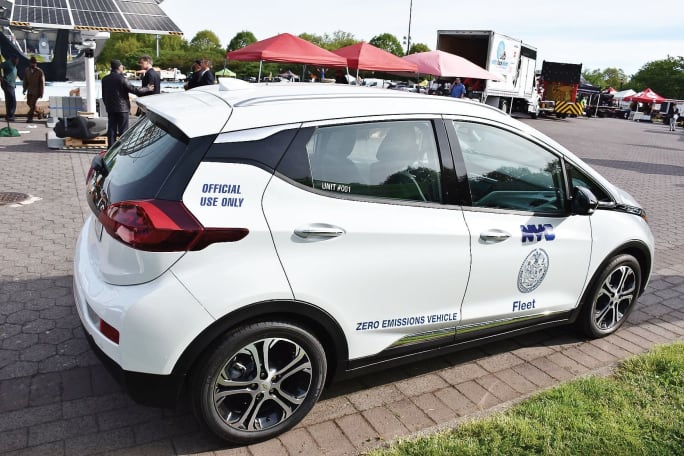
New York City employees in need of a vehicle have the option to use a private vehicle from a rental company or a city-branded vehicle from the city’s shared fleet.
Photo courtesy of New York City
In his current role, Kerman runs into a problem a lot of fleet managers may face: convincing customers they don’t need more vehicles.
“We’ll get agencies saying ‘We need more cars’ and I’ll look out the window from my meeting with them and there will be 100 cars sitting in a parking lot,” he explained. “There are a lot of applications where I don’t need 10 cars. I need five shared cars. And we see that all the time, frankly. I often say that you don’t have a car problem, you have a sharing problem.”
Kerman noted that this program is a top-down change, and it’s something that employees are still getting used to.
“It’s an enormous cultural change — you don’t get a key to your car anymore, you get a card key, you go online to reserve a car like you might a conference room. But there is a real need to break the pattern of fleet as fleet ownership — I get a fleet vehicle whether I use it or not, whether I need it or not.”
The program is growing — in the 2017 calendar year, 95 agencies or divisions used the Car Share program, up 72% from the year before.
Moving forward, DCAS plans to reduce its fleet of assigned vehicles and add more vehicles to its Fleet Share program, with an emphasis on fuel-efficient vehicles.
A local law requires DCAS to issue annual reports on the Car Share and Fleet Share efforts. In this report, DCAS shares the latest numbers on the program, including how many vehicles are used, how many employees are participating, any changes made in the last year, and any plans for future initiatives.
Kerman said DCAS continues to collect data on the program and determine the optimal levels of vehicle usage. This includes what percentage of cars are reserved and what percentage of reservations are filled.
The department is also interested in expanding the program to include more options than light-duty vehicles. But this can come with more challenges.
“Could we share cargo vans? Could we share rack trucks? Could we share bucket trucks?” Kerman asked. “When you get into agency technical operations, there are lots of legitimate operational issues and logistical issues. But we are interested in the ability to go beyond passenger vehicles and into our work trucks.”

St. Johns County, Florida, had fleet data, but turning it into reliable decision guidance was another matter. Instead of starting over with a new fleet management system, the county connected existing tools and built a scoring system that gives managers an objective look at fleet health.
Read More →
New one-day registration lets fleet professionals attend Tuesday, Wednesday, or Thursday, with passes available for $249.
Read More →
Two variants of the concept shuttles were revealed: a low-floor configuration and a high-floor configuration.
Read More →
What if your next technician hasn’t worked in a fleet shop yet? What fleets are doing to free up time.
Read More →
With more than 8,000 vehicles and pieces of equipment to maintain, the City of Phoenix could not afford to wait for fully trained technicians to walk through the door. Instead, they revamped their entire workforce strategy and showed how public fleets can create their own talent pipeline while preparing existing employees for increasingly complex vehicles.
Read More →
Could a change in how work gets done help your fleet return vehicles to service sooner?
Read More →
Public fleets have more data than ever, but inconsistent records and missing information can still undermine maintenance, replacement, and cost decisions.
Read More →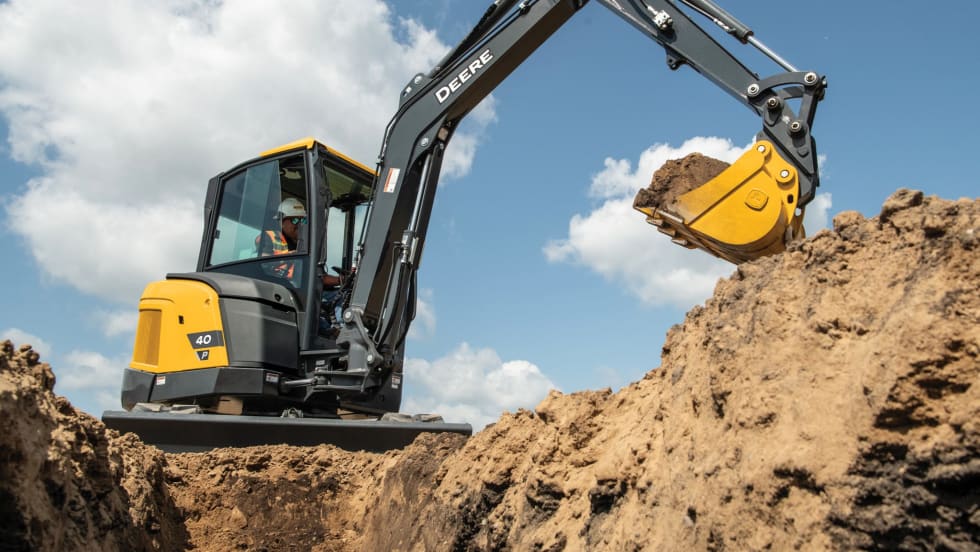
John Deere is adding a compact excavator designed for crews that need to move equipment between jobsites and handle multiple types of work with one machine. The 40 P-Tier weighs less than 10,000 pounds and offers configurable hydraulics, attachment options, and connected fleet-management capabilities.
Read More →
This week, we look at what past Leading Fleet winners can teach us about making progress, plus how to build a business plan your fleet will actually use.
Read More →
Do you know a fleet leader who has made a lasting impact on the industry? Nominate this fleet professional for the 2027 Public Fleet Hall of Fame.
Read More →