





Efficient Fleet Maintenance Means Few Communication Breakdowns
How Fleets Can Create a Better Culture of Shop Safety
Shops must adopt a ‘culture’ in which safety is of top importance, according to experienced fleet managers.
May 11, 2024
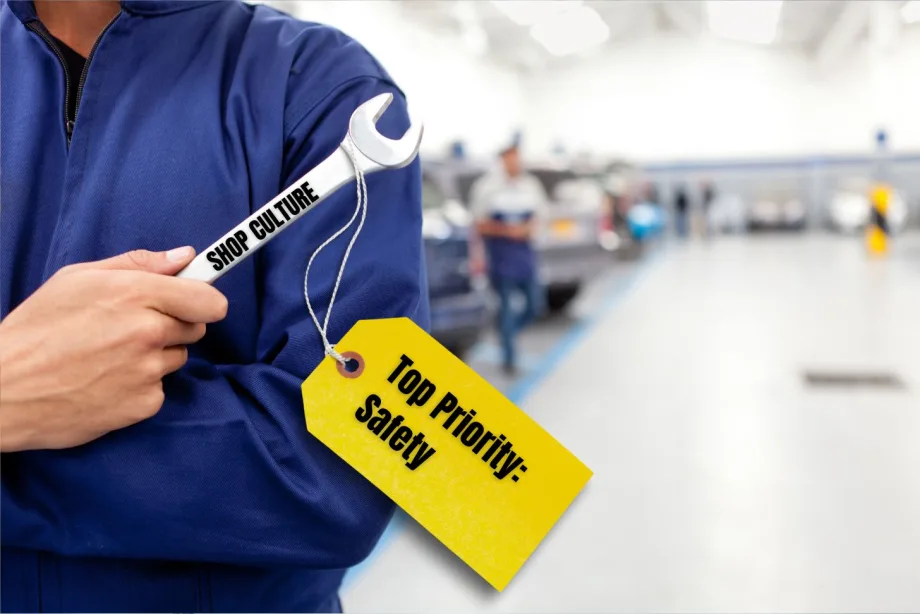
Shops must adopt a ‘culture’ in which safety is of top importance, according to experienced fleet managers.
Photo: Government Fleet
4 min to read
The city of Glendale, Arizona, fleet management safety program includes three main components: employee safety, equipment safety, and environmental safety.
For that latter component, the city’s environmental team inspects the fleet maintenance facility once a year, checking for anything that could be an environmental hazard. To prepare for that, members of the Fleet Management team track areas such as fuel, oil, batteries, and filter disposal to ensure environmental compliance.
“So it really keeps us in check as far as what we need to be doing on a daily basis, not just trying to pass some inspection that’s happening at the end of the year,” said Craig Croner, CPFP, the city’s deputy director of field operations.
Implementing a Fleet Safety Program in Your Organization
The city of Knoxville, Tennessee, fleet department director of fleet services, Nicholas Bradshaw said his department’s safety approach is about creating a culture of “being intentional” every day, and then also implementing “a robust compliance operation.”
A safety program can’t just be about compliance, he said. “I feel like that’s not sufficient because you’re checking the box, ‘I don’t want to get caught, I don’t want to have a violation,’ but that’s not the same as having a safety
culture,” Bradshaw said. “We’re trying to prevent injuries, which is the real name of the game, so it’s both things. It’s creating a culture of being intentional and it’s about compliance.”
Creating a Culture of Shop Safety
In addition to environmental safety and driver safety, equipment safety is another prong of the city of Glendale, Arizona, shop safety program. New technicians must complete several hours of safety training before they are allowed on the floor.
They must also get certified in forklift operation in certain jobs. Technicians undergo overhead crane training as part of their onboarding, and shop floor hoist training is required annually.
“We haven’t had any significant incidents since I’ve been here, and I think we run a very safe operation because of some of the training and employee awareness that we put into place,” Croner said.
Bradshaw, who oversees about 1,700 vehicles and pieces of equipment for the city of Knoxville, oversees four maintenance shops and believes that “shop safety is critical.”
“Our mission is to send everybody home at the end of the day as good or better than they were when they got there,” he said. “That’s part of running a workplace, so safety is a critical part of that.”
A dedicated safety manager for the city helps the department conduct mock OSHA inspections.
“It's creating a culture of being intentional, and it’s about compliance" Knoxville, Tennessee, Fleet Department Director of Fleet Services Nicholas Bradshaw
“There are great vendors out there that we’ve contracted with, and they can do a full-on OSHA report as good as the OSHA inspector can,” Bradshaw said, adding that the department tries to conduct those once per year.
OSHA surprise inspections are important, because “they help folks stay on the ball more consistently,” he said.
But planned inspections are also important, because the preparation for them is important, he said.
“We’ll say, ‘On this date, we want everything to be in ship shape,’ and then everybody knows what it takes to be in ship shape, so that has its own value,” he said.
A department is more likely to get hit with violations during surprise inspections, and that keeps staff members on their toes, he said.
OSHA violations tend to be fairly consistent, with common ones involving liquids, Bradshaw said. Inspectors check if fluids are stored and labeled properly and if walk areas are free of debris. But OSHA can’t have inspectors at the fleet shop all the time, so planned non-OSHA inspections are important.
“You’re sort of responsible for your own compliance, and I think it's helpful to be as close as possible to real-life OSHA inspections on a regular basis and then sharing the results with the team,” Bradshaw said. “So we either do that internally with our risk department or we will get outside folks just to get the diverse perspective of what other folks might think of our environment.”
And he believes communication is a key aspect of shop safety, expanding on the toolbox talks that he says are one-page lessons.
“We assembled all those in some three-ring binders,” he said. “They are supposed to be five minutes or so, and each shop has its own binder. The supervisor is in charge, but sometimes other members of the crew will actually help deliver the lesson.”
Bradshaw describes his approach to safety as “two-pronged,” with the first prong being about “creating a culture” of safety. The second is to have a “robust compliance operation.”
But having a compliance operation doesn’t work well without that safety culture, he said. “We’re trying to prevent injuries, which is the real name of the game, so it’s both things,” he said. “It's creating a culture of being intentional, and it’s about compliance.”
Subscribe to Our Newsletter
More Safety
New Partnership Aims to Expand Public Digital Hazard Alert System Statewide
The Hawai’i Department of Transportation (HDOT) is expanding advance digital hazard alerts for the public statewide.
Read More →
New York City Expands Safety Technologies Across Municipal Fleet
Executive Order 19 moves intelligent speed assistance and pedestrian alerts from pilot programs toward standard fleet equipment, offering other public fleets a look at how safety technology can be tested, measured, and scaled.
Read More →
Sponsored•August 10, 2026
Hidden in Plain Sight: Fleet Compliance Risks
Fleet compliance isn't just about having policies — it's about consistently enforcing them. This practical guide reveals six hidden compliance risks common in public sector and shared fleet operations and outlines proven strategies to improve visibility, accountability, and audit readiness.
Read More →
5 Days Left to Submit Your 2026 Fleet Safety Award Nomination
Know a government fleet, safety, or risk manager who deserves recognition for making fleet operations safer? Nominations are open through Aug. 15.
Read More →
How the First 24 Hours Can Shape a Fleet Crash Response
How a strong accident response process helps government fleets move from the initial report to recovery while building a clearer record for what needs to change next.
Read More →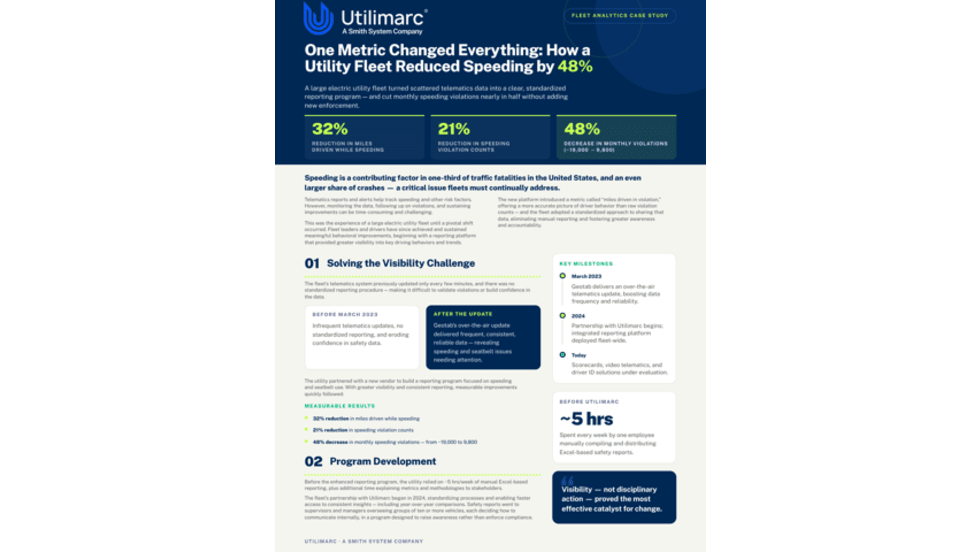
Sponsored•July 17, 2026
How Better Visibility Cut Speeding Violations by 48%
Fleet leaders don't need more data, they need clearer visibility into what the data is saying. This case study explores how one utility replaced speeding-event counts with a single metric — miles driven in violation — to strengthen safety and significantly reduce speeding violations.
Read More →
e-con Systems Expands AI Camera Tools for Traffic Monitoring
The systems support license plate recognition, traffic analytics, and video management for transportation agencies.
Read More →
King Township Pilot Links Driver Feedback to Reduced Speeding
How King Township, a best-in-class municipal fleet, reduced speeding by 10.9% and demonstrated a projected 349% ROI by putting safety ownership directly in drivers' hands.
Read More →
Beyond the Fireline: The Critical Role of Public Fleets in Wildfire Response
Behind every wildfire response is a complex network of vehicles, data, and decisions that must work in sync under extreme pressure. Global heating trends require strong fleet coordination and reliable communications to keep crews safe and operations running smoothly.
Read More →
How AI Is Transforming Public Fleet Safety - Part 1
AI-powered safety systems are helping public fleets tackle distracted driving by delivering real-time coaching and measurable behavior change behind the wheel. In part one of our Q&A, Nauto CEO Stefan Heck explains how agencies can improve safety, reduce costs, and navigate implementation challenges with AI-driven technology.
Read More →