




How City Fleets Handle Tool Allowances
A survey of various-sized municipal fleets across the country reveals a range of tool allowance figures and methods from flat per month or annual stipends to a per- hour allotment. Some cities furnish the tools directly.
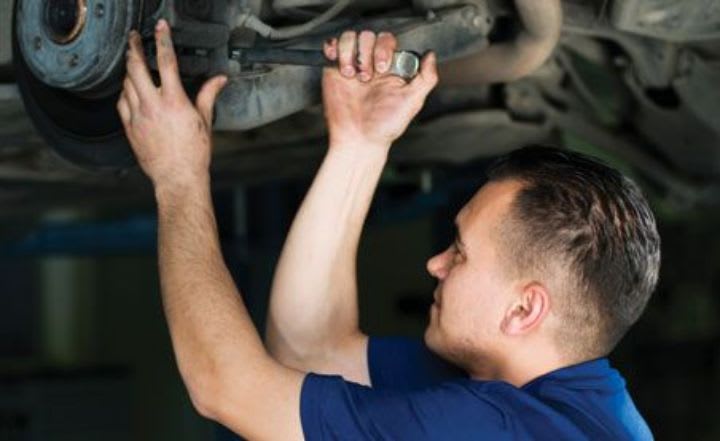
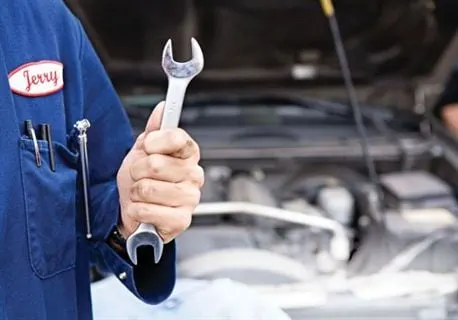
Is your tool allowance competitive? In a recent survey, several government fleets around the country revealed tool allowances range, but the funds are distributed in a variety of ways. Some government fleets provide employees a directly paid allowance.
Scott Simonton, fleet services supervisor for the City of Walsonville, Ore., said the City’s flat $53 per month tool allowance was negotiated with the union. The allowance is now 2 percent of a mechanic’s annual salary. The City’s fleet numbers some 250 units, including vehicles and equipment, maintained by three senior mechanics and an entry-level mechanic.
In Salem, Ore., the City’s 18 mechanics supply their own everyday tools. "We pay for replacements, repairs, and damaged tools," said Floyd Noel, equipment shop supervisor. The fleet numbers 1,475 vehicles and pieces of equipment, Noel said.
A $10,000 budget line item allows the City of Salina, Kan., to provide all tools for the four mechanics in its nonunion shop, said Robert Peck, fleet superintendent. That allotment covers larger tools and diagnostic equipment as well, he said. The fleet operates 700 units of equipment, including 300 vehicles.
The four mechanics for the City of Lancaster, Calif., provide all tools required for work through an annual tool budget of $2,800. "We buy all the tools. They are city inventory," said Steven Anderson, transportation manager. The fleet totals 300 pieces, Anderson said.
Robert Barker, fleet maintenance supervisor for the City of Franklin, Tenn., where the fleet numbers more than 600 vehicles and pieces of equipment, said each year the five full-time mechanics in the nonunion shop each receive a $600 debit card. "We furnish money for special tools," he said.
Alan Brown, fleet manager for the City of Littleton, Colo., said, "Every so often somebody in the region, including myself, conducts an informal survey to see who’s paying what. We try to be somewhere toward the top end of that range. Currently it’s at $700 per year per mechanic, available to them at the beginning of the fiscal year." Littleton’s fleet numbers 300 vehicles, maintained by four technicians.
"It’s designed to replace broken or worn-out tools, and sometimes they need to upgrade things," Brown said. "When it comes to expendables — drill bits, abrasives, saw blades — the shop buys all of that."

[PAGEBREAK]

The tool allowance in the City of Orlando, Fla., a unionized shop, is 30 cents per hour, said Lee Whitehurst, fleet maintenance director. For each ASE certification up to six certifications, technicians receive 30 cents per hour under the current union contract; six certifications, plus the tool allowance, adds $2.10 per hour to technicians’ base pay, Whitehurst noted.
A different formula was used at a nonunion municipal fleet in Virginia, where Whitehurst worked previously.
"We had mechanics give us an inventory as to what they brought to work because they had to supply their own tools," Whitehurst said. The average value worked out to $20,000. "We paid 1 percent of that in a tool allowance," or $200 yearly, Whitehurst said.
Under a bargaining agreement, the City of South Bend, Ind., provides mechanics $400 per year for tools and job-related protective gear, such as boots, said Matthew Chlebowski, director of central services. Mechanics turn in receipts for reimbursement. "We require them to have their own tools," Chlebowski said. The maintenance shop has a "tool crib" stocked with larger tools and electronic testing equipment.
More Operations

Is Keeping Older Fleet Vehicles Really Saving Money?
Is keeping vehicles longer saving money, and what happens when a diagnostic test points to the wrong fix?
Read More →
How Smart Fleet Strategy Can Help Local Government Agencies Do More with Less
Keeping a vehicle longer may ease this year’s budget, but what does it cost the next one? A closer look at fleet decisions can reveal opportunities to reduce spending while protecting essential services.
Read More →
Connect with Government Fleet on LinkedIn
From industry news and fleet management strategies to conversations with peers, Government Fleet's LinkedIn page offers public-sector fleet professionals another way to stay informed and connected.
Read More →
Town of Queen Creek Named Most Successful Fleet Award Winner of Inaugural RTA Fleet Success Awards
Five fleets were honored at RTA Connect 2026 in Chicago for excellence across resource efficiency, intentional culture, risk management, and stakeholder satisfaction.
Read More →
A buyer's guide to fleet management software in 2027
Buying fleet management software in 2027 means looking beyond features and price. As fleet operations, technology and expectations evolve, this guide explores what today’s fleet professionals should consider when choosing a system that can deliver value now and adapt to what comes next.
Read More →
Hazard Alerts, Fleet Car Sales Rise and a New Shuttle Concept
Fleet car sales doubled, but the bigger picture tells a different story in this week’s roundup.
Read More →
How St. Johns County Turned Fleet Data Into Better Replacement Decisions
St. Johns County, Florida, had fleet data, but turning it into reliable decision guidance was another matter. Instead of starting over with a new fleet management system, the county connected existing tools and built a scoring system that gives managers an objective look at fleet health.
Read More →
Fleet Forward Conference Introduces One-Day Passes for 2026
New one-day registration lets fleet professionals attend Tuesday, Wednesday, or Thursday, with passes available for $249.
Read More →
ENC Unveils its ZAVIR Medium-Duty Shuttle
Two variants of the concept shuttles were revealed: a low-floor configuration and a high-floor configuration.
Read More →
Could Your Next Fleet Technician Start as an Intern?
What if your next technician hasn’t worked in a fleet shop yet? What fleets are doing to free up time.
Read More →