




Elite Fleets Continue to Lead the Industry
Previous winners of the No. 1 Leading Fleets award share their current initiatives and programs.


The Elite Fleets are former No. 1 fleets that have continued to thrive, working to improve their own operations and sharing their expertise with the fleet community.
This year’s Elite Fleets have initiated various projects relating to electrification, connected vehicles, telematics implementation, improving customer service, and internship programs.
City of Boise, Idaho
No. 1 in 2015
Led by Craig Croner, CPFP, administrative services senior manager
Fleet size: 1,590
Staff size: 19
Alt-fuel vehicles: 189
Operating budget in FY20: $3.6 million
Value of fleet: $69.5 million
Recent Initiatives: Boise Fleet Services continues to add to and enhance its electric vehicle fleet. Fleet Services worked directly with the city’s environmental management team to craft a clean energy plan that was presented and approved by the mayor and City Council.
Additionally, it implemented a new web-based fleet management software last year and recently completed both automated fuel and parts integration with the parts management vendor and the financial system. As a result, transaction management and reconciliations are much cleaner, allowing fleet staff more efficiency in its daily business.
Fleet Services and financial leadership evaluated the current fleet replacement criteria, maintenance costs, and operational data, and determined it could extend vehicle lifecycles. This shift will net the city savings of about $1 million annually.
Leading the Industry: Fleet Services continues to partner with other local agencies and has created a multi-agency contract for fuel and vehicle purchasing throughout the region.
City of Columbus, Ohio

No. 1 in 2016
Led by Kelly Reagan, fleet administrator
Fleet size: 6,400
Staff size: 144
Recent Initiatives: The fleet team finished its part of the Smart Cities program, with 300 electric vehicles in service and almost 1,000 Level 2 & DC fast chargers in the Columbus area in service.
Leading the Industry: Fleet leadership continues to grow the Ohio chapter of the Municipal Equipment Maintenance Association (MEMA) to more than 165 members throughout Ohio, Michigan, and Tennessee.
The city continues to implement vehicle-to-vehicle (V2V) and vehicle-to-infrastructure (V2I) technologies, with 450 fleet vehicles equipped with the technology. The intent is to track problematic intersections for safety issues, road temperatures, potholes, and various other data points. With this data, city officials will be able to make street improvements.
San Bernardino County, Calif.

No. 1 in 2017
Led by Ron Lindsey, CAFS, fleet management director
Fleet size: 4,000
Staff size: 100
Maintenance facilities: 6
Fuel sites: 60
Mobile service trucks: 11
Recent Initiatives: The fleet team transitioned to a new telematics system, swapping units on 2,500 vehicles. It also expanded its fuel site infrastructure to improve on disaster preparedness.
Leading the Industry: The county fleet operation continues to lead the industry by exceeding customer expectations. This includes providing all types of support to customers, from sanitizing vehicles during the COVID-19 pandemic to designing and building specialized equipment such as “tortoise tunnels” that protect endangered species, to enhancing the ability to provide fuel during emergencies. In addition, the fleet operation began providing hydrogen-powered rental/loaner vehicles through the fleet motor pool.
City of Tulsa, Okla.

No. 1 in 2018
Led by Brian Franklin, CAFM, CPFP, administrative manager, and Mike Wallace, CAFM, CPFP, maintenance manager
Fleet size: 2,500
Staff size: 81
Fleet facilities: 4
Miles driven in fleet cars: 20 million per year
Recent Initiatives: The fleet team implemented a creative process to garner customer feedback. Staff members purchased voting booths for each shop and created ballots for customers to vote on the fleet operation’s effectiveness in the following five areas: customer service, vehicle safety, preventive maintenance, communication, and repair costs. Fleet leadership will use results to determine how it can improve.
Fleet staff created in-house fleet availability dashboards that provide results by shop and vehicle class. The dashboards are updated each morning and distributed to all shop supervisors. Supervisors can drill down and look at open work orders to view data behind the results. Staff members are working with IT to fully automate this process.
Leading the Industry: Fleet staff are founding members of the Oklahoma Public Fleet Management Association and help facilitate an annual conference for government fleet professionals and vendors. In 2019, more than 350 fleet professionals from 12 states registered for the two-day event.
City & County of Denver
No. 1 in 2019
Led by Brad Salazar, fleet management director
Fleet size: 2,443
Staff size: 84
Fleet availability: 95%
Preventive maintenance compliance: 94%
Labor hours billed: 73%
Repairs completed within five days: 84%
Recent Initiatives: To meet the fleet’s organizational needs and support staff development, the leadership team developed a workforce readiness program to mitigate the risk of knowledge loss with a changing workforce. The program identified six critical positions that are impactful to service delivery and identified internal individuals who demonstrated the interest and needed skill set. Staff members implemented succession plans with training and development opportunities, created a classification for vocational trades interns, and became the first municipality in Colorado to implement a vocational internship.
Leading the Industry: The fleet operation is committed to a sustainable fleet, with plans to have 200 electric vehicles in service by the end of 2020 and to install 28 fast-charging stations at city facilities. It is working to become CLEANFleet certified and is piloting 25 vehicles for vehicle-to-vehicle and vehicle-to-infrastructure communication.
More Operations

Fleet Forward Conference Introduces One-Day Passes for 2026
New one-day registration lets fleet professionals attend Tuesday, Wednesday, or Thursday, with passes available for $249.
Read More →
ENC Unveils its ZAVIR Medium-Duty Shuttle
Two variants of the concept shuttles were revealed: a low-floor configuration and a high-floor configuration.
Read More →
Could Your Next Fleet Technician Start as an Intern?
What if your next technician hasn’t worked in a fleet shop yet? What fleets are doing to free up time.
Read More →
How Phoenix Is Building Its Next Generation of Fleet Technicians
With more than 8,000 vehicles and pieces of equipment to maintain, the City of Phoenix could not afford to wait for fully trained technicians to walk through the door. Instead, they revamped their entire workforce strategy and showed how public fleets can create their own talent pipeline while preparing existing employees for increasingly complex vehicles.
Read More →
What’s Slowing Your Fleet Down?
Could a change in how work gets done help your fleet return vehicles to service sooner?
Read More →
Can Public Fleets Trust the Data Driving Their Decisions?
Public fleets have more data than ever, but inconsistent records and missing information can still undermine maintenance, replacement, and cost decisions.
Read More →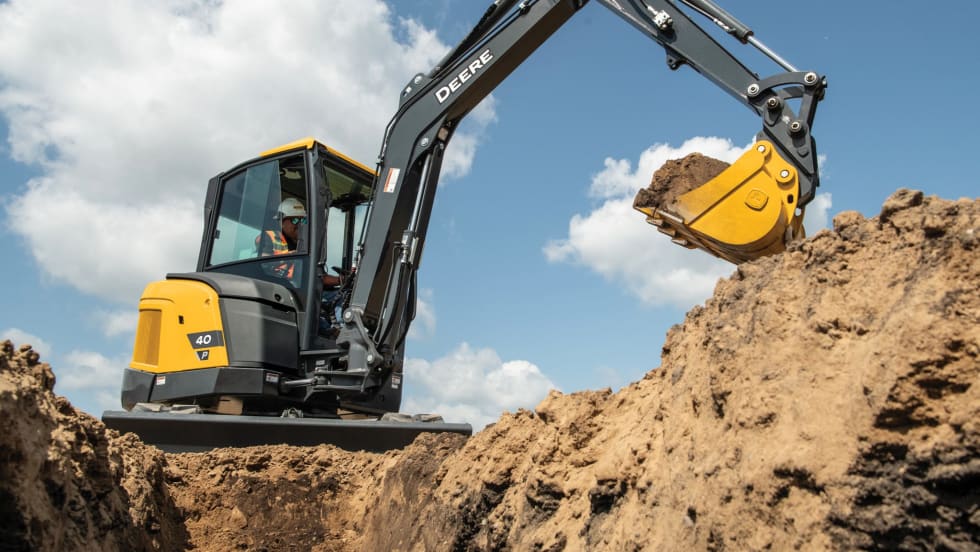
John Deere Introduces 40 P-Tier Compact Excavator
John Deere is adding a compact excavator designed for crews that need to move equipment between jobsites and handle multiple types of work with one machine. The 40 P-Tier weighs less than 10,000 pounds and offers configurable hydraulics, attachment options, and connected fleet-management capabilities.
Read More →
How Leading Fleets Improve and Why Business Plans Matter
This week, we look at what past Leading Fleet winners can teach us about making progress, plus how to build a business plan your fleet will actually use.
Read More →
Nominate a Fleet Leader for the 2027 Public Fleet Hall of Fame
Do you know a fleet leader who has made a lasting impact on the industry? Nominate this fleet professional for the 2027 Public Fleet Hall of Fame.
Read More →
Why Fleet Business Plans Need Three Perspectives
A fleet business plan should help agency leaders understand the fleet’s value, give the organization a clear direction, and establish shared expectations with customer departments.
Read More →