




Related: Are Your Staffing Levels Set for Optimum Efficiency?
Don’t Manage…Lead
Ron McCoy understands the road to being an exceptional fleet manager is rough, but worth it.

Lexi Tucker・Senior Editor

3 min to read

Ron McCoy
Managing people isn’t easy. Coming from the background of being “the worker” as a mechanic for 30 years, Ron McCoy, manager for Allen County Service Center, Ind., says jumping into a management position is an entirely different calling that requires a totally different set of skills. He’s learned a lot about dealing with varying personalities over the years, and always tries to make decisions that benefit not only his team, but those who come to them for fleet troubles.
Keeping Moral Up
Dealing with people of all kinds teaches you much about working with a variety of personalities.
“This being a profession with many ‘Type A’ kinds of people, egos can certainly get in the way from time to time. Everybody thinks they're the best there is, and it’s important for us to all be open to learning things that can help us improve and maintain a comfortable working atmosphere.”
McCoy believes in leading by example rather than just managing. While employee appraisals and pats on the back are all well and good, he believes a passion for what you do and pride in your work should be the best motivator.
“If the work is getting done, I'm not stuck on the processes of how it's getting done,” he says.
He recalls a former employee whose negative energy brought everyone in the shop down. While he still got his job done, the dissension and negativity were having a rough impact on those who worked with him.
“It’s a hard balance to strike when they are having a serious effect on the morale of everybody else but still doing their job. That’s why you have to look for those who truly feel this is their calling during the recruiting process.”
Safety First, No Matter What
Like one would expect with a government job, politics do come into play. However, McCoy knows the importance of picking and choosing your battles. He recalls a recent time when he had to withhold a vehicle for a department as it was not safe to be on the road.
“They were kind of upset I was taking it away from them because of the safety issues. The standard argument is usually, ‘do you know how many people I have to have come through the gate to pay for a new vehicle?’ The answer to that is ‘yes, I do know,’ but they need to have that discussion with their budgeting department. I’m just trying to keep everyone safe. We can only Band-Aida vehicle for so long before it gets to the point that the Band-Aid just gets too big.”
Snap Decisions Aren’t Always the Best Decisions
McCoy and his supervisor have been working to try and come up with an updated replacement program for vehicles. They are currently getting into the last parts of implementing the FASTER Asset Solutions program, and are developing a scoring system that will enable easier conversation between those who use the vehicles and those who maintain them.
The Highway Department is also planning on transitioning to the program, which in turn will make maintenance easier because everything will be included in a single database now. For instance, if a Highway Department vehicle comes into the service center for new windshield wipers, it’ll be easier for McCoy and his team to get it charged out to the right department without adding to a clutter of emails and phone calls.
“It's been a challenge to get people on board. On top of that, as of January 1, half of our county council has completely changed. It can be difficult to get the ball rolling when so many heads are put together suggesting different ideas when we’re already in the process of shifting over to a new program.”
McCoy makes it clear he’s not opposed to hearing new ideas; he just thinks it’s important for newcomers to get to know the reasons behind the original decision before making other suggestions.
Subscribe to Our Newsletter
More Operations

Fleet Forward Conference Introduces One-Day Passes for 2026
New one-day registration lets fleet professionals attend Tuesday, Wednesday, or Thursday, with passes available for $249.
Read More →
ENC Unveils its ZAVIR Medium-Duty Shuttle
Two variants of the concept shuttles were revealed: a low-floor configuration and a high-floor configuration.
Read More →
Could Your Next Fleet Technician Start as an Intern?
What if your next technician hasn’t worked in a fleet shop yet? What fleets are doing to free up time.
Read More →
How Phoenix Is Building Its Next Generation of Fleet Technicians
With more than 8,000 vehicles and pieces of equipment to maintain, the City of Phoenix could not afford to wait for fully trained technicians to walk through the door. Instead, they revamped their entire workforce strategy and showed how public fleets can create their own talent pipeline while preparing existing employees for increasingly complex vehicles.
Read More →
What’s Slowing Your Fleet Down?
Could a change in how work gets done help your fleet return vehicles to service sooner?
Read More →
Can Public Fleets Trust the Data Driving Their Decisions?
Public fleets have more data than ever, but inconsistent records and missing information can still undermine maintenance, replacement, and cost decisions.
Read More →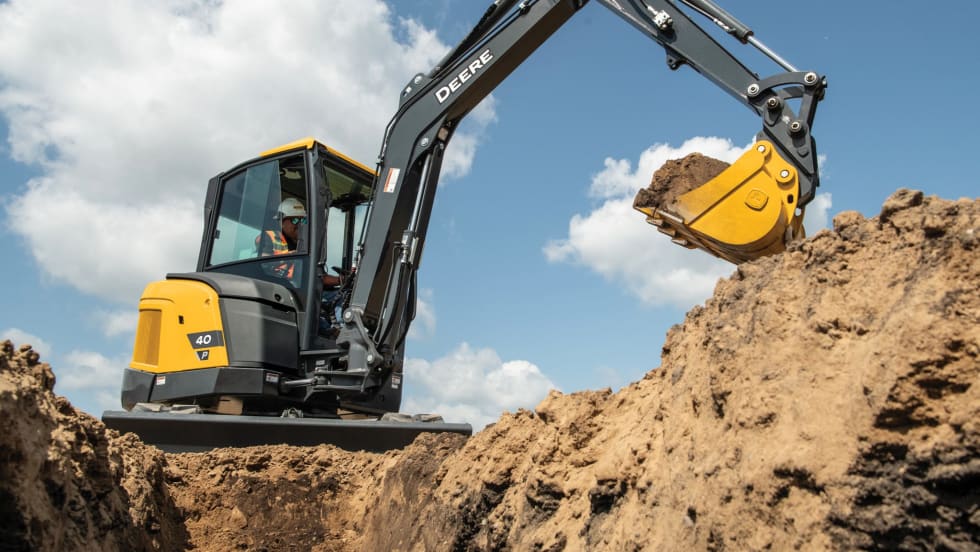
John Deere Introduces 40 P-Tier Compact Excavator
John Deere is adding a compact excavator designed for crews that need to move equipment between jobsites and handle multiple types of work with one machine. The 40 P-Tier weighs less than 10,000 pounds and offers configurable hydraulics, attachment options, and connected fleet-management capabilities.
Read More →
How Leading Fleets Improve and Why Business Plans Matter
This week, we look at what past Leading Fleet winners can teach us about making progress, plus how to build a business plan your fleet will actually use.
Read More →
Nominate a Fleet Leader for the 2027 Public Fleet Hall of Fame
Do you know a fleet leader who has made a lasting impact on the industry? Nominate this fleet professional for the 2027 Public Fleet Hall of Fame.
Read More →
Why Fleet Business Plans Need Three Perspectives
A fleet business plan should help agency leaders understand the fleet’s value, give the organization a clear direction, and establish shared expectations with customer departments.
Read More →