




Bright Ideas: Safety
Disaster preparation, quality inspection, bumper stickers, and cutting lead from operations are just some ways these fleets ensure safety.
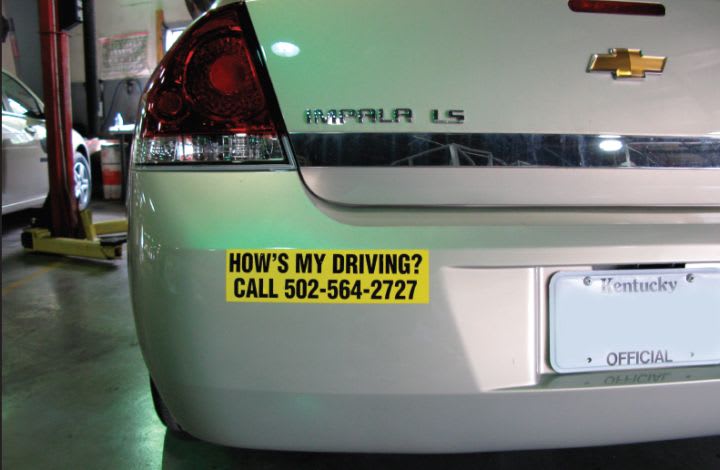
Bumper stickers helped boost Kentucky's driver safety, resulting in a savings of over $150,000 in the first year.
Fleets Awarded for Cutting Lead from Operations
Several government fleets were among 41 recipients recently recognized by the National Partnership for Environmental Priorities for their efforts in reducing and/or recycling hazardous chemicals in their organization.
The City of Oxnard, Calif.; the City of Reno, Nev.; and Cobb County (Ga.) Fleet Management have successfully curtailed the use of lead in their fleet operations.
City of Oxnard. The City of Oxnard eliminated the use of lead wheel weights in favor of steel weights, at a rate of approximately 260 lbs. of replacement lead weights annually. Additionally, the City has eliminated pollution from its vehicle fleet caused by lead weights falling off vehicles while in use, which would add lead to the road and highway environment.
City of Reno. The City of Reno eliminated 400 lbs. of lead wheel weights from the public works fleet by the end of January 2009. Steel weight costs are about 50 percent more, but since labor comprises 90 percent of the wheel-balancing expense, the increase is minimal, according to the City. As the steel weights become more readily available, the overall cost is expected to drop. At the same time, health care issues related to lead exposure to employees and the environment will be greatly improved.
Cobb County Fleet Management. Cobb County Fleet Management successfully met its challenge to convert and recycle 2,500 lbs. of lead wheel weights, eliminating a potential toxic pollutant from posing a risk to human health and the environment. The process of changing from lead to steel for the entire Cobb County fleet occurred over a nine-month period.
City of Columbus, Ohio, Makes Safety a Top Priority
All City of Columbus, Ohio, safety-related vehicles are quality-inspected by a different supervisor after the repair is done. Fleet Management also moved to a new facility and was able to consolidate the parts operation and move to a 24/7 configuration for safety vehicles, both measures better supporting the City's police and fire customers and reduce the amount of reworks, according to Kelly Reagan, fleet management administrator for City of Columbus.
Bumper Stickers Help Boost Kentucky's Driver Safety
The State of Kentucky Division of Fleet Management implemented a "How's My Driving?" program in September 2008. Bumper stickers were placed on every Fleet Management vehicle with a phone number to call. Fleet Management dedicated one staff member to process all phone calls. In conjunction with other existing programs, after the completion of the first year of the program, Fleet Management saw a 34-percent reduction in at-fault accidents and a 27-percent reduction in the frequency of at-fault accidents. This led to a savings in excess of $150,000 in the first year. In the first four months of the second year of the program, at-fault accidents dropped 14 percent compared to the same timeframe of the first year, according to Forrest Banta, director of the division.
Broward Sheriff's Office Prepared for the Worst
Broward (County, Fla.) Sheriff's Office fleet is prepared to handle the worst. Fleet maintains an Emergency Action Policy that includes a sufficient supply of tires to cover all vehicles in the fleet in case of a natural disaster, according to Michael Best, general manager of Broward Sheriff's Office — First Vehicle Services.
The Sheriff's Office also recognized a need to be self-sufficient and maintains its own fuel hauling capability for emergencies. Fleet also utilized Federal Emergency Management Agency (FEMA) grants to construct a mobile repair trailer for use as a command center in the event of a natural disaster.
More Safety
New Partnership Aims to Expand Public Digital Hazard Alert System Statewide
The Hawai’i Department of Transportation (HDOT) is expanding advance digital hazard alerts for the public statewide.
Read More →
New York City Expands Safety Technologies Across Municipal Fleet
Executive Order 19 moves intelligent speed assistance and pedestrian alerts from pilot programs toward standard fleet equipment, offering other public fleets a look at how safety technology can be tested, measured, and scaled.
Read More →
Hidden in Plain Sight: Fleet Compliance Risks
Fleet compliance isn't just about having policies — it's about consistently enforcing them. This practical guide reveals six hidden compliance risks common in public sector and shared fleet operations and outlines proven strategies to improve visibility, accountability, and audit readiness.
Read More →
5 Days Left to Submit Your 2026 Fleet Safety Award Nomination
Know a government fleet, safety, or risk manager who deserves recognition for making fleet operations safer? Nominations are open through Aug. 15.
Read More →
How the First 24 Hours Can Shape a Fleet Crash Response
How a strong accident response process helps government fleets move from the initial report to recovery while building a clearer record for what needs to change next.
Read More →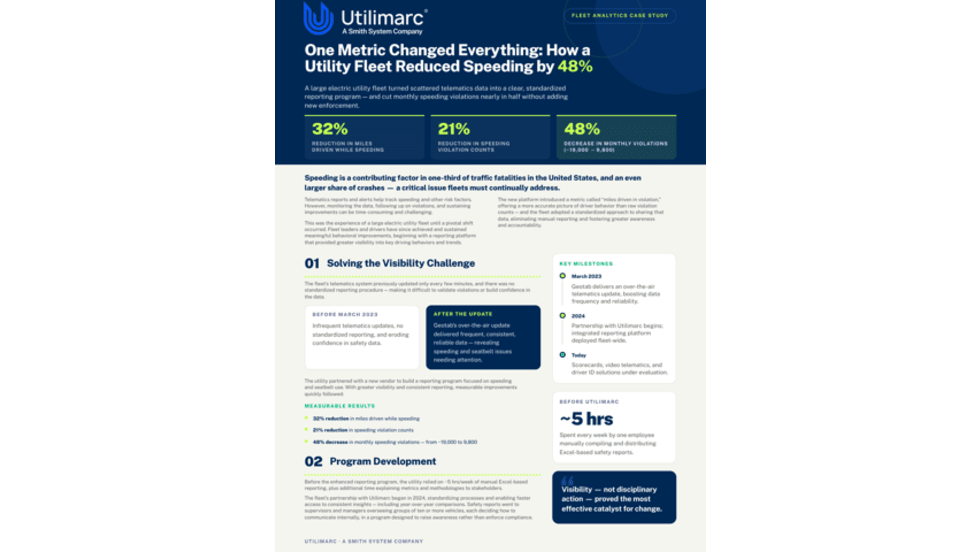
How Better Visibility Cut Speeding Violations by 48%
Fleet leaders don't need more data, they need clearer visibility into what the data is saying. This case study explores how one utility replaced speeding-event counts with a single metric — miles driven in violation — to strengthen safety and significantly reduce speeding violations.
Read More →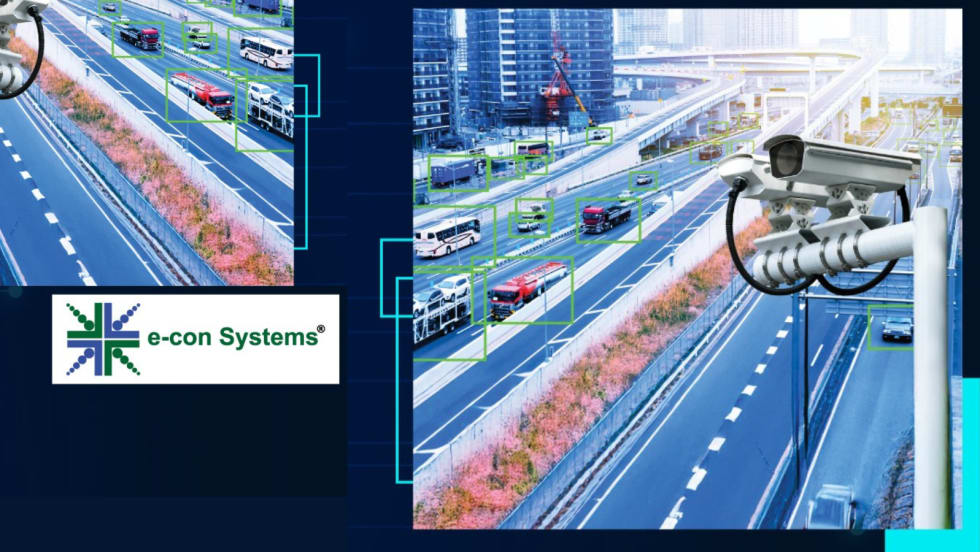
e-con Systems Expands AI Camera Tools for Traffic Monitoring
The systems support license plate recognition, traffic analytics, and video management for transportation agencies.
Read More →
King Township Pilot Links Driver Feedback to Reduced Speeding
How King Township, a best-in-class municipal fleet, reduced speeding by 10.9% and demonstrated a projected 349% ROI by putting safety ownership directly in drivers' hands.
Read More →
Beyond the Fireline: The Critical Role of Public Fleets in Wildfire Response
Behind every wildfire response is a complex network of vehicles, data, and decisions that must work in sync under extreme pressure. Global heating trends require strong fleet coordination and reliable communications to keep crews safe and operations running smoothly.
Read More →
How AI Is Transforming Public Fleet Safety - Part 1
AI-powered safety systems are helping public fleets tackle distracted driving by delivering real-time coaching and measurable behavior change behind the wheel. In part one of our Q&A, Nauto CEO Stefan Heck explains how agencies can improve safety, reduce costs, and navigate implementation challenges with AI-driven technology.
Read More →