




Arizona's Statewide Fleet Consolidation Saves Millions
Handing over the management of vehicles for more than 60 state agencies to the ADOT helped to save taxpayers $6 million.

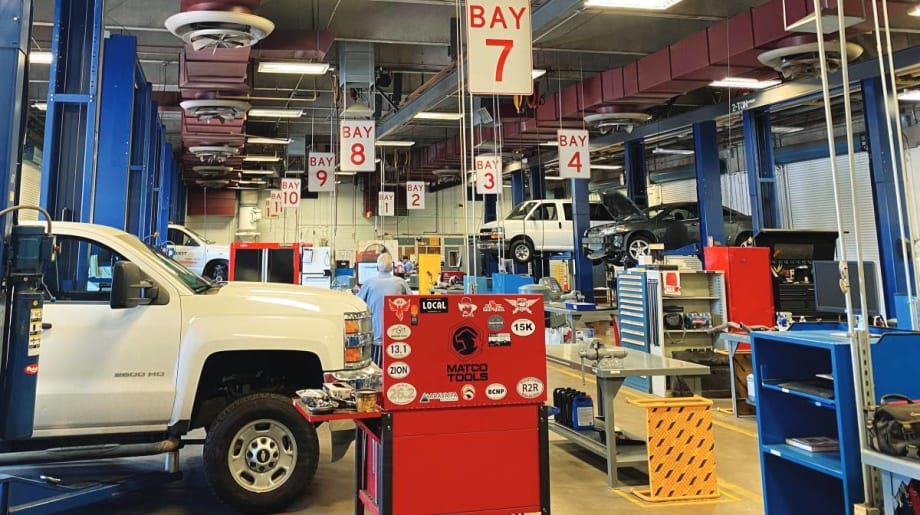
ADOT manages roughly 4,500 vehicles and pieces of equipment of its own and another 2,800 for other state agencies.
Photo: Arizona Department of Transportation
Just a few years ago, most public fleets in Arizona managed their own vehicles. That changed in 2021, when more than 60 state agencies handed over fleet management to the Arizona Department of Transportation (ADOT), a move that gave those agencies access to the department’s advanced fleet expertise and resources.
Today, ADOT manages roughly 4,500 vehicles and pieces of equipment of its own and another 2,800 for other state agencies. The team also handles 100% of the surplus operations for every state agency, which serves a collective fleet of over 7,000 vehicles. Taking on the fleet management function has allowed the department to fine-tune processes, leverage purchasing power, pool equipment and rightsize the fleet — actions that resulted in a $6 million savings for taxpayers. State Fleet Administrator Devin J. Darlek shares how ADOT achieved the savings and what’s next for the statewide fleet.
Reducing Underutilized Assets
ADOT’s first order of business was to righatsize the fleet. Since March 2020, ADOT has sold 1,000 underutilized state agency vehicles. Between selling those vehicles, money that would have been spent on replacing them (ADOT used a baseline of $35,000 per replacement unit), and eliminating maintenance costs for assets purged from the system, reducing underutilized assets led to a majority of the $6 million taxpayer savings.
To rightsize the fleet, Darlek and his team looked at overall utilization and set parameters for mileage and trips taken per week. The team also established criteria for exemptions and made sure critical assets, like first responder or law enforcement vehicles, didn’t get mixed into the lean efforts.
Each underutilized vehicle that didn’t have an approved exception was then evaluated by vehicle type, mileage, age, and maintenance costs to determine whether it should be kept in the fleet. “Vehicles that were in good condition and were within a healthy lifecycle were evaluated and then switched out with older, more costly vehicles in the field,” Darlek explained. “The older, more costly vehicles that were switched out were then brought in and cycled through our surplus operations.”
Selling Above Blue Book
In addition to identifying vehicles to get off the books, ADOT also sold surplus vehicles at about 15% above Kelley Blue Book prices. “When surplusing vehicles, we went to a 100% online auction process, which ended up bringing in a lot more money than having onsite auctions,” Darlek said.
By the time ADOT took responsibility for managing the statewide fleet, selling its vehicles online was already a well-oiled machine. Eight years ago, ADOT Fleet Manager Gary Lowe implemented the department’s online auction system; he has since adjusted it to maximize resale value.
“One of the metrics we use to validate our auction is the amount of money we’re receiving along with the time it takes to sell each vehicle,” Darlek said. “To receive additional money, Gary makes sure not to place too many like-for-like vehicles in the auction at one time so he doesn’t flood the market, so to speak. There are several other great ideas he’s used to get the absolute most money for these vehicles.”
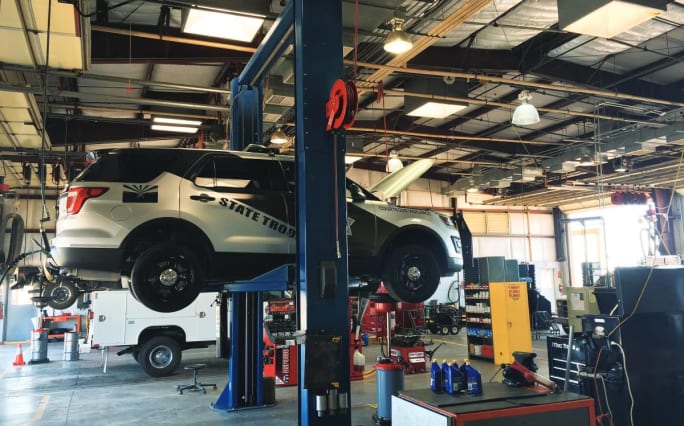
ADOT set a new threshold for preventive maintenance when it consolidated its vehicle services. The state fleet administrator says that saved the department over $140,000 in the first year alone.
Photo: Arizona Department of Transportation
Establishing a Vehicle Replacement System
Another process improvement is a new vehicle replacement system. Before, ADOT used the Air Force’s model, which was complicated and confusing for customers because it required a lengthy calculation. Now, the fleet uses a 10-point system — another recommendation from Lowe. The system calculates points for both utilization and age, then totals those points. Vehicles that reach 10 points are eligible for replacement — but they don’t get replaced automatically. “That’s when other factors come into play like utilization, maintenance costs, criticality of the vehicle, etc.” Darlek said.
The new system is easier for customers and the budget team that controls the dollars to understand. “With such an easy, consistent, and transparent system, we’ve been able to gain trust with both our customers and with our budget team,” Darlek said.
Leveraging Buying Power
With so many more vehicles to manage, naturally the volume of orders has increased as well. This makes it possible for ADOT to leverage the department’s relationship with contracted dealers for better pricing.
“In some cases, we’ve gotten much better deals like $2K to $3K less than the state contracted price,” Darlek said. “We’ve also positioned ourselves much better when it comes to warranties or even having the manufacturers replace things outside of warranty when special circumstances apply.”
Sharing Equipment
Another way ADOT has leveraged its statewide resources is by creating a heavy equipment sharing system called H-AMP (Heavy Automated Motor Pool). Built in-house, H-AMP’s online reservation system lets users see what equipment is available and for what price, then share expensive heavy equipment around the state. ADOT also established a transport system for equipment pickup and delivery to rental customers.
“We’ve saved hundreds of thousands of dollars by not buying duplicate equipment, and at the same time we’re able to document all of the use,” Darlek said. “Implementing this system has been a very popular subject with the state’s budget group; they’ve supported us better knowing that we’re stretching those important taxpayer dollars.”
Fine-Tuning Maintenance and Tire Replacement Schedules
Consolidating the fleet function also gave ADOT the opportunity to review PM schedules and new tire policy.
Prior to the consolidation, ADOT performed most services at the 6,000-mile mark. But when it reviewed maintenance record data and manufacturer requirements, it learned 100% of manufacturers allow for a higher PM interval above 8,000 and decided to set a new threshold. “Going to 8,000 miles (or one year) would enable us to stay below manufacturer requirements, not get too far out of our service interval, and could save us quite a bit of money,” Darlek explained. “Our first year, savings were over $140,000.”
Tire replacement also led to schedule changes. ADOT’s original five-year policy was implemented many years ago after blowout issues with a popular brand of tires. The fleet’s new policy was adopted from the Tire Industry Association; now, technicians make an informed decision about when tires should be replaced rather than abiding by a date on the calendar.
“Our goal was to save additional money but at the same time make sure we kept our vehicles and drivers safe,” Darlek said. “The new tire policy system calls for all of our technicians and Preventive Maintenance personnel to be trained and certified within the tire program. The length of time tires stay on the vehicle is decided upon by the certified technician and not an arbitrary timeline.”
What’s Next
Up next for the statewide fleet is equipping all state vehicles and specialized equipment with GPS, then using the data to make informed choices.
“We’re using data to make our fleet decisions instead of arbitrary numbers or someone’s feelings,” Darlek said. “We are also using GPS to ensure drivers are safe, monitoring both seatbelt use and speeds.”
10-Point Vehicle Replacement Formula
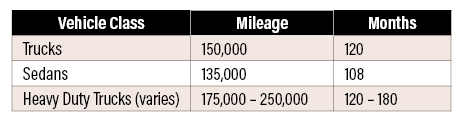
ADOT’s vehicle replacement system uses a 10-point methodology to identify vehicles and equipment that are good candidates for replacement. The calculation is based on: (1) 60% utilization (mileage) and (2) 40% age.
Points for Utilization:
● The calculation: Lifetime miles ÷ expected meter at replacement x 6
● Example: A current ADOT 2015 Ford F150 has an odometer reading of 65,087 miles. It is expected to be replaced when it reaches 150,000 miles.
◗ 65,087 ÷ 150,000 x 6 = 2.60 points for utilization
Points for Age:
● The calculation: Months since placed in service ÷ expected useful life (in months) x 4.
● Example: That same ADOT 2015 Ford F150 was placed in service in May of 2015, or 76 months ago. It is expected to be replaced after
120 months.
◗ 76 ÷ 120 x 4 = 2.53 points for age
Total Points Calculation (Utilization + Age):
● 2.60 utilization points + 2.53 age points = 5.13 total points for
this vehicle.
Is this vehicle considered eligible for replacement?
Answer: No, this vehicle would not be considered for replacement until it reaches 10 points.
In general, this formula typically results in the following replacement criteria:
Source:
Devin J. Darlek, State Fleet Administrator, Arizona Department of Transportation
More Operations
Is Keeping Older Fleet Vehicles Really Saving Money?
Is keeping vehicles longer saving money, and what happens when a diagnostic test points to the wrong fix?
Read More →
How Smart Fleet Strategy Can Help Local Government Agencies Do More with Less
Keeping a vehicle longer may ease this year’s budget, but what does it cost the next one? A closer look at fleet decisions can reveal opportunities to reduce spending while protecting essential services.
Read More →
Connect with Government Fleet on LinkedIn
From industry news and fleet management strategies to conversations with peers, Government Fleet's LinkedIn page offers public-sector fleet professionals another way to stay informed and connected.
Read More →
Town of Queen Creek Named Most Successful Fleet Award Winner of Inaugural RTA Fleet Success Awards
Five fleets were honored at RTA Connect 2026 in Chicago for excellence across resource efficiency, intentional culture, risk management, and stakeholder satisfaction.
Read More →
A buyer's guide to fleet management software in 2027
Buying fleet management software in 2027 means looking beyond features and price. As fleet operations, technology and expectations evolve, this guide explores what today’s fleet professionals should consider when choosing a system that can deliver value now and adapt to what comes next.
Read More →
Hazard Alerts, Fleet Car Sales Rise and a New Shuttle Concept
Fleet car sales doubled, but the bigger picture tells a different story in this week’s roundup.
Read More →
How St. Johns County Turned Fleet Data Into Better Replacement Decisions
St. Johns County, Florida, had fleet data, but turning it into reliable decision guidance was another matter. Instead of starting over with a new fleet management system, the county connected existing tools and built a scoring system that gives managers an objective look at fleet health.
Read More →
Fleet Forward Conference Introduces One-Day Passes for 2026
New one-day registration lets fleet professionals attend Tuesday, Wednesday, or Thursday, with passes available for $249.
Read More →
ENC Unveils its ZAVIR Medium-Duty Shuttle
Two variants of the concept shuttles were revealed: a low-floor configuration and a high-floor configuration.
Read More →
Could Your Next Fleet Technician Start as an Intern?
What if your next technician hasn’t worked in a fleet shop yet? What fleets are doing to free up time.
Read More →