




3 Finalists Chosen for Fleet Manager of the Year Award
The Public Sector Fleet Manager of the Year Award recognizes accomplishments and efficient operations.

The three finalists for this year’s Public Sector Fleet Manager of the Year award have numerous accomplishments to cite, including advances in fleet greening, significant savings through warranty recovery and expanding consignment parts inventory, and a consolidation of separate fleets within an agency.
Sponsored by DriveCam, powered by Lytx, and General Motors, the award honors fleet managers for efficient operations and accomplishments in the prior year. The annual award is now in its 10th year.
Industry professionals nominate their peers, who are then asked to fill out a questionnaire detailing their operations and accomplishments. A panel of 15 judges consisting of working fleet managers managing diverse fleets across the country judged this year’s award. Candidates are judged on the following criteria: business plan, technology implementation, productivity, policies, preventive maintenance program, utilization management, replacement program, customer service, fuel management, and safety.
Government Fleet Magazine will announce the winner of the 2014 Public Sector Fleet Manager of the Year award at The Honors Celebration at the Government Fleet Expo & Conference (GFX), which takes place June 2-4 in San Diego.
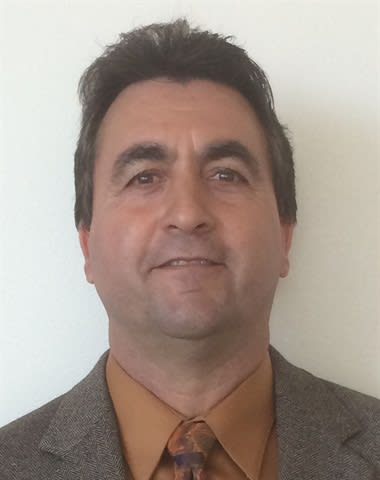
Paul Condran, equipment maintenance/fleet manager, City of Culver City, Calif.
Fleet size: 500 on-road vehicles, 30 off-road vehicles
Maintenance facilities: 1
How long you’ve been in fleet: I have been in the automotive profession for about 38 years, 29 of which was in public sector fleet management.
How you started in fleet: I previously worked for Ferrari Motors, and my uncle showed me a job announcement for an equipment maintenance supervisor job with Culver City. I went through the process, interviewed, and was selected. The rest, as they say, is history!
First thing you do in the office every morning: Generally, I am in the office by 6 a.m. or 6:15 a.m. This is “my” time — to go through hundreds of e-mails and phone messages, set up my daily objectives, review any urgent matters, etc.
One non-fleet thing you can’t do without for your job: My computer/iPhone to stay connected.
Best advice/lesson anyone has taught you during your career: I have a placard in my office that paraphrases General Colin Powell when I heard him speak. This is my charge each day: “There are no secrets to success. Do not waste time looking for them. Success is the result of perfection, hard work, learning from failure, loyalty to those for whom you work, and persistence.”
I would also add to try your best to be positive and proactive, especially in the face of adversity. When you are told no, look for other avenues that can lead to the results you desire. A person must maintain a broader perspective of their goals, realize what does and does not matter, and always hold the interests of the organization in high regard. In public service, it’s up to you to be great.
Accomplishments: We were able to teach another city all about alternative fuels, especially natural gas. We had the staff come to our location and spend a whole week with us. We were able to discuss how to calculate the costs, provide specifications and a step-by-step process, including the specifications and maintenance of a natural gas fueling station. To witness this entity perform beyond our expectations and forge ahead with alternative fuel vehicles and stations was very gratifying.
Pete Scarafiotti, CAFM, CEM, CPFP fleet director and automotive engineer, City of Mesa, Ariz.
Fleet size: 1,675 on-road vehicles, 200 off-road vehicles
Maintenance facilities: 2
How long you’ve been in fleet: 43 years.
How you started in fleet: I loved cars and started to work as a technician. As the years progressed, I decided there had to be a better way to approach some of the design problems I kept encountering. I then decided I could either keep cutting my knuckles or go to school, get my mechanical engineering degree, and move into vehicle design.
Your favorite part of fleet management: It’s the people! I enjoy helping my clients achieve their operational goals and my coworkers achieve their career goals.
Tell us a funny fleet story: I was a new young manager and had inherited a technician who was both near retirement and unproductive. The shop supervisor told me old “Everett” had been good in his day but was now quarrelsome and unproductive. He recommended I fire him. I met with the old timer and asked him to tell me what was wrong in one sentence only. He thought for a minute and said, “Young man, it’s not fun anymore.”
We talked for about half an hour, and when the old-timer returned to work, I went to the scheduler and told him to ensure that only 1970s vehicles be scheduled for our friend. We had plenty of those at the time. By the end of the month, the old-timer was a top performer and in a great mood. When the supervisor asked how I did it, I told him the old-timer was stuck in old technology and to return him to happiness, we simply had to return him to that which he knew the best, his comfort zone.
What you do in your spare time: I restore muscle cars and write. I’ve completed three books to date — none of them are about fleet.
Something others don’t know about you: Between 1980 to 1996, I raced sled dog teams across the Pacific Northwest, Canada, and Alaska.
The first thing you do in the office every morning: I walk the floor and read the faces. You’ll find all of your little problems there long before they become big ones.
Best advice/lesson anyone has taught you during your career: “Take the time to be a good listener. You can’t help folks unless you understand the problem and how it affects them.” This insight was provided to me years ago by a great fleet mentor, E.T. Silvers.
Accomplishments: Our fleet identified an opportunity to reduce operational cost by expanding our warranty recovery program. Over the past several years, the fleet has recovered approximately $2.5 million from manufacturers by aggressively pursuing warranty opportunities. The forecasted recovery for fiscal-year 2014-15 is $350,000.
We recognize the value of doing business with local vendors, and we currently purchase 21% of assets and material from local Mesa vendors compared to the current overall city average of 13%. The forecasted increase in Mesa business for fiscal-year 2014-15 is $3 million.
Finally, in an attempt to reduce the fleet’s standing inventory cost, we are increasing our parts consignment agreements with additional vendors. Consignment inventories are owned by the vendor, stocked on fleet’s shelves, and paid for only as they are installed on a fleet vehicle. Forecasted savings for fiscal-year 2014-15 is $245,000.
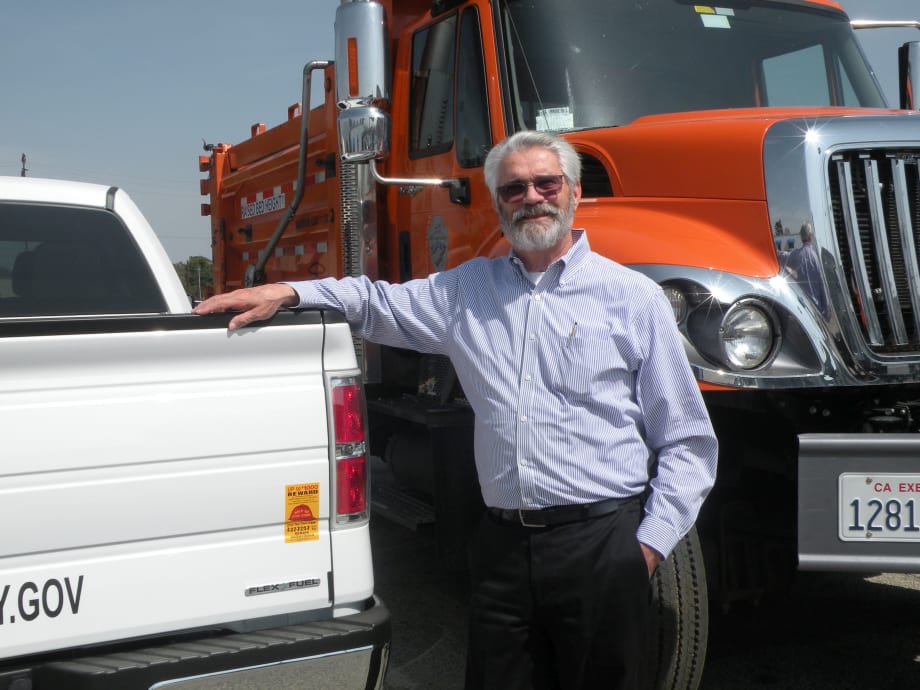
Roger Weaver, CAFM, CPFP fleet management director, San Bernardino County, Calif.
Fleet size: 4,997 on-road units, 407 off-road units
Maintenance facilities: 6
How long you’ve been in fleet: 47 years — 34 with private fleets and 13 with the county.
How you started in fleet: I began my career working for AT&T/Pacific Telephone as a pay phone coin collector in 1968 and quickly became an installer and test technician. In 1970, my boss informed me of a looming massive layoff — and I was a newbie by their standards! To avoid demotion or being laid off, I submitted for the first job opening that came up. It turned out to be a garage supervisor position. Being a “gear head” at heart, I thought I had died and gone to heaven! I’ve never looked back.
Your favorite part of fleet management: Every day is a challenge and an opportunity to be creative. I view managing a fleet very much like a giant puzzle, a puzzle unlike the traditional ones where you know what the picture looks like on the box top. Not like a puzzle where all you have to do is make the pieces fit to recreate the picture — more like a puzzle mixed with a little mystery, where you’re never quite sure exactly what the picture is, but you begin to recognize it as it develops. What I get to do every day is to define the puzzle, describe it to others, and help them create it. What more could anyone ever want in a job?
What you do in your spare time: Honey Do’s! I live in a mountain community on 5+ acres, and there is always something to do around the house or the forest. Whether it’s cutting down a tree, clearing a pathway, or chopping firewood, living on the mountain isn’t easy. When I’m not working around the house, I tinker around the garage restoring old cars. My current project is a full restoration of a 1967 Camaro intended to someday belong to my oldest grandson. I also have a 1929 Ford Roadster pickup (fully restored) and a 1925 Oldsmobile (un-restored, in original condition).
First thing you do in the office every morning: Open an Excel spreadsheet! That, and I spend a little time with a cup of coffee and pick up where I left off the day before. From the time I walk in until the time I leave, I’m pretty much at my desk working on something and no matter what it is, you can be sure it’s in Excel.
One non-fleet thing you can’t do without for your job: My Fiscal-Year Results binder — it sits on the corner of my desk every day! You can’t know where you’re going unless you know where you are, and my binder gives me an accurate picture of where I am every day.
Accomplishments: After more than 25 years of separate vehicle maintenance and repair operations, County Fire Vehicle Services (25 employees) combined with Fleet Management (85 employees). The fleet facility was remodeled, rearranged, and significantly upgraded to optimize space and facilitate the reorganization. Bringing the two operations together increased labor and equipment efficiency and reduced parts inventories by avoiding duplication, which already saved more than $60,000. Through better asset management and use of taxpayers’ money, we estimate this will save $350,000 annually. Standardization of parts inventory functions also enabled purchase orders for larger volumes, which will make parts less expensive.
The additional contestants of the 2014 Public Sector Fleet Manager of the Year award are:
Timothy Ables, vehicle fleet manager, U.S. Air Force
Fleet size: 62,000 on-road vehicles, 24,000 off-road vehicles
Maintenance facilities: 307
Accomplishment: We have become an award-winning fleet team.
Scott Bingham, state fleet manager, State of Utah
Fleet size: 7,235 on-road vehicles, 291 off-road vehicles
Maintenance facilities: N/A
Accomplishment: Managing 4,500 vehicles, we have implemented a Vehicle Services Center and cut maintenance and repair costs by 19%.
Doug Bond, transportation services manager, Alameda County, Calif.
Fleet size: 1,020 on-road vehicles
Maintenance Facilities: 3
Accomplishment: We are leading the $2.8 million federally funded local government EV fleet demo project.
Paul Hanna, fleet and facilities supervisor, City of Olympia, Wash.
Fleet size: 207 on-road vehicles, 47 off-road vehicles
Maintenance facilities: 1
Accomplishment: We met all our business targets for the first time in our fleet’s history.
John King, fleet director, Marion County, Fla.
Fleet size: 868 on-road vehicles, 258 off-road vehicles
Maintenance facilities: 1
Accomplishment: Fleet reduced its fuel spend and harmful emissions by using alternative fuels.
Rick Longobart, facilities, fleet & central stores manager, City of Santa Ana, Calif.
Fleet size: 521 on-road vehicles, 130 off-road vehicles
Maintenance facilities: 1
Accomplishment: We shared green transportation strategies with the community through outreach projects.
Julie Lyons, fleet & facility services manager, City of Anaheim, Calif.
Fleet size: 750 on-road vehicles, 350 off-road vehicles
Maintenance facilities: 1
Accomplishment: Fleet recently created a motor pool and developed replacement and utilization policies.
Dan Miller, fleet manager, Sacramento County, Calif.
Fleet size: 2,980 on-road vehicles, 150 off-road vehicles
Maintenance facilities: 10
Accomplishment: A change in fleet culture allowed us to become more efficient and improved customer relationships.
Kelly Reagan, fleet administrator, City of Columbus, Ohio
Fleet size: 2,993 on-road vehicles, 3,289 off-road vehicles
Maintenance facilities: 4
Accomplishment: We began construction on a second CNG fueling station, expected to be open later this year.
Dennis Scamardo, CAFM, fleet manager, Monterey County, Calif.
Fleet size: 1,164 on-road vehicles, 144 off-road vehicles
Maintenance facilities: 2
Accomplishment: By partnering with user departments and nearby entities, we provide better service than we can alone.
Jeff Tews, CPFP, fleet operations manager, City of Milwaukee, Wis.
Fleet size: 2,357 on-road vehicles, 722 off-road vehicles
Maintenance facilities: 5
Accomplishment: A redesigned pay plan to compensate ASE-certified technicians allows us to recruit the best technicians.
Denny Traylor, fleet manager, City of Houston
Fleet size: 1,640 on-road vehicles
Maintenance facilities: 3
Accomplishment: The fleet team has learned to work well together, with greatly improved production and morale.
More Operations

Is Keeping Older Fleet Vehicles Really Saving Money?
Is keeping vehicles longer saving money, and what happens when a diagnostic test points to the wrong fix?
Read More →
How Smart Fleet Strategy Can Help Local Government Agencies Do More with Less
Keeping a vehicle longer may ease this year’s budget, but what does it cost the next one? A closer look at fleet decisions can reveal opportunities to reduce spending while protecting essential services.
Read More →
Connect with Government Fleet on LinkedIn
From industry news and fleet management strategies to conversations with peers, Government Fleet's LinkedIn page offers public-sector fleet professionals another way to stay informed and connected.
Read More →
Town of Queen Creek Named Most Successful Fleet Award Winner of Inaugural RTA Fleet Success Awards
Five fleets were honored at RTA Connect 2026 in Chicago for excellence across resource efficiency, intentional culture, risk management, and stakeholder satisfaction.
Read More →
A buyer's guide to fleet management software in 2027
Buying fleet management software in 2027 means looking beyond features and price. As fleet operations, technology and expectations evolve, this guide explores what today’s fleet professionals should consider when choosing a system that can deliver value now and adapt to what comes next.
Read More →
Hazard Alerts, Fleet Car Sales Rise and a New Shuttle Concept
Fleet car sales doubled, but the bigger picture tells a different story in this week’s roundup.
Read More →
How St. Johns County Turned Fleet Data Into Better Replacement Decisions
St. Johns County, Florida, had fleet data, but turning it into reliable decision guidance was another matter. Instead of starting over with a new fleet management system, the county connected existing tools and built a scoring system that gives managers an objective look at fleet health.
Read More →
Fleet Forward Conference Introduces One-Day Passes for 2026
New one-day registration lets fleet professionals attend Tuesday, Wednesday, or Thursday, with passes available for $249.
Read More →
ENC Unveils its ZAVIR Medium-Duty Shuttle
Two variants of the concept shuttles were revealed: a low-floor configuration and a high-floor configuration.
Read More →
Could Your Next Fleet Technician Start as an Intern?
What if your next technician hasn’t worked in a fleet shop yet? What fleets are doing to free up time.
Read More →