




Why More Fleets Are Turning to Cooperative Contracts to Buy Vehicle Lifts
Vehicle lift manufacturers say cooperative procurement is becoming more common because public agencies can save time and money.

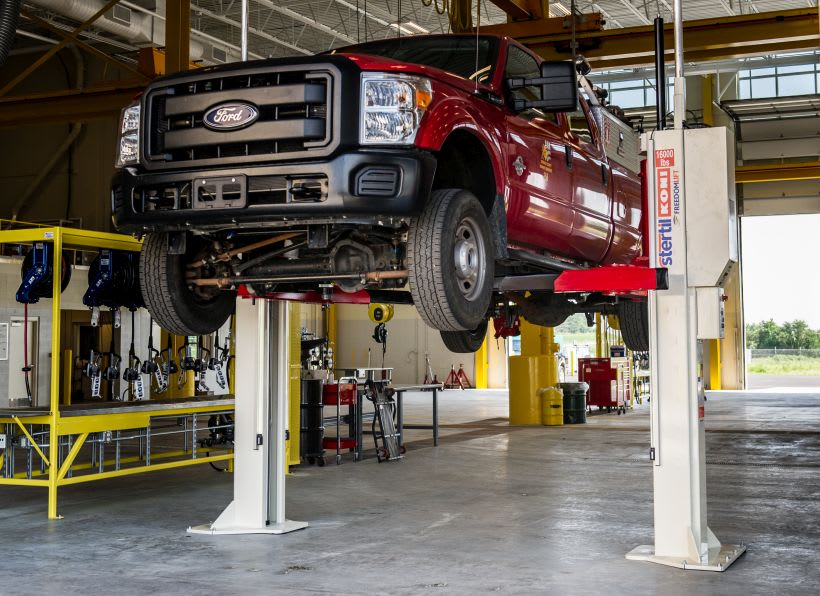
Stertil-Koni’s FreedomLift is a flexible, heavy-duty 2-post lift with capability range from 16,000 lbs. to 30,000 lbs., depending on the model.
Photo courtesy of Stertil-Koni
Cooperative procurement is often seen as a time- and money-saving way to purchase government products, from vehicles and equipment to shop equipment. In fact, cooperative procurement is becoming more common among those buying vehicle lifts, according to lift suppliers.
“Our company has more government contracts than ever before and we are using co-ops more,” said Christine Bilz, government sales leader for Vehicle Service Group (VSG), the parent company of Rotary Lift.
“Without a co-op, a typical procurement for a large heavy-duty vehicle lift project can take anywhere between three months and seven months and tie up buyers, managers, and legal resources within the purchasing department,” said Stertil-Koni President Jean DellAmore. Cooperative procurement allows agencies to cut the procurement period by more than half.
What does that time cost government agencies? Steve Perlstein, president and government sales manager for Mohawk Lifts, said data from the procurement groups show that a simple procurement costs an agency more than $10,000, and a complex procurement much more.
“Given lifts have already been competitively bid and advertised on a national basis and the hard work has been done, procurement offices can save the $10,000 in actual costs of research; vendor interviews; writing, preparing, and mailing bids; analysis of the received bids; [and] responding to disgruntled vendors who don’t meet specs,” Perlstein said.
The growing popularity is partially due to limited government resources — as well as limited staffing, Bilz from VSG added.
“Government resources are getting tighter and some agencies don’t have enough personnel with the knowledge and background to understand the complexities of buying the needed equipment or products,” she explained. “Often, purchasing decisions need to be made quickly in order to maintain productivity and keep taxpayers’ dollars at work. That means there isn’t time for a long, intensive bidding process.”
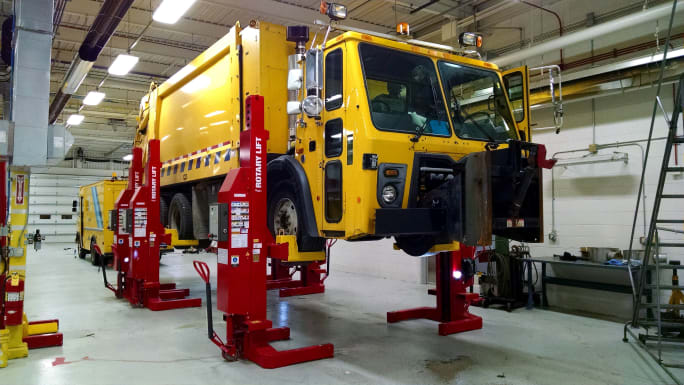
Rotary Lift Mach Series wireless mobile column lifts are available in a wide range of lifting capacities to accommodate everything from light passenger vehicles to heavy-duty trucks and equipment.
Photo courtesy of VSG
Not Just Time Savings
In addition to saving time, Stertil-Koni’s DellAmore offered other reasons why government agencies are choosing to buy lifts using this route: the cooperative group has done the research of the vendor candidates for the products offered; it gives buyers freedom to choose the best product and best vendor; and buyers can choose the vendor they prefer based on their individual requirements.
Bilz from VSG added that cooperative purchasing contracts produce lower prices, and they’re especially advantageous for small governments because the small entities can benefit from the bulk purchasing leveraged by larger government consumers.
Dispelling Misconceptions about Cooperative Procurement
Despite co-ops having been available and in use for years, lift vendors are still seeing misconceptions about cooperative purchasing.
“The biggest misconception is that these awards were not competitively bid,” Perlstein said. “The fact is they were competitively bid [and] awarded…. These contracts were nationally advertised, several pre-bid meetings were held, [and] all who intended to participate did.”
Stertil-Koni’s DellAmore said another misconception buyers have is that “by utilizing the co-op’s vetting process, it could replace existing employees. And, if a customer piggybacked off of another agency’s contract it would be forced to use that agency’s terms and conditions.”
He said this isn’t true, and that each public entity can negotiate its own terms and conditions with the vendor.
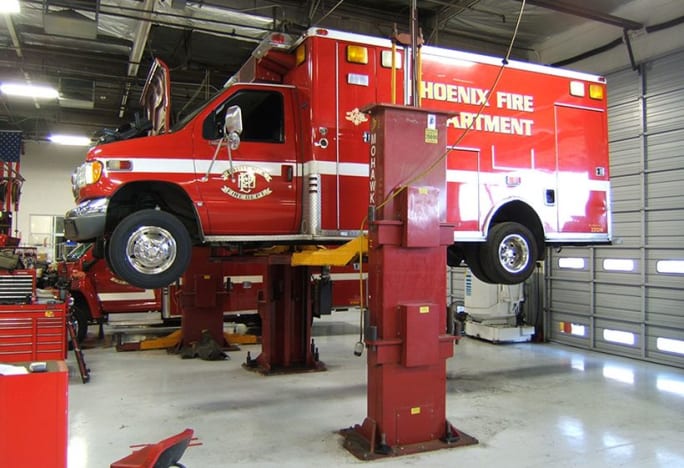
Mohawk Lift's TP-20 lift is a two-post lift with 20,000-lb. capacity.
Photo courtesy of Mohawk Lifts
Which Cooperative Procurement Group Should You Use?
There are various cooperative groups out there, and once you’ve decided that you’re purchasing using this route, which group do you choose? Is there a price difference between them?
“Each contract has its own terms and conditions such as — but not limited to — pricing, freight charges, and installation. Generally, they are fairly consistently priced,” DellAmore said.
Perlstein said that most co-ops’ prices are the same as long as the freight is the same. One national co-op does not include freight costs, resulting in slightly lower prices. However, the freight cost is added on later.
Bilz added, “Some states recognize different contracts as their state contract, and depending on which state the customer is in depends on which contract they can use.”
These lift manufacturers have contracts with the following cooperatives:
Mohawk/ | Rotary Lift | Stertil-Koni | |
NASPO ValuePoint (formerly WSCA-NASPO) | X | X | X |
Sourcewell (formerly NJPA) | X | X | X |
U.S. General Services Administration (GSA) | X | X | X |
HGACBuy | X | X | X |
California Multiple Award Schedules (CMAS) | X | X | X |
Procure.AZ.gov | X | X | |
Oregon.gov | X | X | |
MiDEAL (Michigan) | X | X | |
Texas Multiple Award Schedule (TXMAS) | X | X | X |
Ohio.gov | X | X | X |
Kansas City Regional Purchasing Cooperative (KCRPC) | X | X | |
OGS (New York State Office of General Services) | X | X |
Related: Procurement & Fleet: Working Collaboratively Through Cooperative Contracting
More Procurement
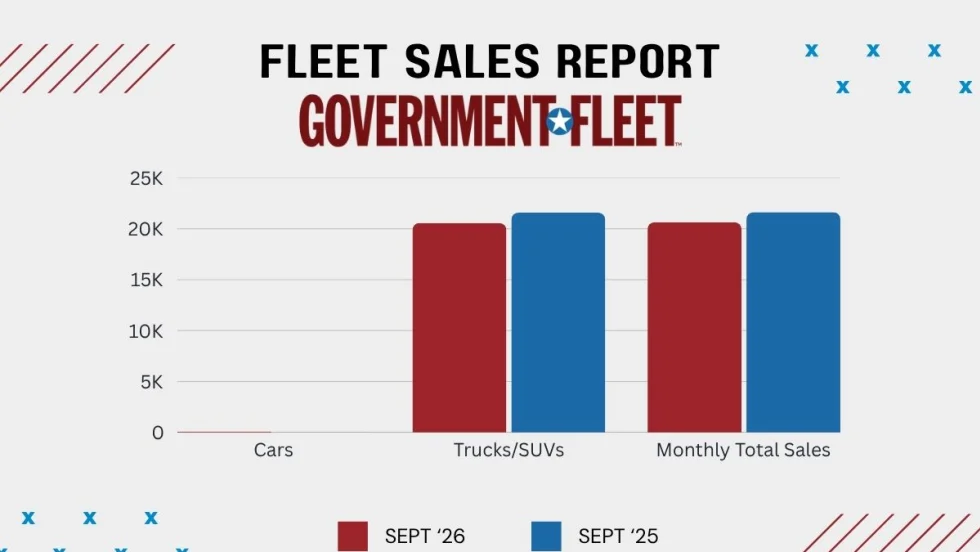
Government Fleet Car Sales More Than Double in September
Government fleet car sales rose 112.8% year over year in September, climbing from 39 to 83 units even as total monthly sales declined 4.5%.
Read More →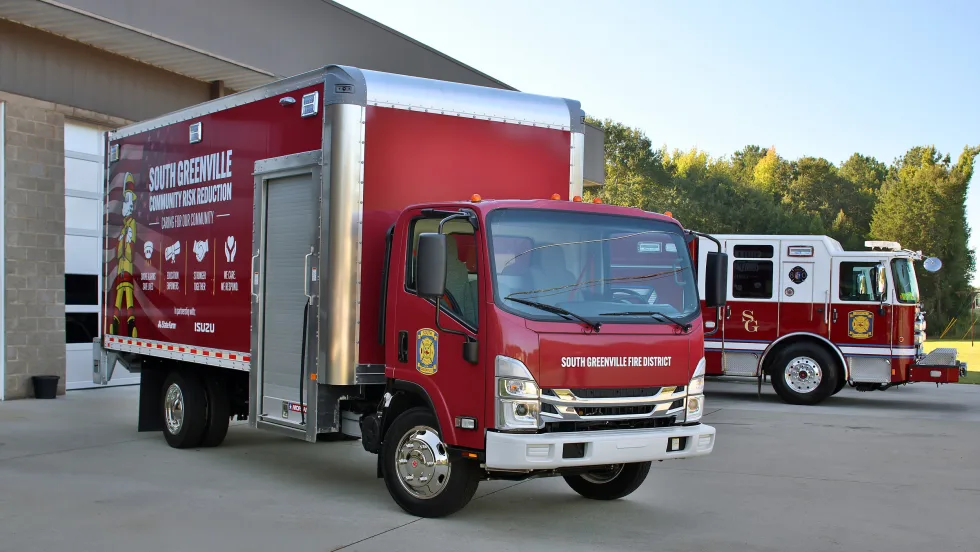
Isuzu Donates New N-SERIES NRR Truck to South Greenville Fire District to Support Community Outreach
Isuzu NRR equipped with Morgan truck body and PALFINGER liftgate will help support fire safety education, community engagement and outreach programs throughout Southern Greenville County.
Read More →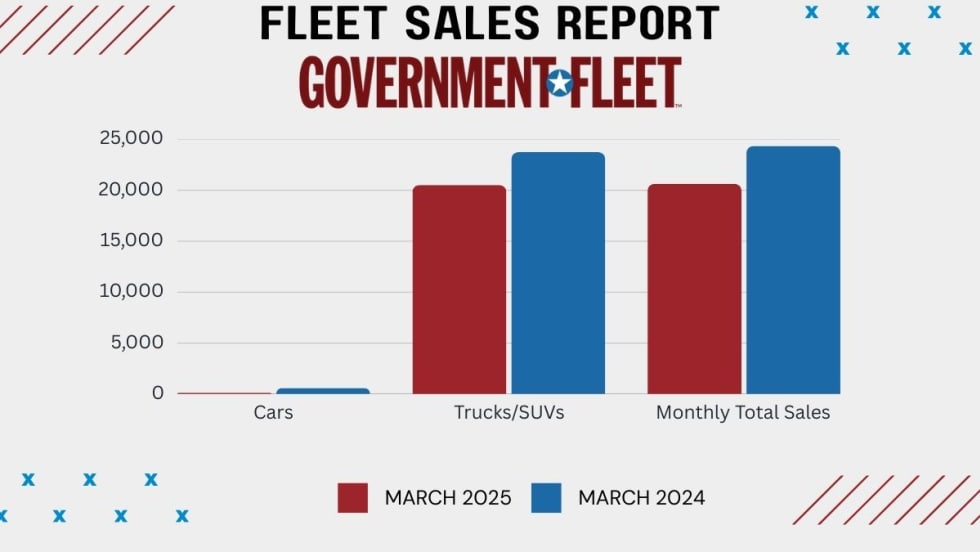
Government Vehicle Sales See Continued Growth from Beginning of Year
Government fleet sales rose from both January and February monthly totals, which were both under 20,000.
Read More →
Updated: Trump Signs Proclamation Imposing 25% Tariff on Auto Imports
A new proclamation signed by President Trump imposes a 25% tariff on imported passenger vehicles and key auto parts, citing national security concerns.
Read More →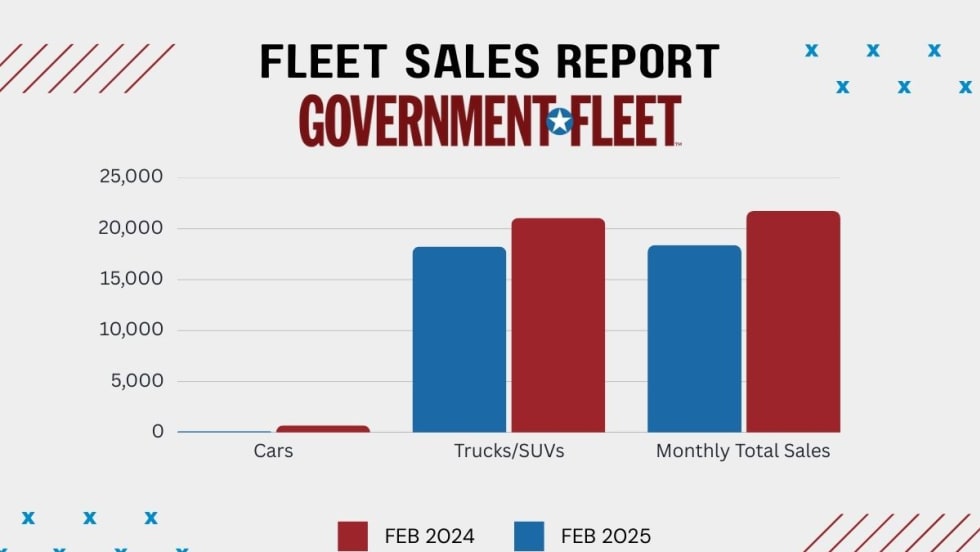
Government Vehicles Sales See Another Dip Compared to 2024
Government fleet sales last month came in at 18,383 vehicles, falling 15.4% from 21,737 in February 2024.
Read More →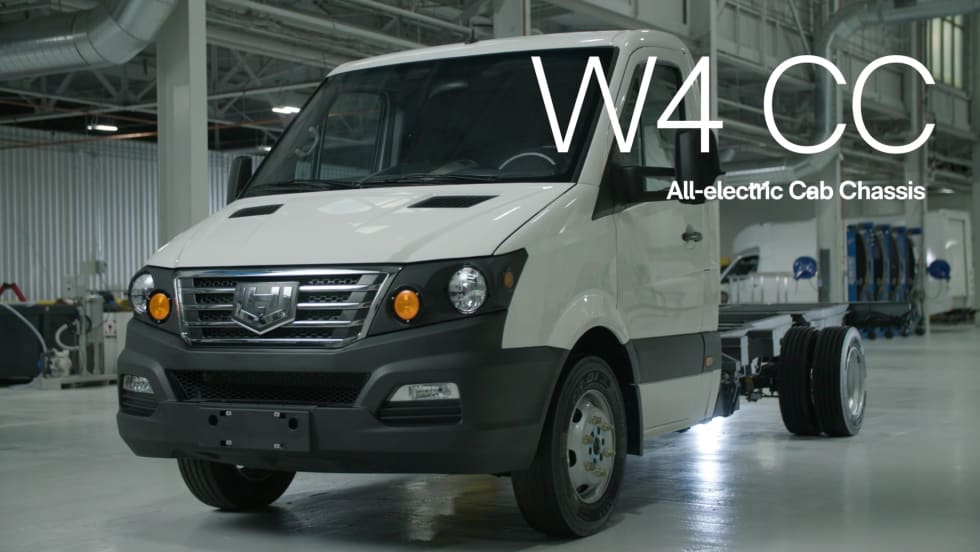
Washington Municipality Adds Workhorse Electric Trucks to Fleet
The municipality will deploy two W4 CC electric work trucks for trash and recycling can switch-outs, enhancing the efficiency of its waste management services.
Read More →
From the Archives: Changes in Fleet Acquisitions
When vehicles become harder to acquire, fleet managers must balance keeping vehicles on the road longer while managing the escalating operating costs of older vehicles.
Read More →
Mack Defense Awarded Contract By U.S. Marine Corps To Develop Medium Tactical Truck
The U.S. Marine Corps awarded Mack Defense a 12-month contract for the initial development of a new Medium Tactical Trucks (MTT) fleet.
Read More →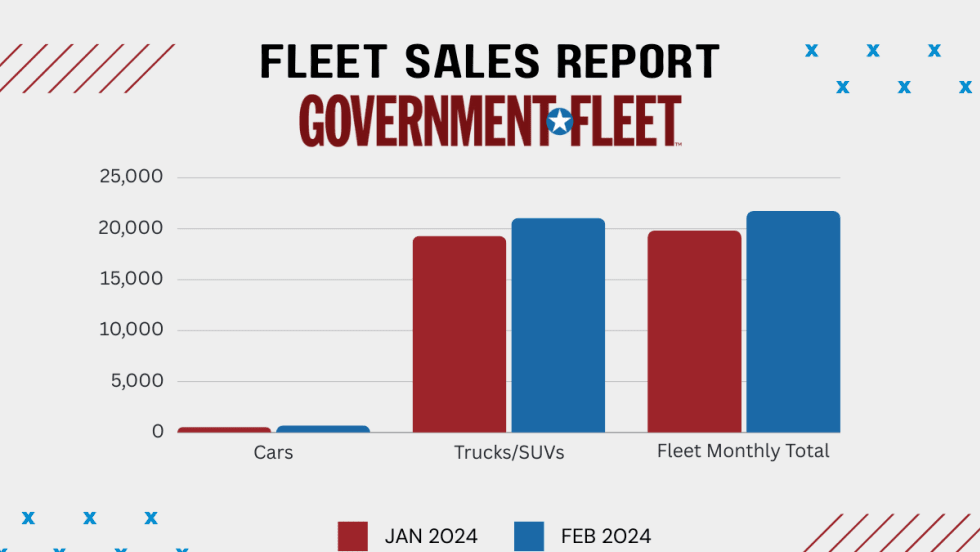
Government Vehicle Sales Rise from January to February
Government vehicle sales continue to rise into 2024 with both car and truck/SUV sales climbing between January and February of 2024, according to Bobit/Government Fleet sales data released March 2.
Read More →
How the UAW Strike Affected Government Fleet Orders from the Big 3
Government Fleet asked the Big 3 how their operations have been in the weeks since the UAW strike ended, with new contracts ratified. Plus, automakers address concerns about vehicle delivery delays.
Read More →