




Why Cooperative Procurement Can Pay Off for Public Fleets
Cooperative buying programs, such as HGACBuy, enable public sector fleets to save on vehicle and equipment purchases.
Public sector fleets and government agencies of all levels throughout the U.S. are increasingly utilizing cooperative procurement, or consortium, tactics to purchase vehicles and equipment at the lowest possible price.
Designed to promote activity among local governments, cooperative procurement improves efficiency by granting inter-governmental contracting authority at the local level, including contracts between all political subdivisions and state agencies.
HGACBuy Cooperative Purchasing Program
Open public procurement allows a government entity to purchase items
while demonstrating fiscal responsibility with taxpayer money, offers vendors an opportunity to compete, and enables governments to obtain the best overall price, according to Bob Wooten, program manager,
cooperative purchasing, Houston-Galveston Area Council. (H-GAC).
In 1971, the cooperative procurement strategy was introduced to the state of Texas with the passing of the Interlocal Cooperation statute, which allows a city, county, state, or other government entity within the state of Texas to legally cooperate for activities such as purchasing.
“It can take 3-9 months to complete a procurement process. Soft costs include time involved in research, negotiating a contract, and attorney and staff fees,” said Wooten.
However, through HGACBuy — HGAC’s cooperative purchasing program used exclusively by governmental entities — any government agency can procure items, including cars, fire trucks, and fleet maintenance equipment. After the competitive bid process, H-GAC issues a two-year contract to the lowest responsible bidder. Minimizing cost and time, the contract allows government entities that meet legal requirements to purchase equipment, according to Wooten.
“Public fleets can obtain better pricing through the contract, leveraging the power of our membership to get the best possible pricing. The competition and size of membership usually provide better pricing than fleets would get on their own,” said Wooten.
Services Offered
As a designated purchasing agent on behalf of participating government fleets, H-GAC performs the following services for competitive bids and proposals:
Conducts research and surveys.
Develops specifications for each product or service.
Solicits vendor participation and issues specifications documents.
Conducts pre-bid and pre-proposal conferences.
Opens bid and proposal responses before evaluation.
Issues vendor contracts awarded by the H-GAC board of directors and certifies contract validity.
Let the Bidding Begin
The bid process starts with a draft bid solicitation sent to all potential bidders. After a pre-bid conference, the final bid document is created and, after evaluation, the H-GAC board of directors awards the winning vendor a contract to provide goods and services to government members.
“For example, if a city wanted to buy 10 police cars, they would look on our Web site (www.hgacbuy.org) to see which vendors we have under contract for the type of police car they want. The member would call the contractor directly to work up a quote for them based on HGACBuy’s contract pricing. The member would then purchase directly from the vendor who delivers the product or service to the member,” said Wooten.
A contracted list of aftermarket options is also available to vendors, including light bars, customized paint, etc.
In 2005, $220 million in products and services were bought through HGACBuy and about $240 million in 2006. The program has 300 vendors under contract and more than 1,700 government agency members spread across 27 U.S. states, growing by about 125 agencies each year, according to Wooten.
H-GAC is just one government-to-government co-op for procuring goods. The Mid America Regional Council (MARC) serves the Kansas City regional market in the same way H-GAC serves nationally.
Using Another State’s Contract
H-GAC’s contract terms and conditions mandate the guaranteed lowest
prices on vehicles and equipment, according to Steve Perlstein, government sales manager for Mohawk Lifts, an HGACBuy vendor and contract holder for garage lifts with Multiple Award Schedule (MAS) contracts serving 19 states, HGAC, MARC, and GSA.
For agencies that don’t have a contract, state procurement statutes (purchasing laws) allow an agency within the non-contracted state to use another state’s contract.
“For example, there are no lift companies that have a contract with the state of Colorado; however, the town of Parker, Colo., wanted to purchase a Mohawk lift and used another state’s contract, which offered four lift brands, as a contracting vehicle,” said Perlstein.
WSCA Stipulates Lowest Pricing
The Western States Contracting Alliance (WSCA), a trade organization
comprising mostly Western states, also has a contract for garage lifts and related equipment; however, any state can join this contract. Since each offer stipulates the prices are the lowest to any
government agency, if a price decreases for the private sector, or the product’s list price decreases, so does the government price, according to Perlstein.
The WSCA was a competitively bid contract, sent to all members of the Automotive Lift Institute (ALI).
For a WSCA state to become an active participant in the multi-state WSCA contract, the state signs a participation agreement attached to the WSCA contract.
Not all WSCA member states have joined the WSCA procurement, while some non-WSCA member states, such as Missouri, have joined. Participation in a WSCA contract is a state-by-state decision. However, if a state elects to participate in a WSCA contract, usage is voluntary among its local government agencies, according to Perlstein.
More Operations
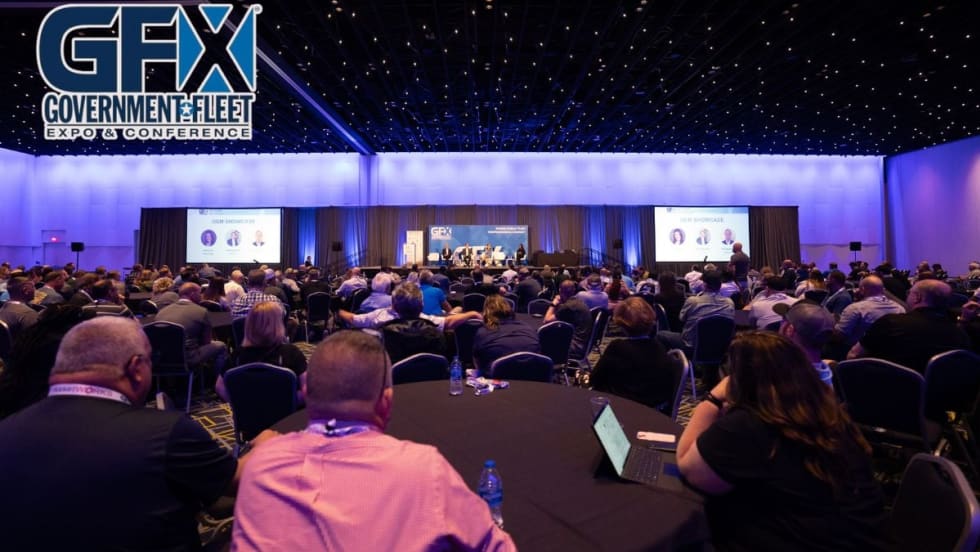
Public Fleet Professionals Set to Converge as GFX Gets Underway
Known as the largest gathering of public fleet professionals in the nation, GFX will feature in-depth training sessions, emerging fleet technologies, and access to leading suppliers and service providers.
Read More →
The Technician Pipeline: Finding, Keeping, and Promoting Techs Within the Operation
A look at where to find good talent, what fleets are doing to incentivize those techs to stay within the fleet, and what promotion looks like for a technician within the public sector.
Read More →
5 Public Fleet Stories Worth Revisiting Before GFX | The May Dispatch
Public fleet leaders are being asked to prepare for more, communicate better, and make decisions that hold up under pressure.
Read More →
Drive More Profit with Greater Fleet Uptime
Fleet downtime costs money. JASPER helps keep vehicles on the road with quality remanufactured components, fast nationwide delivery, and reliable solutions that boost uptime and profitability.
Read More →
Turning Connected Vehicle Data Into Decisions That Matter
Fleet leaders have more data than ever, but turning that data into clear, actionable decisions remains a challenge. This white paper shows how leading organizations are using connected vehicle data to improve safety, reduce costs, and optimize fleet performance. Learn how to turn insight into action across your fleet.
Read More →
Are You Tracking Your Fleet's True Total Cost of Ownership?
Bobit Business Media surveyed 190 fleet professionals and found that while most fleets are tracking costs, fragmented systems and data gaps are keeping true TCO visibility out of reach. With rising pressure to control spend in an increasingly volatile environment, the gap between what fleets think they know and what the data actually shows is wider than you might expect. See how your peers are managing costs today and where the industry still has room to improve.
Read More →
Minneapolis Fire Department Prepares to Add Three New Pierce Enforcer Pumpers to Front-Line Fleet
The order, secured through Pierce dealer MacQueen, marks the department’s move from commercial chassis pumpers to Pierce custom fire apparatus designed to meet the operational demands of Minnesota’s largest city.
Read More →
The Human Side of Fleet Leadership: Lessons from Larry Campbell
As public fleets navigate rapid change through AI, telematics, and increasing operational pressures, Larry Campbell believes the fundamentals of leadership matter more than ever. The longtime fleet leader reflects on accountability, integrity, and why earning trust remains the foundation of a successful fleet operation.
Read More →
Turn Fleet Data Into Smarter Decisions
Fleet leaders have access to more operational data than ever, but disconnected systems and unclear metrics often slow decision-making instead of improving it. This article outlines five practical steps fleets can take to transform fragmented data into actionable insights that improve planning, safety, utilization, and long-term performance.
Read More →
RoadFlex Brings Fleet Spend Management to the Field with Mobile App for Drivers, Fleet Managers
Through the RoadFlex mobile app, drivers can access their assigned cards, view recent transaction activity, and upload receipts directly from their mobile devices.
Read More →