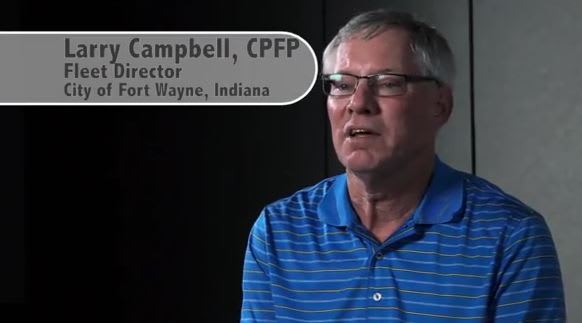
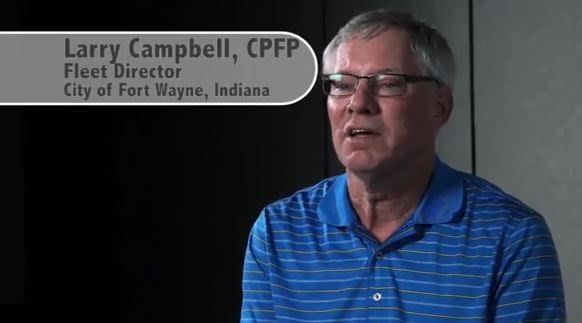
In Government Fleet's Knowledge Sharing video series, Larry Campbell, CPFP, fleet management director for the City of Fort Wayne, Ind., discusses the computerization of fleet management, keeping a good professional reputation, and thinking before speaking.
by Staff
March 10, 2015
1 min to read
In Government Fleet's Knowledge Sharing video series, Larry Campbell, CPFP, fleet management director for the City of Fort Wayne, Ind., discusses the computerization of fleet management, non-technical fleet managers, keeping a good professional reputation, and thinking before speaking.
Campbell started in fleet 36 years ago as a mechanic’s helper and has risen to become one of the most respected public-sector fleet managers in the industry. During his time at Fort Wayne, Campbell has been a champion for alternative fuels, upgraded the city’s fleet facility to modern standards, and developed a point system for procurement to better explain to elected officials why the lowest bid may not be the best bid. Campbell was the 2012 Public Sector Fleet Manager of the Year and is on the Board of Directors for the Greater Indiana Clean Cities Coalition.Campbell manages a fleet of about 1,800 units and two maintenance facilities.
Government Fleet has launched the Knowledge Sharing video series featuring veteran fleet managers sharing advice and tips for new fleet managers. This series was created to address the “graying” of the industry and to allow experienced fleet managers to pass along their industry knowledge.
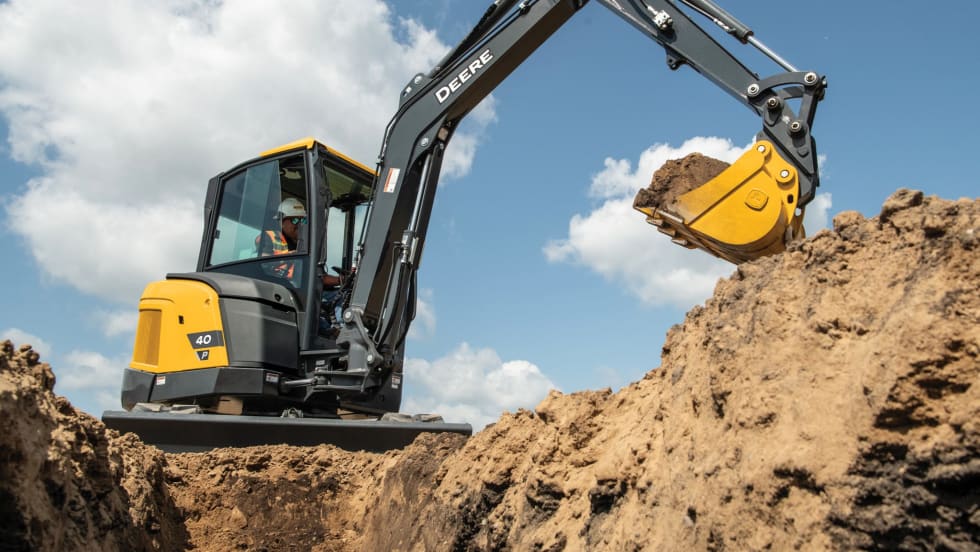
John Deere is adding a compact excavator designed for crews that need to move equipment between jobsites and handle multiple types of work with one machine. The 40 P-Tier weighs less than 10,000 pounds and offers configurable hydraulics, attachment options, and connected fleet-management capabilities.
This week, we look at what past Leading Fleet winners can teach us about making progress, plus how to build a business plan your fleet will actually use.
A fleet business plan should help agency leaders understand the fleet’s value, give the organization a clear direction, and establish shared expectations with customer departments.
This week’s fleet news covers emergency preparedness, shifting vehicle sales, electric truck investments, and new tools for monitoring road conditions.
North Carolina transportation officials are adding another set of eyes to roads that aren't covered by fixed traffic cameras. A statewide deployment gives NCDOT access to on-vehicle imagery to verify conditions during work zones, severe weather, emergencies, and other traffic events.
For Tallahassee, finally receiving 87 delayed police cruisers created a new problem: how to get them on the road without creating a massive backlog. The solution would change more than the upfit process.