





Keep Reading: Debunking the Myths of Cooperative Purchasing in Public Fleets
What’s Driving the Next Chapter of Public Fleet Operations
From balancing legacy vehicles with electrification goals to turning underused data into real outcomes, how public fleets can move forward strategically, even when resources are limited and the path isn’t clear.
May 21, 2025
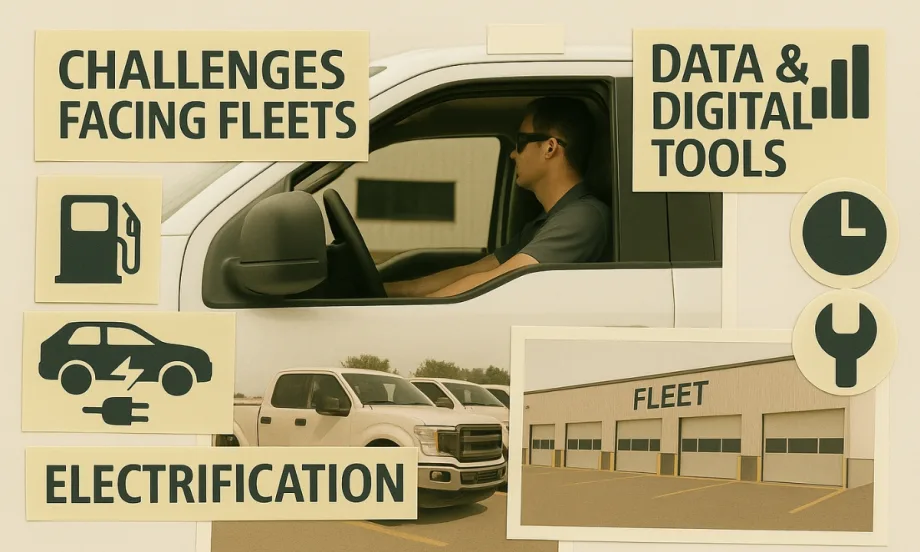
From balancing legacy vehicles with electrification goals to turning underused data into real outcomes, how public fleets can move forward strategically, even when resources are limited and the path isn’t clear.
Photo: This utilizes an AI-generated image. Refer to our Terms of Use.
6 min to read
Public fleets are under more pressure than ever. Budgets are stretched, vehicles are aging, and expectations around sustainability and accountability continue to grow. At the center of this shift is data; once considered a bonus, data is now essential to daily operations and long-term planning.
While attending this year's NAFA I&E conference, we caught up with David Delahuerta, Manager of Public Sector at Geotab, to talk about how agencies are navigating this changing landscape. From balancing legacy vehicles with electrification goals to turning underused data into real outcomes, he shared how public fleets can move forward strategically—even when resources are limited and the path isn't always clear.
Adapting to Increased Reliance on Data and Digital Tools
According to Delahuerta, public fleets have reached a turning point in how they approach data. What was once seen as a nice-to-have is now a core operational requirement. Fleets aren't just collecting data—they're putting it to work.
Delahuerta pointed to examples like optimizing routes, uncovering underutilized assets, meeting compliance goals, and proactively managing risk. These functions have become mission-critical, especially as agencies face tighter budgets, growing calls for transparency, and evolving mandates around electrification.
Pressing Operational Challenges Facing Fleets Today
"Public sector fleets are being asked to do more with less," said Delahuerta. "Less budget, fewer people, and aging vehicles that need to perform like new at the same time."
Fleets are under pressure to electrify, modernize, and account for every dollar spent. One of the biggest challenges, Delahuerta noted, is finding the right balance between maintaining legacy assets and preparing for the future. That means keeping older vehicles road-ready while gradually building out an EV fleet with long-term goals in mind.
He also pointed to the challenge of system inoperability, as fleets adopt more digital tools that don't always work well together. To move forward, agencies are looking for integrated platforms that can consolidate fleet data, extend vehicle life cycles, and support realistic sustainability planning—all while staying grounded in current operational needs.
"Fleet managers are walking a financial tightrope right now, modernizing where they can to make the biggest impact while proving the return on every dollar," Delahuerta explained.
To manage that balance, many agencies are rolling out targeted pilot programs, applying for state and federal funding, and using performance data to justify new investments. Rather than overhauling entire operations at once, they're identifying the areas where technology can deliver the most immediate value, whether that's improving fuel efficiency, extending the life of existing vehicles, or beginning electrification efforts in the places where it makes the most sense operationally.
Delahuerta emphasized that successful modernization doesn't happen all at once, it's about moving forward strategically and building on early wins.
Turning Data into Action and Buy-In
The key to gaining leadership buy-in is starting with shared goals, whether that means improving safety, cutting costs, or advancing sustainability. From there, it's about showing, not telling.
"Proving how technology supports those goals with real data, and doing it quickly, can make the difference," Delahuerta said. One example is idling costs. Once a fleet manager sees how much vehicles have been idling, they can take action. "We've seen public sector fleets cut idling nearly 80% in just a few short months. These quick wins can really help create powerful momentum."
He also noted that many fleets miss opportunities by not acting on the data they already have. "There's so much data at their fingertips—data about idling, maintenance, safety behaviors that, when tapped into, could inform on important decisions about the fleet operations."
But it often goes untouched. Delahuerta said this may be due to the data being siloed or teams not being sure how to translate it into action. The real value, he emphasized, comes when that data informs decisions, like how to adjust maintenance plans or improve operations before problems occur.
Navigating Concerns Around Data Privacy and Internal Accountability with Digital Fleet Systems
As public fleets adopt more digital systems, concerns around data privacy and internal accountability are becoming more prominent. Delahuerta noted that there is growing awareness in the public sector about how fleet data is collected, stored, and used.
To address these concerns, agencies are putting formal governance policies in place, implementing role-based access controls, and clearly communicating with employees and constituents about what data is being processed and why. These steps not only build trust internally, but also help agencies meet increasingly high standards for data security and compliance.
Delahuerta added that adopting tools with strong privacy protections and verified security certifications can give public fleets the confidence they need to move forward with digital systems while ensuring sensitive information remains protected.
Being Prepared for a Shift to Electric or Alternative Fuel Vehicles
"Government fleets are in very different places when it comes to electrification, but this is also true of any fleet," Delahuerta said.
Some are already deploying EVs and building out charging infrastructure, while others are still in the early stages, trying to figure out how and where to begin. Despite those differences, most fleets run into the same challenges: limited funding, infrastructure gaps, and a lot of uncertainty about how to scale.
This is where data can make a real difference. "It can help cut through the guesswork," he explained. Tools that analyze existing fleet operations—such as vehicle use patterns and cost profiles—can offer a phased, realistic roadmap for electrification based on actual performance. It's about using real-world data from your current fleet to make smart decisions, not assumptions.
Still, Delahuerta acknowledged that for many fleets, electrification isn't an immediate step. In those cases, he recommends focusing on optimization. Areas such as fuel usage and routing are places where fleets can already make a sustainability impact.
"These are great ways to start moving the data when it comes to sustainability and cost, the two are not mutually exclusive," he said.
When it comes to the fleet manager's role, as more responsibilities are tied to sustainability and policy goals, there has also been an evolution. Today, faculty are expected to wear many hats, from data analysts and sustainability champions to policy makers and change managers.
"They are balancing traditional tasks like uptime and maintenance, qualified leading electrification projects, complying with evolving regulations and providing their progress to leadership and to the public," Delahuerta said. "It's not just about keeping vehicles on the road, it's about steering agencies through one of the biggest operational shifts in decades."
Barriers Slowing Progress and What Comes Next
Public sector fleets often face what David Delahuerta called the "Triple Threat:" technical friction, cultural hesitation, and financial constraints. "Technically, legacy systems don't always talk to each other, making it hard to unify operations," he said. "Culturally, change can feel risky and uncomfortable, and you have deeply established workflows. Financially, even the best ideas can stall under the weight of unpredictable budgets."
These challenges are compounded by growing external pressures. "In the next five years, legislation and planning will set the pace for public fleet operations, especially around sustainability mandates," Delahuerta said. "But just as important is the rise in public demand for transparency, accountability, and climate leadership. Citizens expect more than service."
Fleets that succeed, he noted, will be those that align with these evolving expectations—using data not just to track performance, but to prove impact, adapt to changing policies, and deliver measurable results. Building operational resilience and strategic agility will be key to navigating both internal constraints and external demands.
Subscribe to Our Newsletter
More Operations
Is Keeping Older Fleet Vehicles Really Saving Money?
Is keeping vehicles longer saving money, and what happens when a diagnostic test points to the wrong fix?
Read More →
How Smart Fleet Strategy Can Help Local Government Agencies Do More with Less
Keeping a vehicle longer may ease this year’s budget, but what does it cost the next one? A closer look at fleet decisions can reveal opportunities to reduce spending while protecting essential services.
Read More →
Connect with Government Fleet on LinkedIn
From industry news and fleet management strategies to conversations with peers, Government Fleet's LinkedIn page offers public-sector fleet professionals another way to stay informed and connected.
Read More →
Town of Queen Creek Named Most Successful Fleet Award Winner of Inaugural RTA Fleet Success Awards
Five fleets were honored at RTA Connect 2026 in Chicago for excellence across resource efficiency, intentional culture, risk management, and stakeholder satisfaction.
Read More →
Sponsored•October 14, 2026
A buyer's guide to fleet management software in 2027
Buying fleet management software in 2027 means looking beyond features and price. As fleet operations, technology and expectations evolve, this guide explores what today’s fleet professionals should consider when choosing a system that can deliver value now and adapt to what comes next.
Read More →
Hazard Alerts, Fleet Car Sales Rise and a New Shuttle Concept
Fleet car sales doubled, but the bigger picture tells a different story in this week’s roundup.
Read More →
How St. Johns County Turned Fleet Data Into Better Replacement Decisions
St. Johns County, Florida, had fleet data, but turning it into reliable decision guidance was another matter. Instead of starting over with a new fleet management system, the county connected existing tools and built a scoring system that gives managers an objective look at fleet health.
Read More →
Fleet Forward Conference Introduces One-Day Passes for 2026
New one-day registration lets fleet professionals attend Tuesday, Wednesday, or Thursday, with passes available for $249.
Read More →
ENC Unveils its ZAVIR Medium-Duty Shuttle
Two variants of the concept shuttles were revealed: a low-floor configuration and a high-floor configuration.
Read More →
Could Your Next Fleet Technician Start as an Intern?
What if your next technician hasn’t worked in a fleet shop yet? What fleets are doing to free up time.
Read More →