





Keep Reading: Graduate Research Guides Multi-Million Dollar Electrification Effort for California Fleet
California County Adds First Volvo Electric Compactor to Fleet
In addition to the DD25 Electric compactor, the Yolo County fleet has six electric forklifts and two electric pickup trucks with three more in the works.
February 12, 2025
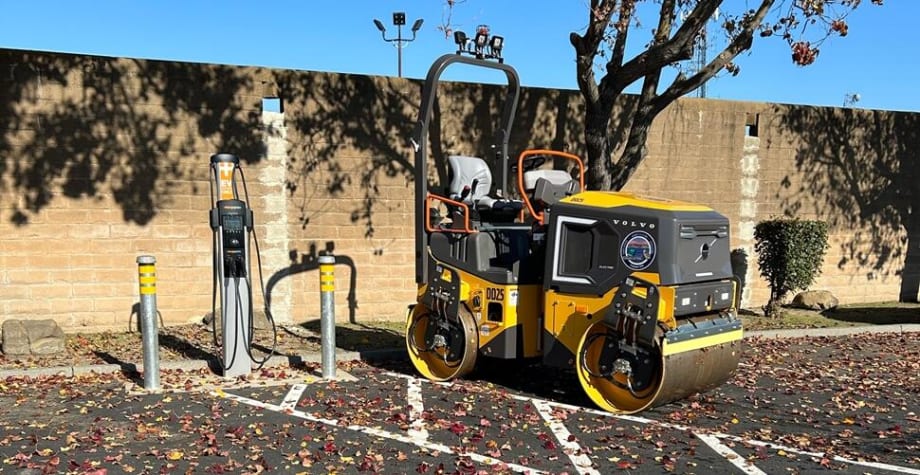
The double-drum compactor will help the Yolo County fleet with a variety of projects, such as compacting soil, gravel and other base materials for road and foundation projects, as well as rolling out and leveling asphalt during road construction and resurfacing.
Photo: Volvo Construction Equipment
4 min to read
In 2020, the Yolo County Board of Supervisors passed a resolution to achieve a carbon-negative footprint by 2030. Moving toward this goal, the Yolo County fleet is putting a new Volvo DD25 Electric compactor to use.
Yolo County's Climate Action and Adaptation Plan outlines more than 180 actions aimed at reducing greenhouse gas emissions and improving climate resilience. One action on the list is electrifying the county’s fleet of on- and off-road equipment.
Rolling Into a More Sustainable Future
In addition to the DD25 Electric compactor, the team has six electric forklifts and two electric pickup trucks with three more in the works.
Ben Lee, fleet superintendent, County of Yolo Fleet Services, said county employees prioritize selecting and utilizing equipment that aligns with the agreed-upon sustainability initiatives, so the small electric compactor was a logical choice.
“The DD25 Electric will help us achieve our goals in several ways: by reducing emissions, lowering noise levels, being more energy-efficient, improving working conditions and promoting environmentally friendly practices,” he said.
It Just Makes Cents
Earlier this year, Lee was invited to an open house event at the Volvo Construction Equipment and Services (VCES) dealership, where he first learned about the manufacturer’s electric machines.
“After discussing the features and benefits of the DD25 Electric plus the upcoming Clean Off-Road Equipment (CORE) Voucher Incentive program, Ben was very interested, and I knew it would be a good fit,” said Scott Nadell, a government sales rep at VCES. “This model is great for the light-duty applications like patch rolling and smaller paving jobs they do.”
Lee and Nadell discussed how a CORE voucher could subsidize the purchase, and because it was a first-come, first-served opportunity, they knew they’d need to act quickly. By initiating the purchase through Sourcewell, Nadell was able to give Lee the best possible price and have everything ready to submit as soon as the voucher program opened.
“Fortunately, they were approved for the grant, and we had a machine already being built at our factory in Pennsylvania that met the fleet’s requirements, so the rest is history,” said Nadell.
No Engine? No Problem.
Yolo County’s DD25 Electric compactor will need to charge no more than a few overnights per week using an existing Level 2 AC charger at their fleet facility. The machine will typically operate for three to four hours a day, and the charge is expected to last for at least six to eight hours.
“There are some remote areas in the county, so we’re looking into a mobile, self-contained charging unit as well, so we wouldn’t have to bring the machine back to the yard each night during a long-term project,” said Lee.
One feature that helps the DD25 Electric run longer is the fact that it does not idle. By turning off automatically when not in use, the machine preserves battery life.
Another perk that Lee’s team is looking forward to is simplified maintenance. Because there is no engine or fuel system, filters and diesel exhaust fluid are not necessary. The usual hydraulic oil and grease are all that’s needed.
The absence of an engine also makes the DD25 Electric quieter than its diesel equivalent, and its smoother ride helps operators feel less fatigued at the end of a shift.
The combination of Volvo’s compactor platform and a 48-volt battery provides about 33 horsepower and 24 kilowatt hours of available power. The drum frequency can be adjusted from 3500 vpm (55 Hz) to 4000 vpm (67 Hz) to cater to different applications.
Progress Remains a Priority
Yolo County is also in the process of developing a Zero Emission Vehicle (ZEV) action plan to identify gaps in infrastructure, recommend locations for new infrastructure development, assess the electrical grid’s capacity to sustain increased ZEV usage and recommend improvements, identify funding sources for future implementation, and more. A Municipal Fleet Transition Plan will be part of this larger strategy, outlining a path to expanding the county’s electric fleet.
Lee views electric equipment as an essential step in reducing emissions and energy consumption, especially as communities and industries work toward meeting stricter regulations and sustainability goals.
“Environmental sustainability is important to our residents, and we have been a leader in the Green Movement for over 40 years,” said Lee. “Yolo County's commitment to sustainability could certainly lead to increased procurement of electric equipment.”
More Operations

Is Keeping Older Fleet Vehicles Really Saving Money?
Is keeping vehicles longer saving money, and what happens when a diagnostic test points to the wrong fix?
Read More →
How Smart Fleet Strategy Can Help Local Government Agencies Do More with Less
Keeping a vehicle longer may ease this year’s budget, but what does it cost the next one? A closer look at fleet decisions can reveal opportunities to reduce spending while protecting essential services.
Read More →
Connect with Government Fleet on LinkedIn
From industry news and fleet management strategies to conversations with peers, Government Fleet's LinkedIn page offers public-sector fleet professionals another way to stay informed and connected.
Read More →
Town of Queen Creek Named Most Successful Fleet Award Winner of Inaugural RTA Fleet Success Awards
Five fleets were honored at RTA Connect 2026 in Chicago for excellence across resource efficiency, intentional culture, risk management, and stakeholder satisfaction.
Read More →
Sponsored•October 14, 2026
A buyer's guide to fleet management software in 2027
Buying fleet management software in 2027 means looking beyond features and price. As fleet operations, technology and expectations evolve, this guide explores what today’s fleet professionals should consider when choosing a system that can deliver value now and adapt to what comes next.
Read More →
Hazard Alerts, Fleet Car Sales Rise and a New Shuttle Concept
Fleet car sales doubled, but the bigger picture tells a different story in this week’s roundup.
Read More →
How St. Johns County Turned Fleet Data Into Better Replacement Decisions
St. Johns County, Florida, had fleet data, but turning it into reliable decision guidance was another matter. Instead of starting over with a new fleet management system, the county connected existing tools and built a scoring system that gives managers an objective look at fleet health.
Read More →
Fleet Forward Conference Introduces One-Day Passes for 2026
New one-day registration lets fleet professionals attend Tuesday, Wednesday, or Thursday, with passes available for $249.
Read More →
ENC Unveils its ZAVIR Medium-Duty Shuttle
Two variants of the concept shuttles were revealed: a low-floor configuration and a high-floor configuration.
Read More →
Could Your Next Fleet Technician Start as an Intern?
What if your next technician hasn’t worked in a fleet shop yet? What fleets are doing to free up time.
Read More →