




Seeing Red: New Virginia State Police Car Lights Add Visibility
Researchers found that drivers passing a stopped police car paid more attention when the car had red lights in its light bar.

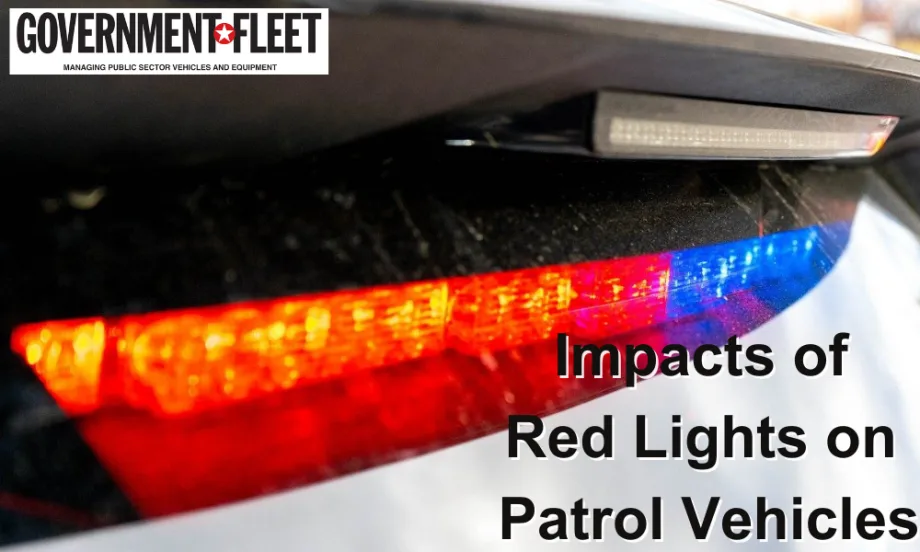
Data collected by Virginia Tech researchers supports that more lighting and the use of red lights in a light bar has a positive impact on traffic behavior.
Photo: Canva/Government Fleet/Jacob Levin for Virginia Tech
An update is coming to Virginia State Police car lights. As the next fleet of Virginia State Police vehicles is being rolled out, the vehicles are being equipped with a new lighting pattern that includes both red and blue lights. The light bars were previously only blue.
The change is based on testing and evaluation by Virginia State Police Driver Training Center staff, nationwide best practices for police vehicle emergency lighting, vendor input, and recommendations from recently published research.
The Science Behind the Color
A team of researchers from the Division of Technology Implementation Infrastructure-Based Safety Systems at Virginia Tech Transportation Institute (VTTI) studied ways drivers can respond faster when they see police cars, as well as ways to make police cars more visible on roadways.
Funded by the National Institute of Justice, the team of VTTI researchers first partnered with Virginia State Police to analyze police vehicle lighting and the responses of drivers in 2014. The most recent study was the first naturalistic traffic assessment of lane-change and speed behavior in proximity to an actively lit law enforcement vehicle conducted on this scale.
After the state's Move Over Law took effect, the researchers used cameras and radars to determine when drivers changed lanes, and whether their speed changed during an incident or traffic stop. Despite the Move Over Law, 40 officers were killed in 2022 across the nation in traffic-related incidents, a 29 percent increase from 2021, according to the National Law Enforcement Officers Memorial Fund.
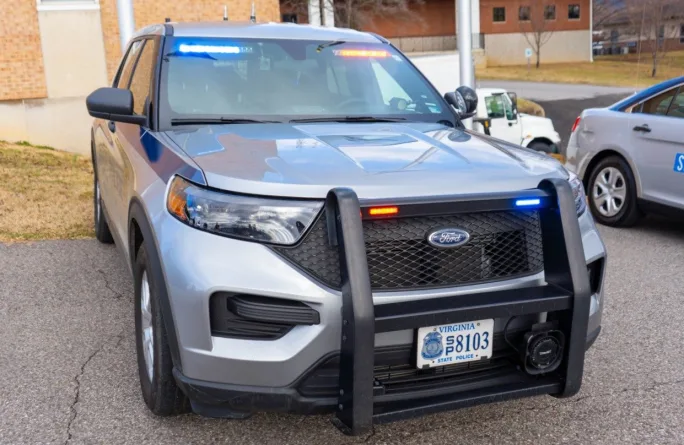
A Virginia State Police patrol vehicle is seen with the department's new emergency lighting configuration.
Photo: Jacob Levin for Virginia Tech
The research investigated a variety of conventional and popular alternatives to lighting police vehicles by placing a police vehicle behind a civilian vehicle on the shoulder of a road. The team analyzed a marked police vehicle with four different lighting patterns and an unmarked vehicle with two different lighting patterns in five locations across Virginia, spanning from urban to rural environments and at different times of day.
Researchers found that the use of red lights had a positive impact on traffic behavior. Behavioral impacts included merging to a farther lane earlier and slowing down while passing.
More Police
Ford Pro Introduces Full-Size 2028 Expedition Police Responder
Ford Pro gave law enforcement customers a first look at the pursuit-rated utility during Police Fleet Expo.
Read More →
Paterson Police Expand Drone Fleet, Launch Real-Time Operations Center
The Paterson Police Department has expanded its drone program and opened a new Real-Time Operations Center designed to support emergency response and incident management. The initiative integrates multiple technologies to provide officers with real-time information during investigations and public safety operations.
Read More →
Why Public Fleet Success Depends on More Than the Vehicles
Tim Coxwell of the Leon County Sheriff’s Office discusses the projects shaping his fleet operation, including long-term work around vehicle selection, greenhouse gas emissions, and cost per mile.
Read More →
Havis Acquires Pro-gard Products
The acquisition brings together two manufacturers of public safety vehicle equipment under one company. Havis says the move expands its portfolio of products for outfitting law enforcement vehicles and other public safety fleets.
Read More →
RTA Fleet Introduces AI Assistant for Fleet360 Platform
As artificial intelligence continues to gain traction across public-sector operations, fleet software providers are finding new ways to incorporate the technology into everyday workflows. RTA's latest addition aims to simplify how users interact with fleet data.
Read More →
2026 Police Fleet Innovators Named
Meet the professionals finding new ways to solve some of law enforcement's toughest fleet challenges.
Read More →
Rynse Expands Nationwide Fleet Wash Access for Law Enforcement
The North Carolina Sheriff’s Association Contract Cooperative purchasing contract aims to streamline procurement process for law enforcement agencies across the U.S.
Read More →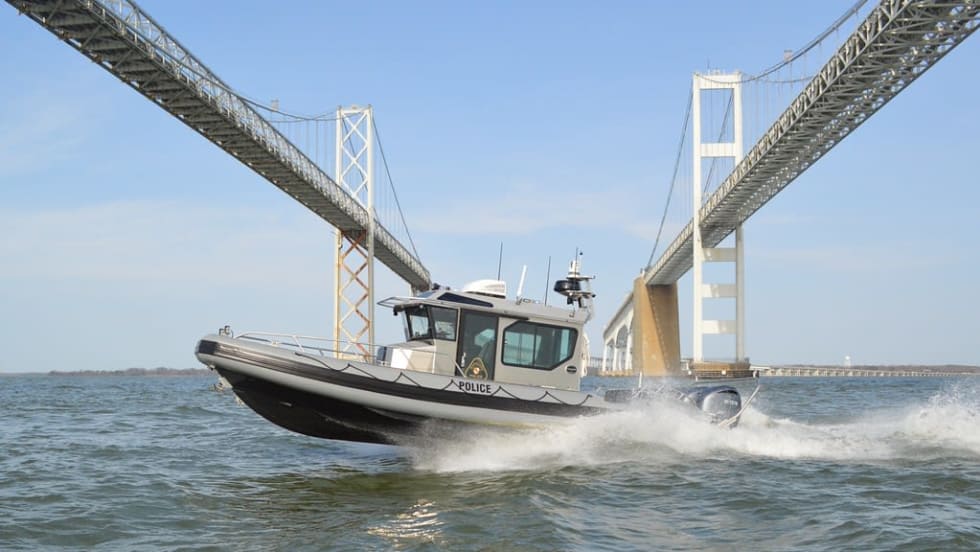
Maryland Natural Resources Police Adds 31-Foot Patrol Boat to Enforcement Fleet
A new addition to Maryland’s marine enforcement fleet is bringing expanded capabilities to Chesapeake Bay operations while honoring a legacy within the agency. The high-performance patrol vessel reflects how law enforcement fleets are adapting to growing demands on the water.
Read More →
LEHR Expands Florida Presence With Enforcement One Acquisition
LEHR has acquired Florida-based emergency vehicle upfitter Enforcement One, marking its eighth add-on acquisition.
Read More →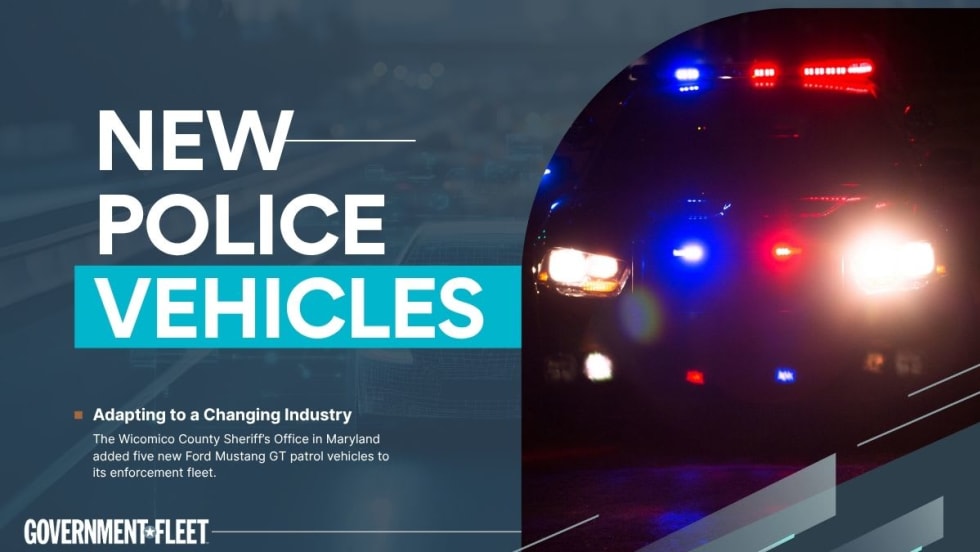
Maryland’s Wicomico County Sheriff Adds Mustang GT Patrol Vehicles
The agency is also working with the Maryland Police Training Commission on a specialized high-performance driving course for deputies assigned to the vehicles.
Read More →