




University of Washington Motor Pool Is Going Green
SEATTLE, WA – The University of Washington is switching to cleaner fuels and using more hybrid vehicles are part of a larger effort at making more environmentally sound, sustainable choices.
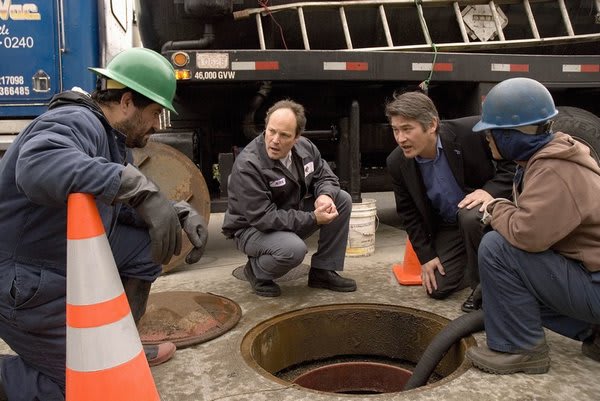
Mitch Poe, program operations specialist for the Motor Pool, left of center, and David Carr, Motor Pool manager, right of center, on Monday discuss the process of cleaning out a diesel tank.
SEATTLE, WA – The University of Washington is switching to cleaner fuels and using more hybrid vehicles are part of a larger effort at making more environmentally sound, sustainable choices, according to University Week, the faculty and staff newspaper for the University of Washington.
According to David Carr, manager of the UW Motor Pool, this summer the Motor Pool switched its trucks and buses to a mixture of ultra-low-sulfur diesel fuel and biodiesel called B-5, which contains five percent biodiesel, a significantly cleaner fuel than regular diesel. As part of that process, Motor Pool had one of its four underground fuel storage tanks that is dedicated to diesel completely cleaned to protect the integrity of the fuel supply.
If there are no problems with the use of B-5, the Motor Pool may ultimately move to B-20, according to University Week. The Motor Pool also has purchased two Ford Escape Hybrids for use in Parking Services, replacing older cars. There are already 19 Prius hybrids among Motor Pool vehicles.
New vehicles and fuels are part the university’s Green Fleet Initiative (formerly called the Clean Fleet Initiative), an effort to reduce pollution and waste in all Motor Pool vehicles.
More Operations
Who Deserves Fleet Recognition and What Could You Teach at GFX?
Who helped shape your fleet career, and what have you learned that could help someone else?
Read More →
What’s Haunting Public Sector Fleets?
Public sector fleet challenges rarely happen in isolation, and addressing one often means understanding how it connects to another.
Read More →
Is Keeping Older Fleet Vehicles Really Saving Money?
Is keeping vehicles longer saving money, and what happens when a diagnostic test points to the wrong fix?
Read More →
How Smart Fleet Strategy Can Help Local Government Agencies Do More with Less
Keeping a vehicle longer may ease this year’s budget, but what does it cost the next one? A closer look at fleet decisions can reveal opportunities to reduce spending while protecting essential services.
Read More →
Connect with Government Fleet on LinkedIn
From industry news and fleet management strategies to conversations with peers, Government Fleet's LinkedIn page offers public-sector fleet professionals another way to stay informed and connected.
Read More →
Town of Queen Creek Named Most Successful Fleet Award Winner of Inaugural RTA Fleet Success Awards
Five fleets were honored at RTA Connect 2026 in Chicago for excellence across resource efficiency, intentional culture, risk management, and stakeholder satisfaction.
Read More →
A buyer's guide to fleet management software in 2027
Buying fleet management software in 2027 means looking beyond features and price. As fleet operations, technology and expectations evolve, this guide explores what today’s fleet professionals should consider when choosing a system that can deliver value now and adapt to what comes next.
Read More →
Hazard Alerts, Fleet Car Sales Rise and a New Shuttle Concept
Fleet car sales doubled, but the bigger picture tells a different story in this week’s roundup.
Read More →
How St. Johns County Turned Fleet Data Into Better Replacement Decisions
St. Johns County, Florida, had fleet data, but turning it into reliable decision guidance was another matter. Instead of starting over with a new fleet management system, the county connected existing tools and built a scoring system that gives managers an objective look at fleet health.
Read More →
Fleet Forward Conference Introduces One-Day Passes for 2026
New one-day registration lets fleet professionals attend Tuesday, Wednesday, or Thursday, with passes available for $249.
Read More →