




Tulsa Opens Public CNG Station
The City of Tulsa, Okla., is opening its second public compressed natural gas (CNG) fueling station on June 8. It will be used to fuel its fleet vehicles and will be open to the public.
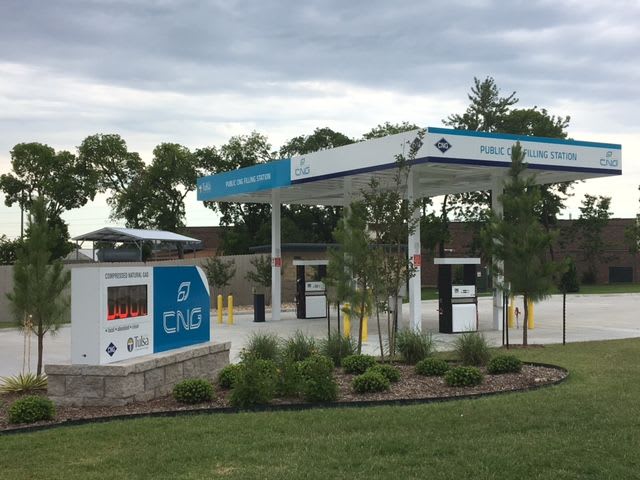
Photo courtesy of City of Tulsa
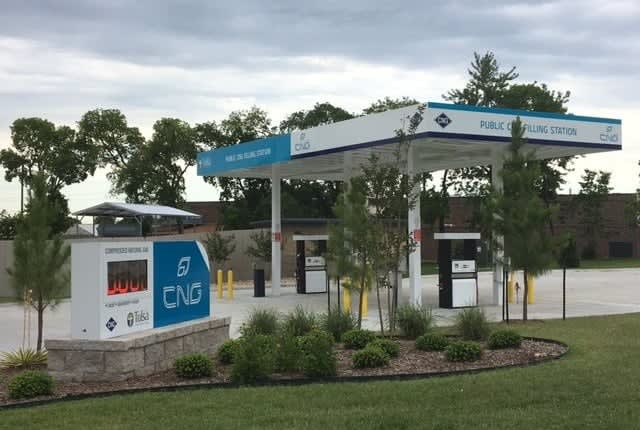
Photo courtesy of City of Tulsa
The City of Tulsa, Okla., is officially opening its second public compressed natural gas (CNG) fueling station to fuel its fleet and public vehicles. State and local officials will attend the grand opening of the $1.75 million station on June 8. Funding for the fueling station came from the “2014 Improve Our Tulsa Sales Tax” funding package.
The unmanned station will be open to the public seven days a week, 24 hours a day. The station will fuel the city’s growing CNG fleet, as well as Tulsa transit buses and public vehicles. The city currently operates 58 CNG vehicles (19 sedans, 30 light-duty trucks, and nine heavy-duty trucks). The station is canopied with two dispensers. The dispensers will have standard half-inch nozzles as well as high-volume three-quarter-inch transit nozzles for greater flow rates. The station can accommodate light-duty vehicles, large buses, and Class 8 heavy-duty trucks.
The new CNG station will have the capacity to produce over 600,000 gasoline gallon equivalents (GGEs) per year with a direct fill rate of 3.6 GGEs per minute. This expands the city’s CNG fueling capacity from 250,000 GGEs to over 850,000 GGEs, an increase of more than 240%. The new station is designed to allow for future growth. In future years, the city will utilize fueling revenues to add a second compressor and additional storage.
This past year, the city saved $20,000 in fuel costs by using CNG. The city’s current cost for CNG is $0.95 per GGE, which is about $0.65 less per gallon than unleaded and diesel fuel. As petroleum prices increase, the city expects to realize greater fuel savings.
The grand opening will coincide with NGV America’s “2017 West Coast-to-East Coast NGV Road Rally.” Rally participants will drive CNG vehicles from Long Beach, Calif., to Washington, D.C., and the Tulsa stop will occur during the June 8th grand opening ceremony.
The City of Tulsa recently solicited help from Kelly Reagan, fleet administrator with the City of Columbus Ohio, to develop a Green Fleet Action Plan. The plan outlines the city’s fuel and emissions reduction goals for 2017 through 2020. Goals of the plan include replacing 50 petroleum-fueled trucks with CNG units and increasing CNG consumption by 60,000 GGEs by 2020. The new CNG fueling station provides the required infrastructure to attain these goals.
More Green Fleet
Sustainability Partners, Energy Systems Group Help Albuquerque Close the Gap on its 100% Renewable Energy Goal
The eight-site, 6 MW solar project has advanced the city toward 100% renewable energy for municipal operations.
Read More →
Port Authority and CALSTART Launch $45 Million Electric Truck and Charging Programs
The programs aim to boost sustainable operations across the East Coast's busiest seaport.
Read More →
Moving Government Fleets Beyond the Vehicle Purchase: EV as a Service
A discussion on how EVaaS is moving beyond pilot programs and what fleets should consider before beginning a larger deployment.
Read More →
Moving Government Fleets Beyond the Vehicle Purchase: EV as a Service
As fleets move beyond small EV pilots, Sustainability Partners CEO Adam Cain explains how EVaaS can address the infrastructure and long-term planning required for larger deployments.
Read More →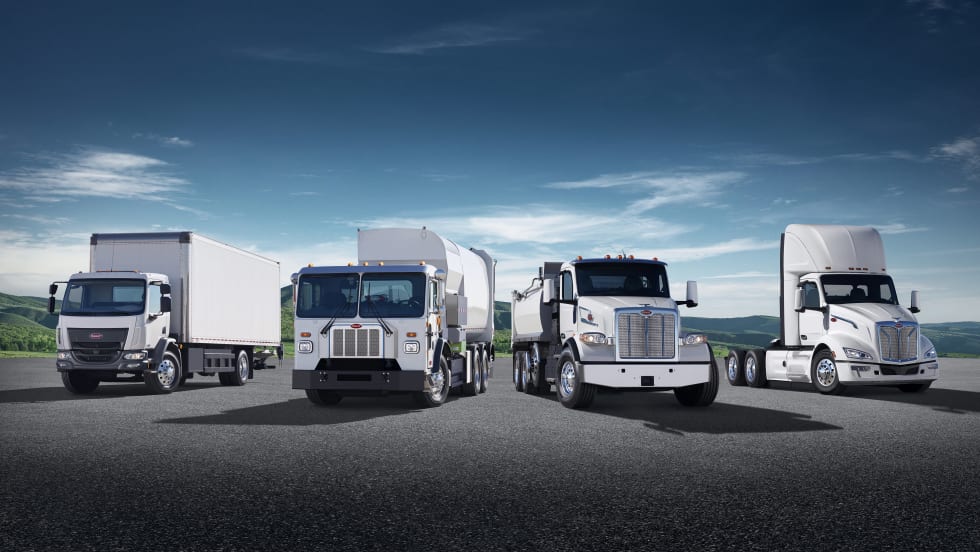
Peterbilt Expands Sourcewell Partnership with Electric Vehicle Lineup
The agreement aims to provide streamlined procurement of Peterbilt trucks for government, education, nonprofit and tribal organizations across the United States and Canada.
Read More →
EV Adoption & Charging Challenges
Where is your fleet in the journey of vehicle electrification? If you're still looking for answers to fleet electrification you've come to the right place.
Read More →
Hawaii Passes Clean Fuel Policy
Hawaii lawmakers passed clean fuel legislation that could support renewable natural gas production, biogas-powered transportation, and lower-carbon fueling options for public and commercial fleets.
Read More →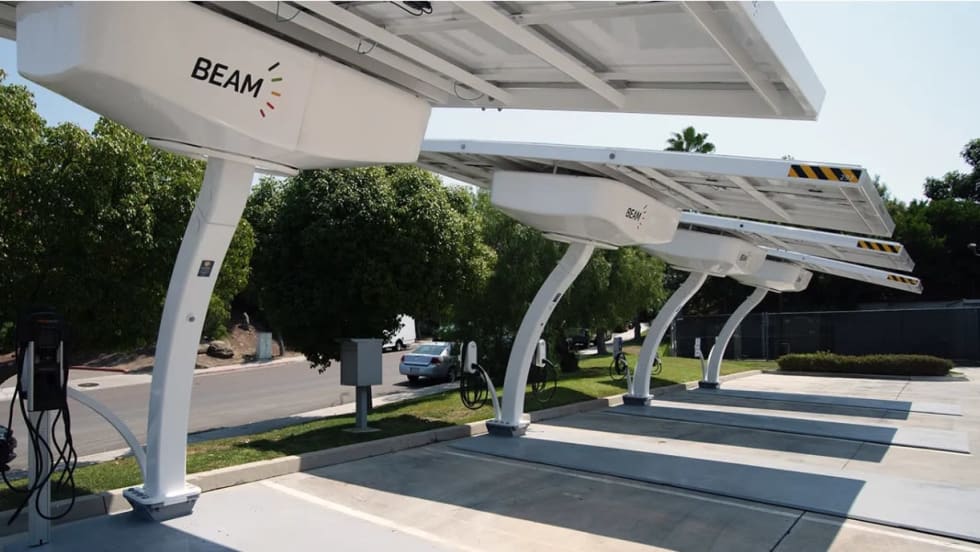
Stanislaus County Deploys Ten Beam Global EV ARC Systems to Support County Fleet Electrification
Stanislaus County deployed 10 off-grid solar-powered EV charging systems and a mobile charging trailer from Beam Global to support its electric fleet operations and emergency response flexibility.
Read More →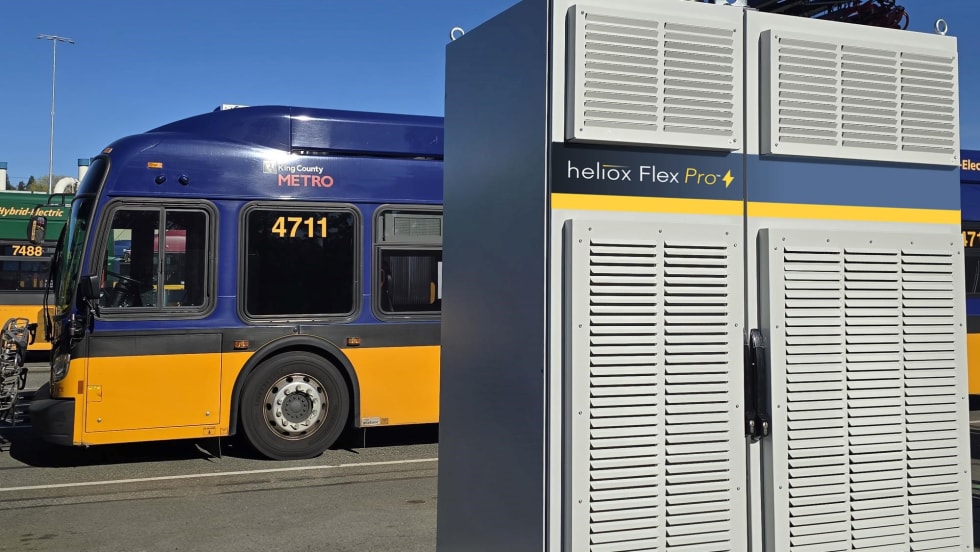
Heliox Pilots 480-kW Bus Charger with King County Metro
King County Metro is piloting Heliox’s new 480-kW Flex Pro charger to support expansion of its battery-electric bus fleet and depot charging infrastructure. The compact charging system supports pantograph and plug-in charging configurations for high-density transit operations.
Read More →