





Not Done? Read The Tire: What You Should Know
Tackling Tire Emissions in NYC
New York City Department of Citywide Administrative Services (DCAS) has partnered with the Clean Fuels Alliance to introduce soy based biotires.
May 3, 2023
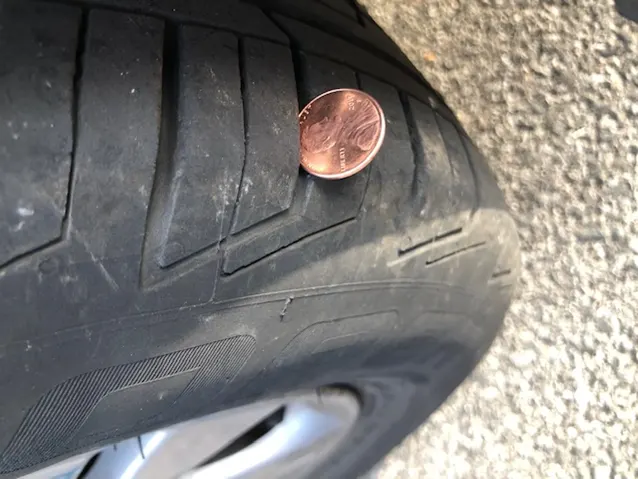
Placing a penny into a tire tread on a car, with the Lincoln head first can help determin if tire tread is too thin.
Photo: NYC DCAS
2 min to read
New York City's fleet vehicles vary from four tires on a sedan to 10 on a garbage truck with approximately 140,000 tires on the road supporting on and off-road fleet. Because of the number of vehicles being used, tire tread has to regularly be checked. This is where the penny test comes in.
Place a penny into a tire tread on a car, with the Lincoln head first. If Lincoln’s entire head is visible, the tread is too thin and the tire should be replaced.
But what happens to the particles and tire components as tires wear down? These particles can end up in streets, the ground, water, and air.
A series of tests found that emissions of particulate matter from tire wear can be 1,000 times worse than from tailpipes, according to Emissions Analytics, an organization that conducts independent emissions tests.
Using Soy-Based Biotires
To reduce the percentage of petroleum product used in vehicle tires, New York City Department of Citywide Administrative Services (DCAS) has partnered with the Clean Fuels Alliance to introduce soy-based biotires. Since 2018, fleet agencies, led by NYPD, have procured 1,931 light duty tires manufactured with soy products, according to DCAS, which first reported on this initiative in August 2020.
According to the DCAS supplier, soy oil can displace up to 60% of the petroleum used in these light duty tires. In 2023, the Department of Sanitation, the Department of Parks and Recreation, the Department of Environmental Protection and Department of Correction will introduce the first heavy duty tires using soy as an alternative to petroleum.
Tire Particle Emissions
In addition to offsetting petroleum use in tires, DCAS is interested in whether these soy tires can help with the tire particle emissions. The City of New York and the City of London launched a fleet partnership in 2017 aimed at best practices in sustainability, safety, and efficiency.
DCAS has also partnered with Emissions Analytics to study the particle emissions from sample city fleet tires and soy-based tires. DCAS has recently provided 83 used tires from 13 separate manufacturers to Emissions Analytics, including soy- and non-soy tires. Emissions Analytics will be looking at the organic chemical profiles for each to assess their tire emissions.
DCAS will also be looking at driving patterns in correlation to vehicle emissions while working to address both the emissions that go into making tires and those that emit from the tires themselves.
More Green Fleet
Sustainability Partners, Energy Systems Group Help Albuquerque Close the Gap on its 100% Renewable Energy Goal
The eight-site, 6 MW solar project has advanced the city toward 100% renewable energy for municipal operations.
Read More →
Port Authority and CALSTART Launch $45 Million Electric Truck and Charging Programs
The programs aim to boost sustainable operations across the East Coast's busiest seaport.
Read More →
Moving Government Fleets Beyond the Vehicle Purchase: EV as a Service
A discussion on how EVaaS is moving beyond pilot programs and what fleets should consider before beginning a larger deployment.
Read More →
Moving Government Fleets Beyond the Vehicle Purchase: EV as a Service
As fleets move beyond small EV pilots, Sustainability Partners CEO Adam Cain explains how EVaaS can address the infrastructure and long-term planning required for larger deployments.
Read More →
Peterbilt Expands Sourcewell Partnership with Electric Vehicle Lineup
The agreement aims to provide streamlined procurement of Peterbilt trucks for government, education, nonprofit and tribal organizations across the United States and Canada.
Read More →
EV Adoption & Charging Challenges
Where is your fleet in the journey of vehicle electrification? If you're still looking for answers to fleet electrification you've come to the right place.
Read More →
Hawaii Passes Clean Fuel Policy
Hawaii lawmakers passed clean fuel legislation that could support renewable natural gas production, biogas-powered transportation, and lower-carbon fueling options for public and commercial fleets.
Read More →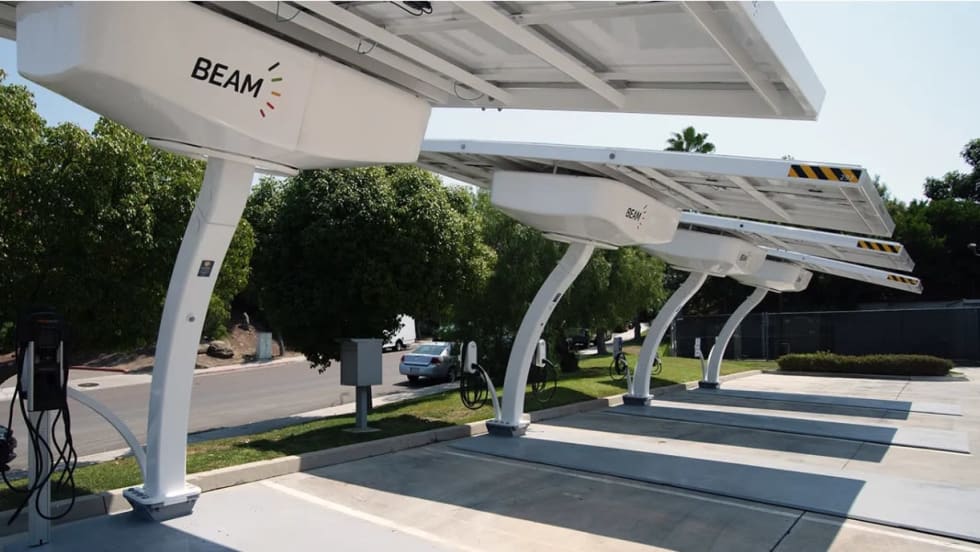
Stanislaus County Deploys Ten Beam Global EV ARC Systems to Support County Fleet Electrification
Stanislaus County deployed 10 off-grid solar-powered EV charging systems and a mobile charging trailer from Beam Global to support its electric fleet operations and emergency response flexibility.
Read More →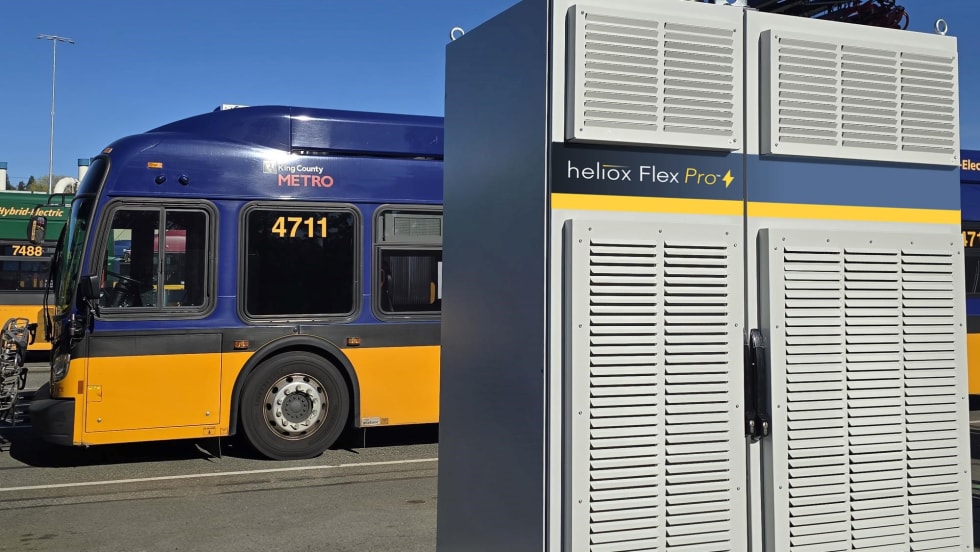
Heliox Pilots 480-kW Bus Charger with King County Metro
King County Metro is piloting Heliox’s new 480-kW Flex Pro charger to support expansion of its battery-electric bus fleet and depot charging infrastructure. The compact charging system supports pantograph and plug-in charging configurations for high-density transit operations.
Read More →