




Survey Shows Biggest Public Fleet Concern is Vehicle Replacement Funds
MT. LAUREL, NJ - A recent policy and procedure benchmark study conducted by ARI found the biggest challenge facing government fleet managers today is obtaining capital funds for vehicle replacements, followed by managing fuel spend and ensuring proper maintenance/PM compliance.
MT. LAUREL, NJ - A recent policy and procedure benchmark study conducted by ARI found the biggest challenge facing government fleet managers today is obtaining capital funds for vehicle replacements. More than 60% of fleet manager respondents noted this was one of their top three concerns. The second and third largest concerns are managing fuel spend and ensuring proper maintenance/PM compliance.
“In a time when all fleets are facing tight budget constraints, it’s not a surprise that obtaining funds for vehicle replacements is a big challenge,” said Cheryl Graham, business development manager – state and government fleets at ARI. “One solution for them,” continues Graham, “is to right size their fleets, which involves completing a utilization study and functional analysis to ensure the appropriate vehicles are assigned to areas where need is greatest.”
Another notable statistic is regarding policy and safety. ARI, which provides fleet management services to many private and public sector fleets, found that generally government fleets do not have the same policy controls in place as do private fleets. Only 38% of public fleets surveyed said they required a signature of acknowledgement upon receiving a fleet policy, while 45% don’t require it and 17% have no policy at all. Further, among public fleets, only 7% of respondents said they test their employees on their understanding of fleet policy. Survey results also show that 32% of fleets do not offer driver safety training. Another difference in standard practice between private and public fleets is the use of motor vehicle records (MVRs) to identify high-risk drivers. Stats show that 44% of public fleets surveyed do not check driver MVRs.
“It’s interesting that a significant number of public fleets make the effort to draft and institute a fleet policy don’t require drivers to acknowledge receipt of it,” Said Suzanne Wilson, ARI’s market research manager. Wilson emphasized that in addition to having employees acknowledge receipt of a policy that may be in place, there are other steps public fleet managers may want to consider to improve employees’ overall knowledge of that policy, such as implementing simple online policy testing modules. “Barring any contractual or legislative obstacles, public sector fleet managers should also consider using motor vehicle record checks to identify high risk drivers,” said Wilson. “This is done fairly consistently in the private sector and can go a long way towards improving a fleets’ overall safety record.”
Policy and Safety Statistics* in Comparison to Private Sector:
Private Sector | Public Sector | |
Have a fleet policy | 90% | 83% |
Require drivers to acknowledge policy | 59% | 38% |
Test drivers on knowledge of policy | 18% | 7% |
Provide safety training to drivers | 77% | 68% |
Checks drivers' motor vehicle records | 90% | 56% |
*All statistics provided by ARI
Another interesting statistic is that three-quarters of respondents have a central motor pool, but only 47%have an automated system to manage these pools. This means nearly one-third of respondents are managing their motor pool manually, according to the survey.
Regarding vehicle remarketing, 45% of respondents said they hold inventory until they have enough to sell rather than selling them individually when available. Additionally, 70% remarket vehicles through a single location/vendor.
Graham added, “While fleets may have policies that dictate specific remarketing procedures, ARI has found that matching each vehicle to the best remarketing channel individually, and expanding the pool of bidders by using multiple virtual markets simultaneously, yields the best result for our clients. While it may be logistically easier to hold vehicles for sale and use a single venue for remarketing, fleets will leave large dollars on the table using this method.”
ARI conducted this survey in October, receiving more than 70 fleet manager responses. For a PDF of full survey results, send a request to inquiries@arifleet.com.
More Maintenance

Freeing Technicians for Higher-Priority Repairs
Could paid interns help public fleets free up experienced technicians for more complex repairs?
Read More →
Stay ready, set and safer with verified fleet inspections
When fleet inspections aren’t verifiable, missed defects can quickly become downtime, safety risks, and service delays. This white paper shows government and municipal fleet leaders how digital inspections can improve accountability, catch issues earlier, and keep vehicles ready when they’re needed most.
Read More →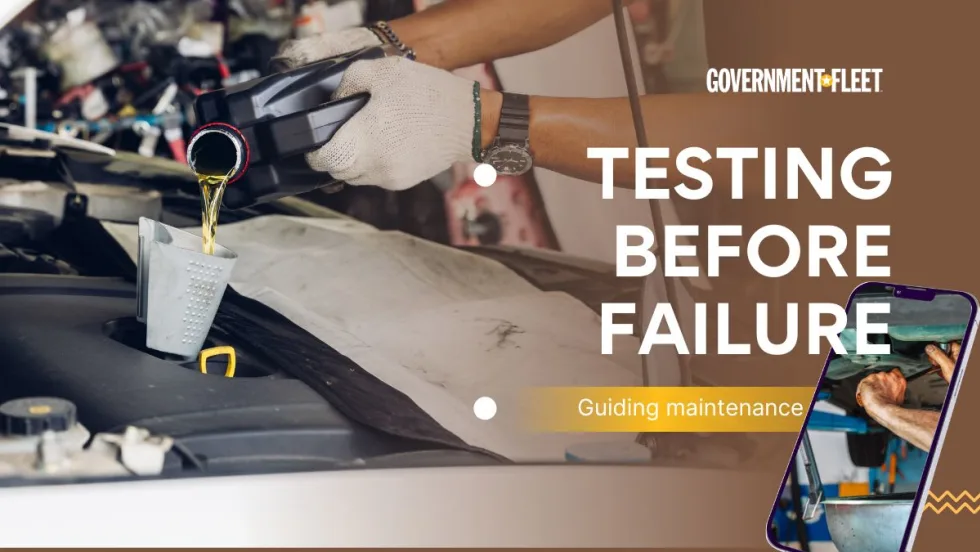
Using Oil Analysis to Help with Engine Losses
How a Texas city changed its lubrication practices and began tailoring preventive maintenance intervals after test results showed oil degradation and fuel dilution.
Read More →
Hidden in Plain Sight: Fleet Compliance Risks
Fleet compliance isn't just about having policies — it's about consistently enforcing them. This practical guide reveals six hidden compliance risks common in public sector and shared fleet operations and outlines proven strategies to improve visibility, accountability, and audit readiness.
Read More →
Is Your Fleet Garage Holding Back Your Operation? | The Fleet Breakroom
Norman Barrientos of Barrientos Design & Consulting explains how agencies can use operational data to show decision-makers why a replacement or major renovation is needed.
Read More →
Reducing Long-Term Maintenance Costs and Downtime
Downtime is rarely caused by a single surprise failure but rather by an issue that builds over time through setbacks ranging from deferred maintenance to poor replacement planning. So what's the fix?
Read More →
The Future of Government Fleet Technicians with Mike Cleary
Insight on preparing for hybrid and electric vehicle service, what fleets need to know about recruiting technicians in a competitive market, and how to make the most of limited training budgets.
Read More →
Work Orders Are More Than Records. They're a Roadmap to Fleet Availability
What if your work orders could predict failures, uncover hidden costs, and boost fleet availability? Here's how leading fleets are using the data.
Read More →
Drive More Profit with Greater Fleet Uptime
Fleet downtime costs money. JASPER helps keep vehicles on the road with quality remanufactured components, fast nationwide delivery, and reliable solutions that boost uptime and profitability.
Read More →
Smart Seasonal Maintenance Tips for Government Fleets
Government fleets carry extra weight, and routes, schedules, and public trust depend on reliability. A systematic spring checklist keeps vehicles in service when agencies need them most.
Read More →