




Proposal Would Put a Boot on Some Jacksonville City Vehicles
JACKSONVILLE, FL – About a dozen Jacksonville City Hall employees could be forced to turn in the keys to their assigned city vehicles if a policy proposed by Mayor John Peyton is approved.
JACKSONVILLE, FL – About a dozen Jacksonville City Hall employees could be forced to turn in the keys to their assigned-city vehicles if a policy proposed by Mayor John Peyton is approved.
Under the proposal, which needs the City Council’s approval, employees can be assigned a vehicle if their job descriptions require them to be identified at all times as a city employee, their position requires travel that would likely damage a personal vehicle, or their jobs require driving more than 700 miles a month, excluding their commutes, according to www.jacksonville.com.
City employees will be allowed to drive assigned-vehicles home if they are considered on-the-clock and at work immediately upon leaving home, they are routinely required to report directly to work to various city locations, or they are routinely required to leave work from various city locations.
Kerri Stewart, the city’s deputy chief administrative officer, said Jacksonville began trying to pare down its list of assigned vehicles as a result of this summer’s budgeting process and later realized a formal policy was needed. In drafting its new policy, the city studied the practices of other local governmental agencies, including city-owned JEA, the Sheriff’s Office, and the Jacksonville Port Authority.
Once the legislation is approved by the council, the city will begin to verify which employees are authorized to have assigned cars and who can take them home. Stewart estimated that after the process is complete, 10 to 15 employees will no longer have assigned vehicles but will instead check out pool cars when needed. Other employees might see their assigned car downgraded, such as from an SUV to a sedan. Others might be slated for upgrades.
The city manages a fleet of 3,806 vehicles, but only 1,739 are driven by city employees and less than 200 are take-home cars. The rest of the fleet is assigned to the state departments of Transportation and Environment Protection and to JEA.
The draft policy also grants the mayor the discretion to authorize car allowances to certain appointed employees. To receive an allowance, the employee must drive at least 200 miles per month for work. Employees will receive $300 a month if their estimated mileage is 200 to 400 miles and $500 if their estimated mileage is 400 or more miles a month.
More Operations

How Dakota County Built a More Structured Fleet Operation
Kevin Schlangen shares how Dakota County’s fleet moved from reactive repairs and limited oversight to a more structured approach built around planning, training, and long-term cost control.
Read More →
Is Your Fleet Ready Before the Storm Hits? | GovCast Cheat Sheet
Could better preparation before a storm and new vehicle technology help fleets recover faster while improving safety?
Read More →
New York City Orders Safety Technology for Municipal Fleet
New York City is expanding the use of pedestrian alerts and intelligent speed assistance across its non-emergency fleet. The executive order establishes new technology requirements for future vehicle purchases while accelerating retrofits on thousands of existing municipal trucks.
Read More →
The Network Behind Better Government Fleet Decisions
A discussion on why relationships across the government fleet community have played such an important role and what shapes the leadership response.
Read More →
Ford, BlackRock, Google and Carhartt Form Skilled Trades Workforce Alliance
The alliance plans to develop a stronger pipeline between training programs and available jobs while examining workforce efforts already underway across the country.
Read More →
The Network Behind Better Government Fleet Decisions
A discussion on why relationships across the government fleet community have played such an important role and what shapes the leadership response.
Read More →
What Makes Fleet Technicians Stay? | GovCast Cheat Sheet
The technician hiring and retention discussion is not new, but the way fleets respond to it continues to matter.
Read More →

On the Road with Government Fleet: Essential Podcasts for Professionals
Let's celebrate listening! Check out a GovCast podcast and discover the insights and strategies that can transform your fleet management approach.
Read More →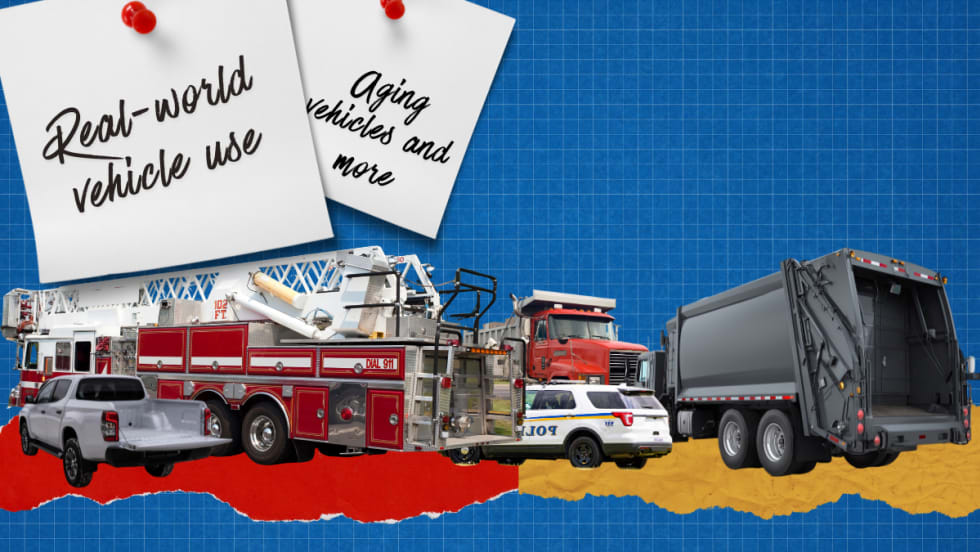
How Real-World Vehicle Use Guides Replacement And Budgets
Three public fleet leaders explain how they use real-world vehicle data and long-term planning to keep aging assets in service and make more informed replacement and budgeting decisions in a high-cost environment.
Read More →