





Related: NYC Maintenance Cost Comparison: Smaller Vehicles Are a Lot Cheaper
NYC: Hybrids Perform Better Than Expected
New York City looked at actual fuel economy of hybrids and non-hybrids and compared them to EPA ratings. It found that hybrids performed better than expected in fuel economy in comparison to the non-hybrids.
June 3, 2020
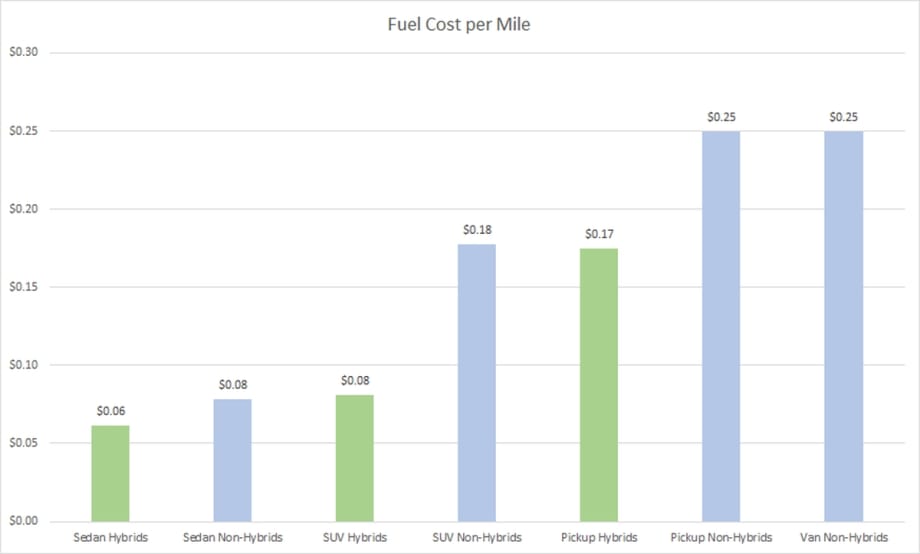
Average fuel cost per mile across all vehicle types is 12 cents.
Data: NYC DCAS
2 min to read

Hybrids on average performed just 12% worse in real-world fuel economy in comparison to EPA expected fuel economy, compared to 24% worse for non-hybrids.
Data: NYC DCAS
The New York City Department of Citywide Administrative Services (DCAS) Fleet looked at actual fuel economy of hybrids versus non-hybrids and found that hybrids performed better than expected in fuel economy in comparison to non-hybrids.
Fleet staff reviewed data in calendar year 2019 for 4,000 non-policing fleet units including sedans, SUVs, pickups, and vans. These units traveled over 18 million miles in this period with half the mileage using hybrid vehicles and the other half non-hybrids. This report focused on hybrids and not plug-in hybrids (PHEVs) or battery-electric vehicles (BEVs).
For each of 106 separate vehicle models and years, staff members compared the Environmental Protection Agency (EPA) fuel economy to the actual fuel economy. EPA ratings are under perfect conditions, while actual use data includes factors such as air conditioning or heating, idling, traffic, etc. Telematics systems were used for accurate reporting on fuel economy per mile.
According to ratings from the EPA, the city’s hybrid vehicles should have been 118% more fuel efficient than non-hybrids. In fact, the hybrids were 155% more fuel efficient. In total, and especially for SUVs, hybrid vehicles perform better in reality against their EPA ratings than non-hybrids, according to the DCAS.
Chief Fleet Officer Keith Kerman wrote in the DCAS fleet newsletter that the reduced fuel costs combined with lower maintenance costs and improved resale value make these hybrids the clear choice, both environmentally and fiscally, over gas models. He further stated that the city is strongly opposed to the federal government’s intention of changing current Corporate Fuel Economy Standards (CAFE).
DCAS has published these findings, including the findings for each model, here (Excel download).
More Green Fleet
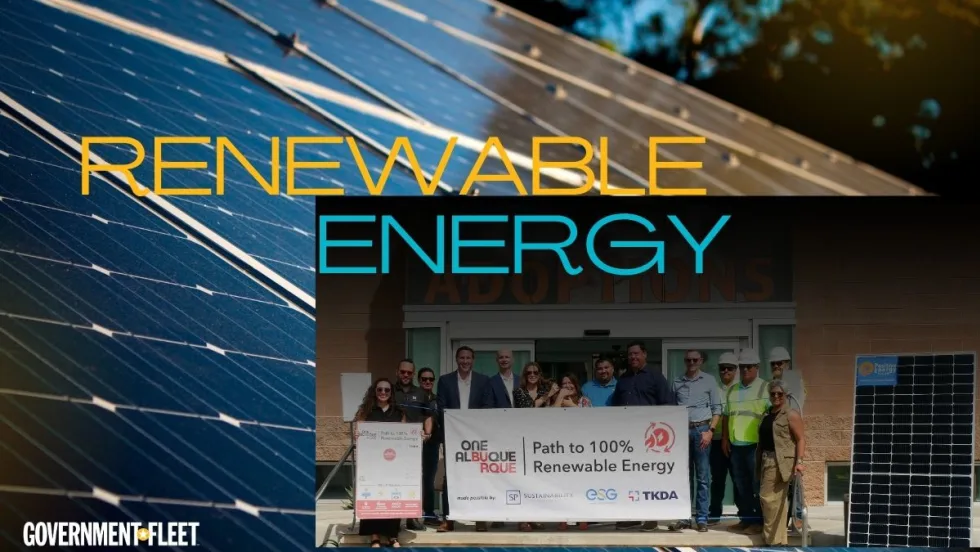
Sustainability Partners, Energy Systems Group Help Albuquerque Close the Gap on its 100% Renewable Energy Goal
The eight-site, 6 MW solar project has advanced the city toward 100% renewable energy for municipal operations.
Read More →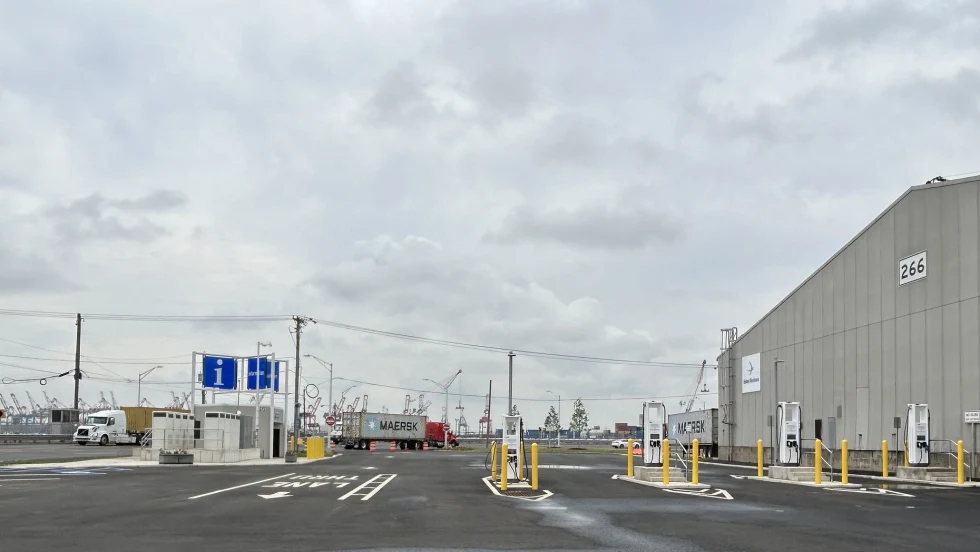
Port Authority and CALSTART Launch $45 Million Electric Truck and Charging Programs
The programs aim to boost sustainable operations across the East Coast's busiest seaport.
Read More →
Moving Government Fleets Beyond the Vehicle Purchase: EV as a Service
A discussion on how EVaaS is moving beyond pilot programs and what fleets should consider before beginning a larger deployment.
Read More →
Moving Government Fleets Beyond the Vehicle Purchase: EV as a Service
As fleets move beyond small EV pilots, Sustainability Partners CEO Adam Cain explains how EVaaS can address the infrastructure and long-term planning required for larger deployments.
Read More →
Peterbilt Expands Sourcewell Partnership with Electric Vehicle Lineup
The agreement aims to provide streamlined procurement of Peterbilt trucks for government, education, nonprofit and tribal organizations across the United States and Canada.
Read More →

EV Adoption & Charging Challenges
Where is your fleet in the journey of vehicle electrification? If you're still looking for answers to fleet electrification you've come to the right place.
Read More →
Hawaii Passes Clean Fuel Policy
Hawaii lawmakers passed clean fuel legislation that could support renewable natural gas production, biogas-powered transportation, and lower-carbon fueling options for public and commercial fleets.
Read More →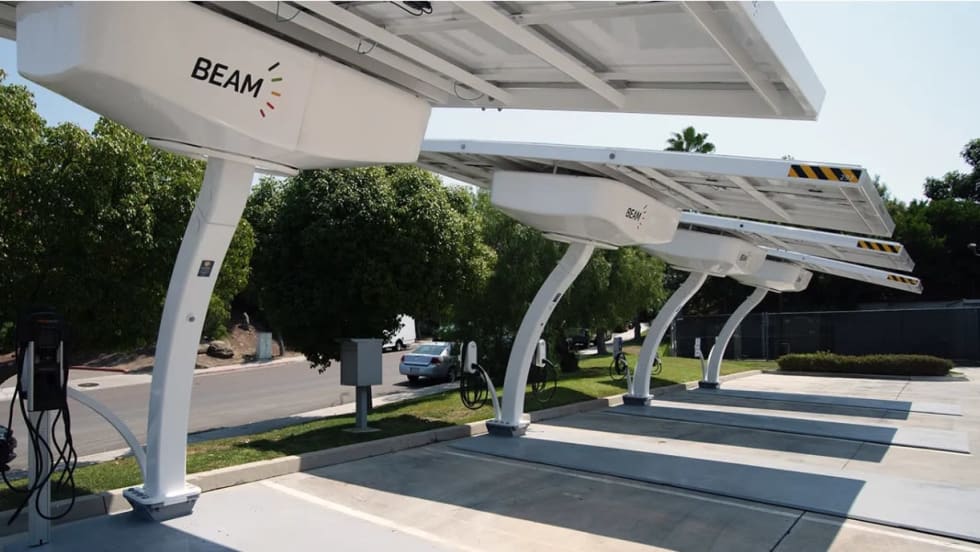
Stanislaus County Deploys Ten Beam Global EV ARC Systems to Support County Fleet Electrification
Stanislaus County deployed 10 off-grid solar-powered EV charging systems and a mobile charging trailer from Beam Global to support its electric fleet operations and emergency response flexibility.
Read More →
Heliox Pilots 480-kW Bus Charger with King County Metro
King County Metro is piloting Heliox’s new 480-kW Flex Pro charger to support expansion of its battery-electric bus fleet and depot charging infrastructure. The compact charging system supports pantograph and plug-in charging configurations for high-density transit operations.
Read More →