




Related: Battery-Electric Vehicles for 2019
New Jersey City University Adds Electric Vehicles
New Jersey City University’s Department of Facilities and Construction Management completed the capital purchase of three electric vehicles.
January 9, 2019
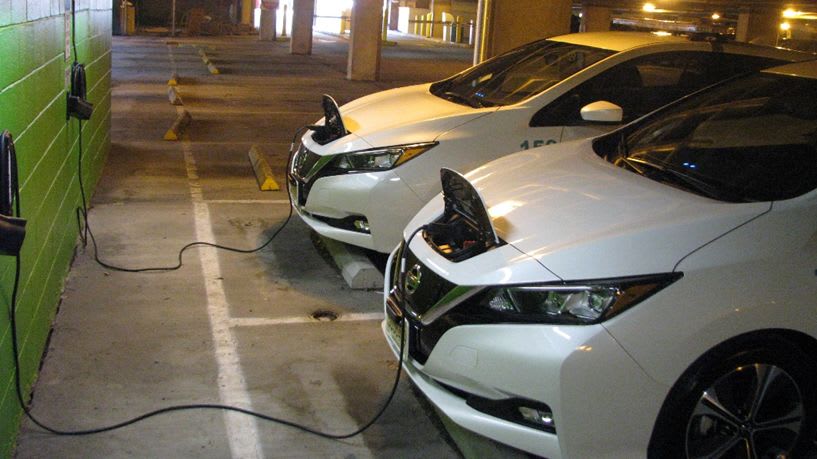
New Jersey City University has added three Nissan Leaf EVs.
Photo courtesy of New Jersey City University
2 min to read
New Jersey City University’s (NJCU) Department of Facilities and Construction Management completed the capital purchase of three electric vehicles (EVs), replacing one vehicle used for mail deliveries and two vehicles used for campus patrol with three battery-electric Nissan Leafs.
Mailroom Vehicle
The mailroom vehicle, a gasoline-powered 2007 Dodge Caravan, was replaced November 2017 with a 2017 Nissan Leaf EV. The vehicle is used by mailroom staff for traveling to and from the main post office and for delivering mail and packages to university departments. To maximize rear cargo space for packages and mail, the rear seats were removed and replaced with a large cargo cover.
The average annual cost of gasoline for the Dodge Caravan was $574, compared to an average annual electricity cost of $118 for the Nissan Leaf. Maintenance on the Caravan averaged $2,526 per year (based on three years of data). In comparison, maintenance on the Nissan Leaf costs an average $600 per year maintenance (according to Edmunds). In total, the Nissan EV could potentially cut operating costs by $2,382.
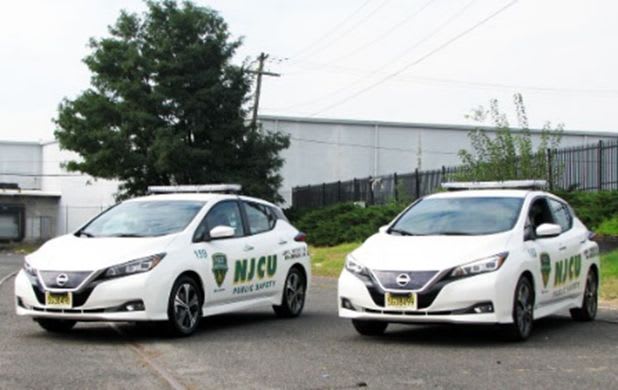
The university expects big savings with its new battery-electric patrol vehicles, because the vehicles are often left idling and subject to stop-and-go driving more often than other fleet vehicles.
Photo courtesy of New Jersey City University
Public Safety Vehicles
Two gasoline-powered patrol vehicles were replaced with 2018 Nissan Leaf EVs in September 2018. The vehicles are used for campus patrol, and were outfitted with LED light bars that include a solar panel; left, right, front, and rear take-down lights; and siren.
These vehicles cost less to operate and maintain than the replaced vehicles, especially since patrol vehicles tend to have longer idle times and increased stop-and-go driving. Fueling up the previous patrol vehicle cost $3,588 per year, compared to average electricity cost average of $711 per year for the Nissan Leaf EV. Maintenance on the previous vehicle averaged $4,506 per year (based on three years of data). Maintenance on the new EV costs $600 per year (according to Edmunds). In total, that’s a $6,783 reduction in operating costs per vehicle, per year.
NJCU’s Sustainability Initiative
NJCU will continue to transition its fleet toward EVs and other clean-burning technologies by replacing older vehicles as they reach full lifecycle. The fleet will likely be a mix of battery-electric cars and extended-range or plug-in hybrids. This does not include specialized vehicles — such as snow plowing vehicles — that can be replaced with engine start-stop systems and other fuel-saving features.
About the Author: Patrick Bartole, CAFM, is the automotive fleet manager for New Jersey City University. During his tenure as fleet manager, he has proactively built the fleet department from its foundation. Bartole is a 15-year NAFA Fleet Management Association member. He can be reached at pbartole@njcu.edu.
More Green Fleet
Sustainability Partners, Energy Systems Group Help Albuquerque Close the Gap on its 100% Renewable Energy Goal
The eight-site, 6 MW solar project has advanced the city toward 100% renewable energy for municipal operations.
Read More →
Port Authority and CALSTART Launch $45 Million Electric Truck and Charging Programs
The programs aim to boost sustainable operations across the East Coast's busiest seaport.
Read More →
Moving Government Fleets Beyond the Vehicle Purchase: EV as a Service
A discussion on how EVaaS is moving beyond pilot programs and what fleets should consider before beginning a larger deployment.
Read More →
Moving Government Fleets Beyond the Vehicle Purchase: EV as a Service
As fleets move beyond small EV pilots, Sustainability Partners CEO Adam Cain explains how EVaaS can address the infrastructure and long-term planning required for larger deployments.
Read More →
Peterbilt Expands Sourcewell Partnership with Electric Vehicle Lineup
The agreement aims to provide streamlined procurement of Peterbilt trucks for government, education, nonprofit and tribal organizations across the United States and Canada.
Read More →

EV Adoption & Charging Challenges
Where is your fleet in the journey of vehicle electrification? If you're still looking for answers to fleet electrification you've come to the right place.
Read More →
Hawaii Passes Clean Fuel Policy
Hawaii lawmakers passed clean fuel legislation that could support renewable natural gas production, biogas-powered transportation, and lower-carbon fueling options for public and commercial fleets.
Read More →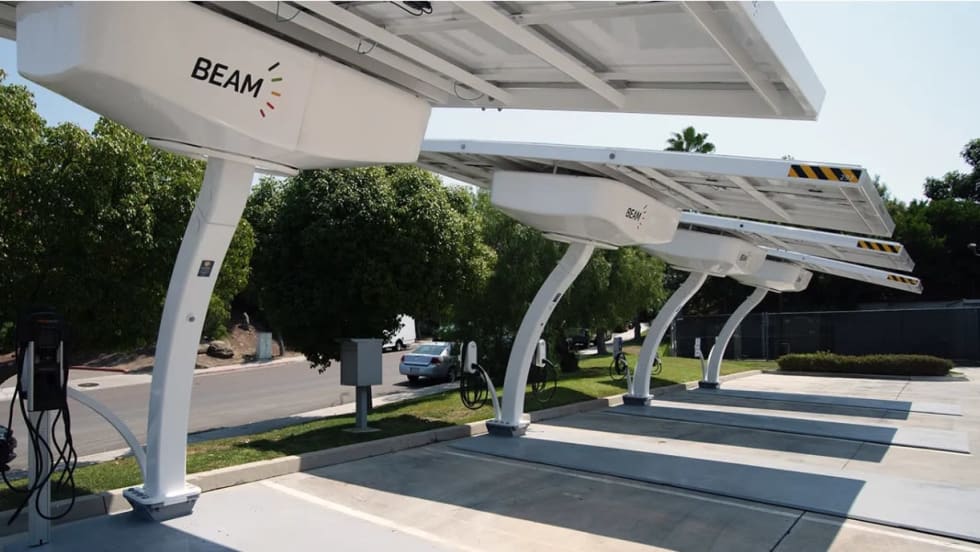
Stanislaus County Deploys Ten Beam Global EV ARC Systems to Support County Fleet Electrification
Stanislaus County deployed 10 off-grid solar-powered EV charging systems and a mobile charging trailer from Beam Global to support its electric fleet operations and emergency response flexibility.
Read More →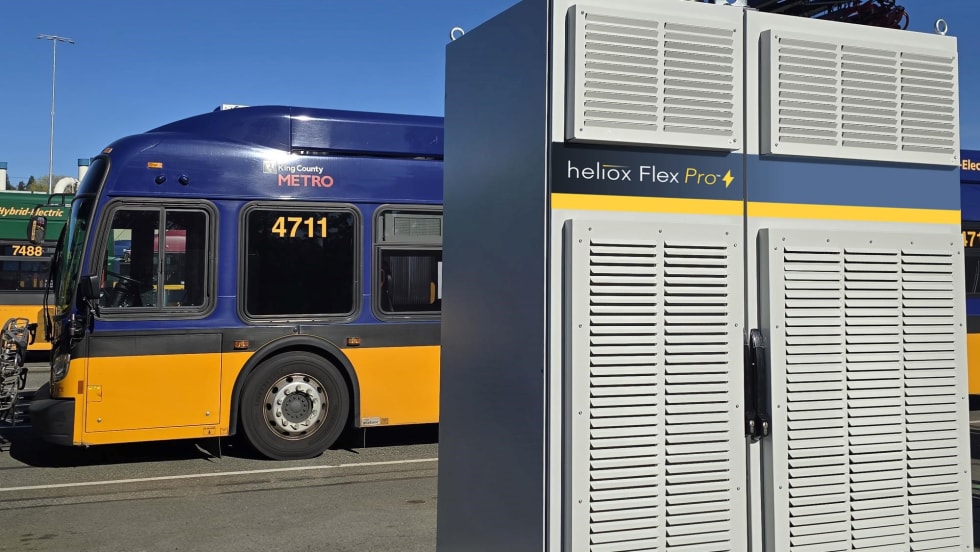
Heliox Pilots 480-kW Bus Charger with King County Metro
King County Metro is piloting Heliox’s new 480-kW Flex Pro charger to support expansion of its battery-electric bus fleet and depot charging infrastructure. The compact charging system supports pantograph and plug-in charging configurations for high-density transit operations.
Read More →