




N.J. City University Installs EV Charging Station
New Jersey City University (NJCU) installed a Level 2 electric vehicle (EV) charging station on campus for employee use and plans to install additional charging stations for fleet use.
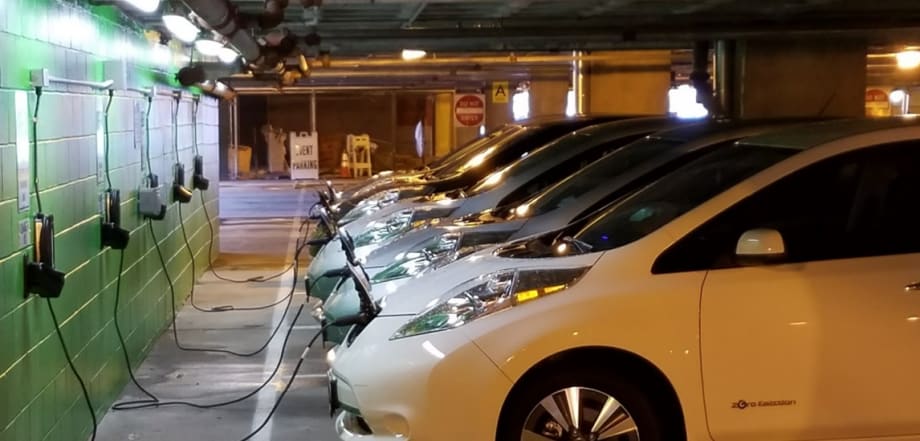
Photo courtesy of NJCU
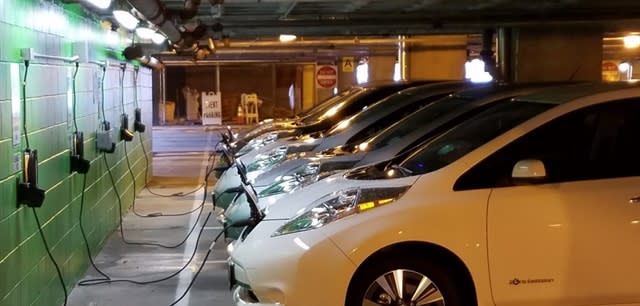
Photo courtesy of NJCU
New Jersey City University (NJCU) installed a five-charger Level 2 electric vehicle (EV) charging station on campus with support from the New Jersey Department of Environmental Protection and Public Service Electric & Gas (PSE&G). The EV charging station is for employees and students that own or lease battery-electric or plug-in hybrid vehicles for commuting to and from campus.
The EV charging station utilizes the Hydra access control system developed by Liberty Access Technologies and includes demand response and load management features. PSE&G provided the university with the chargers and Hydra system free of charge. The utility owns the charging system and collects EV data to analyze the impact and electrical demand. NJCU received funding from the NJ Electric Vehicle Workplace Charging Grant for installation costs and is responsible for electricity costs.
The chargers are available to enrolled participants at no cost for electricity, and parking at the five dedicated EV spots is also free until Dec. 31. Standard parking rates and/or fees will apply beginning Jan. 1, 2018, although NJCU is considering offering a discounted parking rate after Dec. 31.
To use the chargers, participants must obtain an authorization code from Fleet Management to enter into the EV charger keypad. Alternatively, the Liberty Hydra App allows registered users to manage EV charging on their smartphones instead of using the on-site EV charger keypad.
NJCU Fleet Management will oversee and manage the charging stations. This includes registration and enrollment. In addition, the parking department will receive copies of all registered users along with detailed EV data reports on usage.
NJCU Fleet Management, with the assistance of the Public Safety and Parking departments, hosted a Ride & Drive and EV awareness event sponsored by Nissan on campus. The event, held on July 25, featured five Nissan Leafs. NJCU later arranged an on-site demonstration of the new Chevrolet Bolt electric vehicle.
New Jersey City University, under the leadership of Facilities & Construction Management, plans to install additional EV charging stations for fleet usage. In addition, NJCU plans to replace some gasoline vehicles with electric vehicles. These EVs will be beneficial for security patrol and mail deliveries. EV purchases will depend on capital budget approvals and/or possible grants and discounted programs from manufacturers.
Patrick M. Bartole, CAFM, is the automotive fleet manager for New Jersey City University.
More Green Fleet
Sustainability Partners, Energy Systems Group Help Albuquerque Close the Gap on its 100% Renewable Energy Goal
The eight-site, 6 MW solar project has advanced the city toward 100% renewable energy for municipal operations.
Read More →
Port Authority and CALSTART Launch $45 Million Electric Truck and Charging Programs
The programs aim to boost sustainable operations across the East Coast's busiest seaport.
Read More →
Moving Government Fleets Beyond the Vehicle Purchase: EV as a Service
A discussion on how EVaaS is moving beyond pilot programs and what fleets should consider before beginning a larger deployment.
Read More →
Moving Government Fleets Beyond the Vehicle Purchase: EV as a Service
As fleets move beyond small EV pilots, Sustainability Partners CEO Adam Cain explains how EVaaS can address the infrastructure and long-term planning required for larger deployments.
Read More →
Peterbilt Expands Sourcewell Partnership with Electric Vehicle Lineup
The agreement aims to provide streamlined procurement of Peterbilt trucks for government, education, nonprofit and tribal organizations across the United States and Canada.
Read More →
EV Adoption & Charging Challenges
Where is your fleet in the journey of vehicle electrification? If you're still looking for answers to fleet electrification you've come to the right place.
Read More →
Hawaii Passes Clean Fuel Policy
Hawaii lawmakers passed clean fuel legislation that could support renewable natural gas production, biogas-powered transportation, and lower-carbon fueling options for public and commercial fleets.
Read More →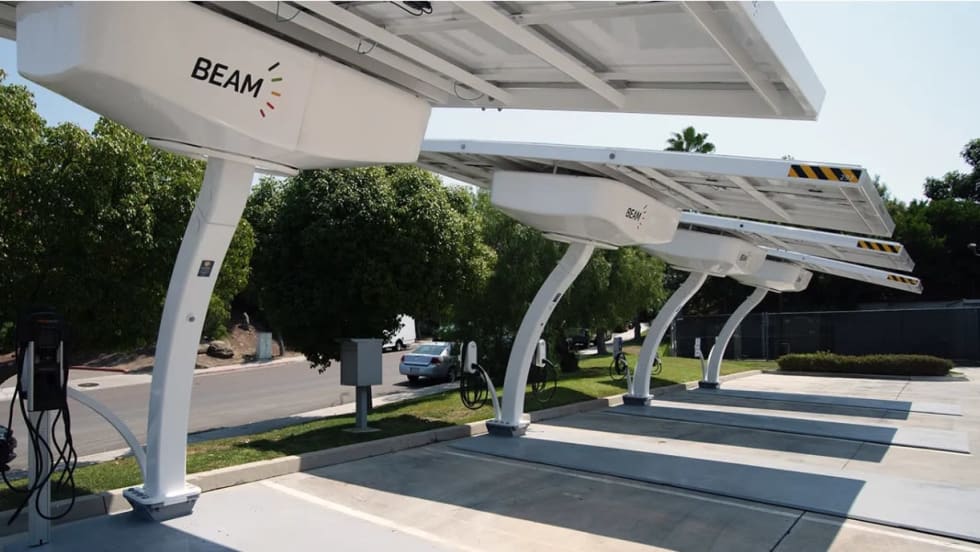
Stanislaus County Deploys Ten Beam Global EV ARC Systems to Support County Fleet Electrification
Stanislaus County deployed 10 off-grid solar-powered EV charging systems and a mobile charging trailer from Beam Global to support its electric fleet operations and emergency response flexibility.
Read More →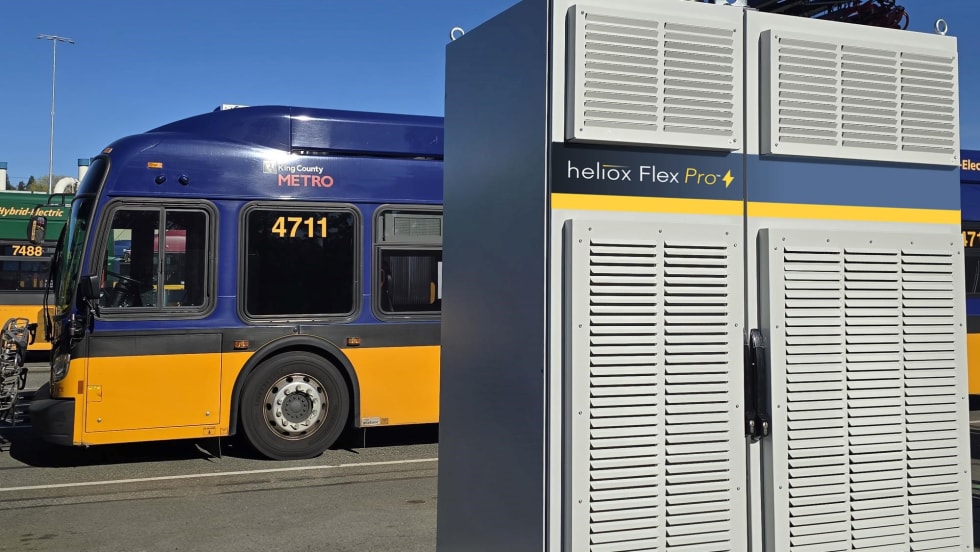
Heliox Pilots 480-kW Bus Charger with King County Metro
King County Metro is piloting Heliox’s new 480-kW Flex Pro charger to support expansion of its battery-electric bus fleet and depot charging infrastructure. The compact charging system supports pantograph and plug-in charging configurations for high-density transit operations.
Read More →