




Moving Toward Alternative-Fuel Vehicles – Biodiesel and Hybrids Appear as Bright Spots
ALEXANDRIA, VA — According to a press release issued by the American International Automobile Dealers Association, in recent years, many of the nation´s fleets managed by public works departments have begun to use alternative-fuel vehicles (AFVs).
ALEXANDRIA, VA — According to a press release issued by the American International Automobile Dealers Association, in recent years, many of the nation´s fleets managed by public works departments have begun to use alternative-fuel vehicles (AFVs). Such vehicles aim to reduce exhaust emissions and reduce the nation´s dependence on foreign oil. The Energy Policy Act of 1992 mandated that state and federal fleets, along with alternative fuel suppliers, phase AFVs into their fleets. Recently, though, the Department of Energy issued a final rule saying that an AFV regulation governing private and local fleets is "not necessary" and cannot be promulgated. A number of local government fleets, however, have launched extensive AFV programs, either of their own volition or because of state law. According to the federal Energy Information Administration [EIA], meanwhile, the number of AFVs on the road more than doubled in the 10 years following 1992. As of 2002, EIA estimates that AFVs number slightly more than a half-million vehicles. Those vehicles are fueled by propane, CNG, E-85 (82,500 vehicles fueled by a blend of 85 percent ethanol and 15 percent gasoline), and electricity. In addition to those vehicles, EIA estimates that by 2000 there were some 2.6 million flexible-fueled vehicles (FFVs) on U.S. roads capable of operating on ethanol blends of E85. An FFV is any vehicle designed to be operated on any mixture of two or more different fuels. But the future direction of the AFV movement is very much in doubt. Part of the problem is in the federal EPAct. "EPAct never required you to use the fuel; it just requires the acquisition of AFVs," said John Brewington, a fleet management consultant based in Mount Airy, N.C. So if you´re a state government with more than 50 vehicles in the fleet, and you meet certain other qualifications, you have to be buying 75-percent AFVs in 2004. "The number of E-85 vehicles far out-strips any other AFVs," said Brewington. "But they never get any E-85 to run them. The availability of E85 is very limited.” “The problem with (E-85) flex-fuel vehicles is infrastructure," said Phoenix´s public works operations manager. "Nationwide, there are only about 200 fueling stations for these flex-fuel vehicles, even though there are more than 2 million vehicles. They´re burning gasoline, not E-85." Plus, E85 vehicles have to be specially engineered to eliminate certain metals from the engine. That´s because the alcohol in E85 is very corrosive, Brewington said. CNG is in trouble, as well. Ford, a major supplier of cars and trucks that run on CNG or propane, is discontinuing production of those vehicles after the 2004-model year. General Motors in 2005 will make two CNG-fueled pickups: a Chevrolet Silverado and a GMC Sierra. The manufacturers´ cutbacks in new CNG vehicles could spell the end of CNG as an alternative fuel, said Mike Brennan, fleet support services manager for Mesa, Ariz., as reported in The Arizona Republic. Mesa runs 72 percent of its fleet on CNG. Phoenix, meanwhile, operates 1,180 alternative-fuel cars, most of them on CNG. That´s down from a peak of 1,350 CNG vehicles in FY 2002- 2003, Duckett said. The city owns 11 CNG fueling sites and used 1.4 million equivalent gallons of CNG in FY 2004. About 71 percent of the city´s alternative-fuel fleet is made by Ford, so the city expects to be hit hard by Ford´s decision. Now, Phoenix´s CNG vehicles are wearing out, budgeted funds have tightened, and federal/state grants have dried up. "Over the past couple of years, fewer and fewer CNG vehicles have been available for purchase, and now Ford dropped the big hammer," said Duckett. "And Dodge stopped making CNG vehicles – we used to buy their vans." Phoenix´s fleet, and those of other cities in Maricopa County, are required by a state law to operate 75 percent of all vehicles on alternative fuel-but electric hybrid vehicles are not acceptable under the law. The state law, however, did not define "fleet," said Duckett. "It´s very difficult to determine what the definition of fleet is, by law," said Duckett. "Are you counting cars, but not bulldozers? It´s tough to get there from here." For more than 10 years, Denver has operated under a "Green Fleet" program as a matter of policy. Goal one, says Executive Order No. 3 from the mayor, is to assure that the city and county of Denver operate a fleet of vehicles that minimizes environmental impact. Goal two is "to enhance domestic energy security and maximize fuel efficiency and diversity." To those ends, city officials have announced a pilot program to use biodiesel in 60 diesel-fueled vehicles. The vehicles include a variety of medium- and heavy-duty trucks, dump trucks, flusher trucks, backhoes, loaders, and the like, said Nancy Kuhn, project coordinator for the Fleet Maintenance Division within the Public Works Department. No modifications are required to the vehicles, to the city´s maintenance facilities, or to the city´s fueling infrastructure. An estimated 50,000 gallons of B-20 biodiesel will be used in the pilot program. B-20 is a blend of 20-percent biodiesel and 80-percent petroleum diesel. The blend has the same energy potential as regular diesel with no drawbacks other than cost, said Brewington. The fuel costs 27 cents more per gallon than regular diesel fuel. Readily available in Denver, biodiesel is a domestically produced, renewable fuel, typically made from seed oils like soybeans, rapeseed, brown mustard seed, or used fryer fat. Biodiesel reduces serious air pollutants such as soot, particulates, carbon monoxide, hydrocarbons, and air toxics. Some years ago Denver launched a program to use propane fuel, and bought 28 vehicles equipped to burn it. A few vans use pure propane, and some pickups are dual fueled with gasoline or propane. "Now they´re difficult if not impossible to buy," said Kuhn. Denver also has 83 vehicles capable of running on E-85. But like many other locations in the country, the city has a very limited infrastructure that can provide E-85 fuel. "The city has these vehicles that can run on E-85, but doesn´t have the infrastructure and fueling ability in place for E-85," said Kuhn. "There is one gas station in Denver that sells E-85. "We´ve been moving to hybrid electric cars in our passenger vehicles," said Kuhn. "We have 53 Toyota Prius passenger vehicles assigned to agencies in our motor pool. Public Works has a motor pool, and a lot of our Prius cars are in that pool." Like Denver, Montgomery County, Md., has a policy of improving air quality and reducing dependence on foreign oil. The county has developed an Air Quality Protection Strategy (AQPS) to help improve the Washington, D.C., area´s air quality. The region is struggling to meet National Ambient Air Quality standards. Ground-level ozone and particulate matter are problems especially in this region, said Mark Ricketts, the county´s program manager. Accordingly, the Montgomery County fleet operates 93 FFVs that can burn E85 fuel, as well as 69 CNG vehicles that include 58 transit buses. The E-85 vehicles include 39 Ford Taurus cars, 25 Dodge Caravan vans, and various other pickups and sport utility vehicles. Presently, said Ricketts, the E-85 flex-fuel vehicles are using E-85 about half the time and regular unleaded fuel the other half. "This is due to the location of the fuel site and where the primary operation of the vehicles occurs," said Ricketts. "The availability of the E-85 fuel has been good so far. However, the cost to transport the fuel makes it 37 cents higher per gallon than unleaded. The fuel is being transported from Indiana and requires a five-day lead time." He said the FFVs that burn E-85 cost $500 more for passenger cars and $3,500 more for trucks. "Montgomery County is paying the difference in cost for the FFVs," said Ricketts.
More Operations

Fleet Forward Conference Introduces One-Day Passes for 2026
New one-day registration lets fleet professionals attend Tuesday, Wednesday, or Thursday, with passes available for $249.
Read More →
ENC Unveils its ZAVIR Medium-Duty Shuttle
Two variants of the concept shuttles were revealed: a low-floor configuration and a high-floor configuration.
Read More →
Could Your Next Fleet Technician Start as an Intern?
What if your next technician hasn’t worked in a fleet shop yet? What fleets are doing to free up time.
Read More →
How Phoenix Is Building Its Next Generation of Fleet Technicians
With more than 8,000 vehicles and pieces of equipment to maintain, the City of Phoenix could not afford to wait for fully trained technicians to walk through the door. Instead, they revamped their entire workforce strategy and showed how public fleets can create their own talent pipeline while preparing existing employees for increasingly complex vehicles.
Read More →
What’s Slowing Your Fleet Down?
Could a change in how work gets done help your fleet return vehicles to service sooner?
Read More →
Can Public Fleets Trust the Data Driving Their Decisions?
Public fleets have more data than ever, but inconsistent records and missing information can still undermine maintenance, replacement, and cost decisions.
Read More →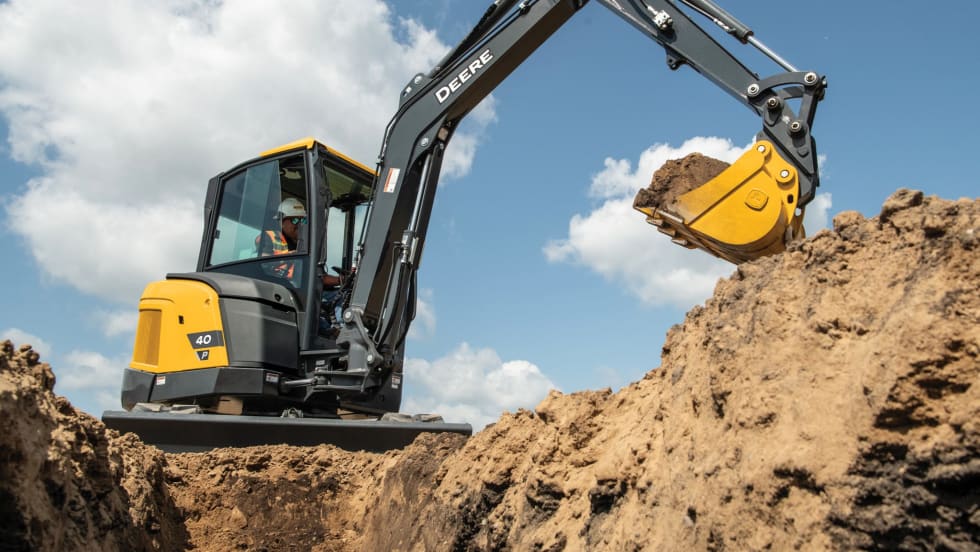
John Deere Introduces 40 P-Tier Compact Excavator
John Deere is adding a compact excavator designed for crews that need to move equipment between jobsites and handle multiple types of work with one machine. The 40 P-Tier weighs less than 10,000 pounds and offers configurable hydraulics, attachment options, and connected fleet-management capabilities.
Read More →
How Leading Fleets Improve and Why Business Plans Matter
This week, we look at what past Leading Fleet winners can teach us about making progress, plus how to build a business plan your fleet will actually use.
Read More →
Nominate a Fleet Leader for the 2027 Public Fleet Hall of Fame
Do you know a fleet leader who has made a lasting impact on the industry? Nominate this fleet professional for the 2027 Public Fleet Hall of Fame.
Read More →
Why Fleet Business Plans Need Three Perspectives
A fleet business plan should help agency leaders understand the fleet’s value, give the organization a clear direction, and establish shared expectations with customer departments.
Read More →