




Michigan Receives Nine Homeland Security Vehicles
SOUTH HAVEN, MI – The State of Michigan received nine of 17 heavy rescue trucks manufactured by Michigan-based apparatus builder Spencer Manufacturing and cab and chassis builder, Spartan Chassis, as part of the Regional Response Team Network (RRTN).
SOUTH HAVEN, MI – The State of Michigan received nine of 17 heavy rescue trucks manufactured by Michigan-based apparatus builder Spencer Manufacturing and cab and chassis builder, Spartan Chassis, as part of the Regional Response Team Network (RRTN). The RRTN provides quick response capability to WMD/terrorism incidents, coordinates resources, and offers expertise at local, state, and federal levels across a wide range of disciplines. The trucks will be in service with local emergency response agencies throughout the State of Michigan. The remaining eight trucks will be delivered by early-September. The Spencer trucks are walk-around rescue trucks with 18-foot heavy-duty extruded aluminum bodies. Over 675 cubic feet of storage space is provided in transverse and coffin style compartments. The trucks are built on Spartan Advantage Chassis with Cummins ISL 370 horsepower engines, Allison 3000 EVS transmissions, and 20-inch raised roof, five-crewmember cabs. Spencer is installing a custom command center in the cab. Other highlights include Whelen all LED warning light package, ROM painted roll-up doors, Wil-Burt Night Scan Light Tower with FRC lightheads, Smart Power 15KW hydraulic generator, Hannay electric cord reels, and FRC Tri-pod lights. Major chassis specifications on the three trucks include 18,000-lb. front axles, 24,000-lb. rear axles, and 199-inch wheelbases. The award to build the trucks was based on Spencer Manufacturing and Spartan Chassis’ ability to closely follow the specifications provided by the RRTN equipment committee and the fact that the major components, body, and chassis, are built entirely in the State of Michigan.
More Operations

What Government Fleets Are Missing About Their True Costs
What are fleet budgets missing, and how can agencies use the data they already collect to make a stronger case for change?
Read More →
Rethinking Fleet Decisions From the Budget Office to the Shop
This October we looked back at how public fleets are reconsidering familiar processes and using what they learn to make better decisions.
Read More →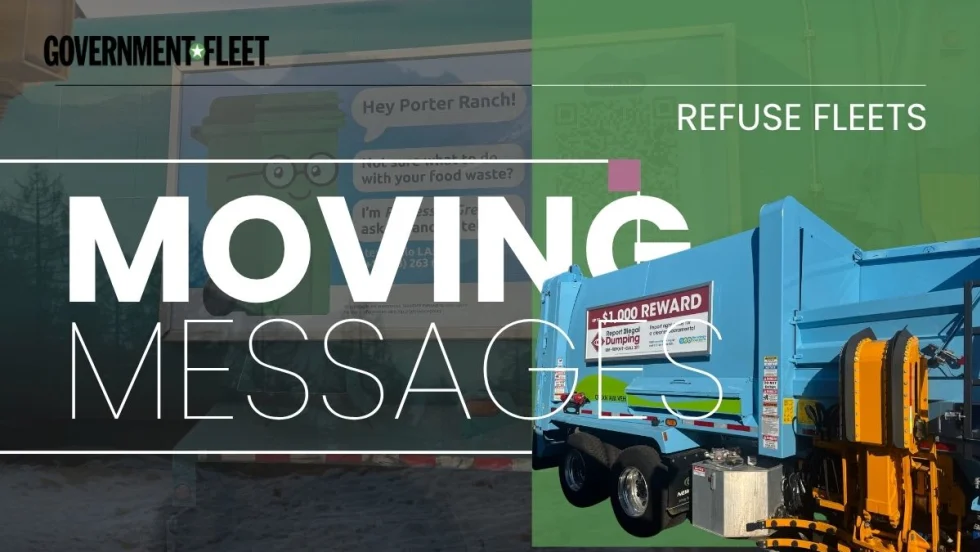
Who Owns the Message on a Refuse Truck?
Refuse trucks can carry public messages into neighborhoods, but keeping those messages current takes planning and clear responsibility.
Read More →
Who Deserves Fleet Recognition and What Could You Teach at GFX?
Who helped shape your fleet career, and what have you learned that could help someone else?
Read More →
What’s Haunting Public Sector Fleets?
Public sector fleet challenges rarely happen in isolation, and addressing one often means understanding how it connects to another.
Read More →
Is Keeping Older Fleet Vehicles Really Saving Money?
Is keeping vehicles longer saving money, and what happens when a diagnostic test points to the wrong fix?
Read More →
How Smart Fleet Strategy Can Help Local Government Agencies Do More with Less
Keeping a vehicle longer may ease this year’s budget, but what does it cost the next one? A closer look at fleet decisions can reveal opportunities to reduce spending while protecting essential services.
Read More →
Connect with Government Fleet on LinkedIn
From industry news and fleet management strategies to conversations with peers, Government Fleet's LinkedIn page offers public-sector fleet professionals another way to stay informed and connected.
Read More →
Town of Queen Creek Named Most Successful Fleet Award Winner of Inaugural RTA Fleet Success Awards
Five fleets were honored at RTA Connect 2026 in Chicago for excellence across resource efficiency, intentional culture, risk management, and stakeholder satisfaction.
Read More →
A buyer's guide to fleet management software in 2027
Buying fleet management software in 2027 means looking beyond features and price. As fleet operations, technology and expectations evolve, this guide explores what today’s fleet professionals should consider when choosing a system that can deliver value now and adapt to what comes next.
Read More →