




Mendocino County Fleet Grappling With Fuel Costs
UKIAH, CA – With the significant rise in fuel costs, Mendocino County, Calif., fleet costs are skyrocketing. The County provides fuel and maintenance for 275 county vehicles, including those driven by the Mendocino County Sheriff's Office, County Public Health, Social Services, building inspectors, among others.
UKIAH, CA – With the significant rise in fuel costs, Mendocino County, Calif., fleet costs are skyrocketing. The County provides fuel and maintenance for 275 county vehicles, including those driven by the Mendocino County Sheriff’s Office, County Public Health, Social Services, building inspectors, among others, according to the Ukiah Daily Journal. Driven about 3 million miles a year, these vehicles have an average fuel economy of 16 miles-per-gallon. County vehicles use approximately 190,000 gallons of gasoline each year. County agencies are billed for gas by the miles they drive, and in order to compensate for higher gas prices, General Services has been raising the charge per-mile for all county vehicles. Some departments may end up paying significantly more for fuel than last year if prices continue to rise. According to the report, the Sheriff’s Office, which accounts for 1.2 million of the 3 million yearly county miles, could end up paying as much as $50,000 more a year for gas if prices continue to rise. The county purchases gas with three different methods:
From wholesalers in 9,000-gallon trucks that fill tanks at county garages.
For outlying areas that are far from county garages, drivers are issued gas cards for special “card lock” systems that allow those drivers to buy gas at some commercial stations at a reduced price.
Each county vehicle also comes with a Voyager credit card for instances when county employees must drive outside the county. In those cases, gas has to be purchased at commercial prices less the federal excise tax.
More Operations

What Government Fleets Are Missing About Their True Costs
What are fleet budgets missing, and how can agencies use the data they already collect to make a stronger case for change?
Read More →
Rethinking Fleet Decisions From the Budget Office to the Shop
This October we looked back at how public fleets are reconsidering familiar processes and using what they learn to make better decisions.
Read More →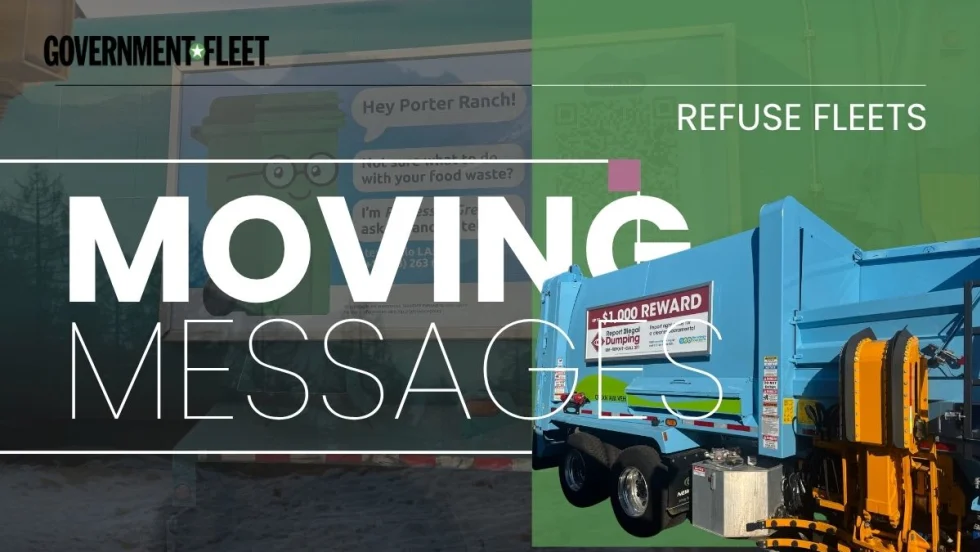
Who Owns the Message on a Refuse Truck?
Refuse trucks can carry public messages into neighborhoods, but keeping those messages current takes planning and clear responsibility.
Read More →
Who Deserves Fleet Recognition and What Could You Teach at GFX?
Who helped shape your fleet career, and what have you learned that could help someone else?
Read More →
What’s Haunting Public Sector Fleets?
Public sector fleet challenges rarely happen in isolation, and addressing one often means understanding how it connects to another.
Read More →
Is Keeping Older Fleet Vehicles Really Saving Money?
Is keeping vehicles longer saving money, and what happens when a diagnostic test points to the wrong fix?
Read More →
How Smart Fleet Strategy Can Help Local Government Agencies Do More with Less
Keeping a vehicle longer may ease this year’s budget, but what does it cost the next one? A closer look at fleet decisions can reveal opportunities to reduce spending while protecting essential services.
Read More →
Connect with Government Fleet on LinkedIn
From industry news and fleet management strategies to conversations with peers, Government Fleet's LinkedIn page offers public-sector fleet professionals another way to stay informed and connected.
Read More →
Town of Queen Creek Named Most Successful Fleet Award Winner of Inaugural RTA Fleet Success Awards
Five fleets were honored at RTA Connect 2026 in Chicago for excellence across resource efficiency, intentional culture, risk management, and stakeholder satisfaction.
Read More →
A buyer's guide to fleet management software in 2027
Buying fleet management software in 2027 means looking beyond features and price. As fleet operations, technology and expectations evolve, this guide explores what today’s fleet professionals should consider when choosing a system that can deliver value now and adapt to what comes next.
Read More →