Lee County, Fla., Featured in Knowledge Sharing Video
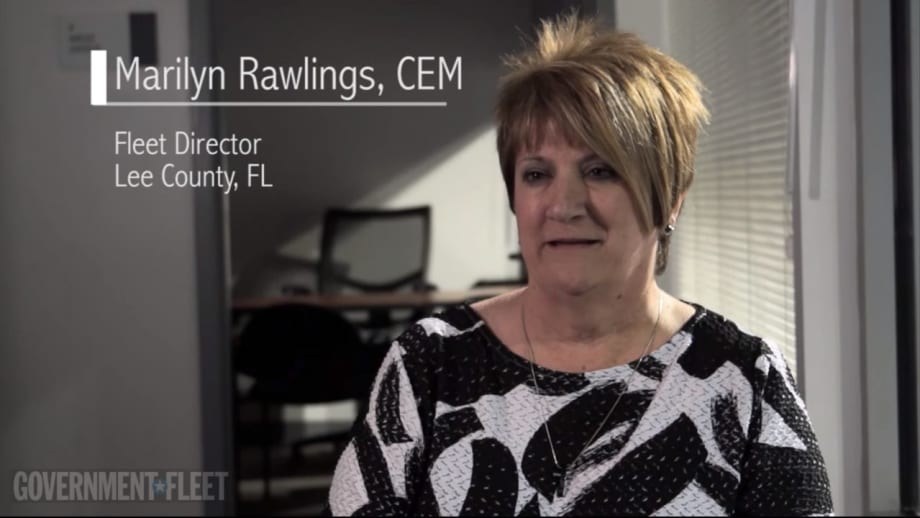
In Government Fleet's Knowledge Sharing video series, Marilyn Rawlings, CEM, fleet manager for Lee County, Fla., talks about being a woman in the fleet industry, bluffing when you don’t know something, and taking responsibility for mistakes.
In Government Fleet's Knowledge Sharing video series, Marilyn Rawlings, CEM, fleet manager for Lee County, Fla., talks about being a woman in the fleet industry, bluffing when you don’t know something, and taking responsibility for mistakes.
Ad Loading...
Rawlings came to fleet 21 years ago at the direction of the county manager to try to turn around a trouble organization, she said. Her accomplishments include developing a team of people who take pride in giving great customer service, constantly re-examining and re-working processes the fleet has to ensure it is the best it can be, and performing at five weddings and two funerals for staff members and their families.
She stresses the people skills in her accomplishments because this year, “when I leave Lee County and hand the keys to my successor, I want my team to know that I cared about them, not that I was the best fleet manager around,” Rawlings said.
The Lee County fleet has just less than 2,000 units, a staff of 32, and two locations.
Government Fleet continues its Knowledge Sharing video series featuring veteran fleet managers sharing advice and tips for new fleet managers. This series was created to address the “graying” of the industry and to allow experienced fleet managers to pass along their industry knowledge.
Keeping a vehicle longer may ease this year’s budget, but what does it cost the next one? A closer look at fleet decisions can reveal opportunities to reduce spending while protecting essential services.
From industry news and fleet management strategies to conversations with peers, Government Fleet's LinkedIn page offers public-sector fleet professionals another way to stay informed and connected.
Five fleets were honored at RTA Connect 2026 in Chicago for excellence across resource efficiency, intentional culture, risk management, and stakeholder satisfaction.
Buying fleet management software in 2027 means looking beyond features and price. As fleet operations, technology and expectations evolve, this guide explores what today’s fleet professionals should consider when choosing a system that can deliver value now and adapt to what comes next.
St. Johns County, Florida, had fleet data, but turning it into reliable decision guidance was another matter. Instead of starting over with a new fleet management system, the county connected existing tools and built a scoring system that gives managers an objective look at fleet health.