




Former President Clinton to Get Custom Hybrid SUV
NEW YORK – Former President Bill Clinton will take delivery of a specially outfitted ‘Presidential Edition' Mercury Mariner Hybrid SUV later this month.
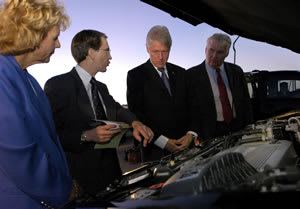
Under the hood: Clinton takes a look at the Mariner Hybrid's four cylinder electric combination motor
NEW YORK – Former President Bill Clinton will take delivery of a specially outfitted ‘Presidential Edition’ Mercury Mariner Hybrid SUV later this month. The vehicle’s customized interior includes unique LED lighting and a 110-volt outlet. The Mariner’s rear bench seats were replaced by a pair of bucket seats and a center console that houses a fold-out writing desk. There are also writing desks that fold down from the backs of the front seats.
It also has individual DVD players for each back and a small refrigerator, and the SUV’s front seats were modified to create more rear seat legroom, according to Kim Irwin, brand manager for Ford’s Mercury division. Irwin declined to discuss certain alterations that had been made for security reasons. The Mariner will be driven by Secret Service agents.
“The Clinton Climate Initiative is working with some of the world’s largest cities to reduce greenhouse gas emissions,” Clinton said in an announcement. “I’m happy to have a fuel-efficient vehicle to do my part, and I’d like to thank the Ford Motor Company for this.”
The Mariner Hybrid, a slightly more luxurious version of the small Ford Escape Hybrid, gets an EPA-estimated 32 miles to the gallon in the city and 29 on the highway. It runs on a four-cylinder engine combined with an electric motor. The Mariner Hybrid is the first hybrid vehicle and the first Mercury vehicle outfitted for presidential use, an honor normally associated with Ford’s more expensive Lincoln brand and General Motors’ Cadillac.
The vehicle will be formally accepted by Clinton during the Clinton Global Initiative conference set for Sept. 20-22 in New York City. The vehicle was donated by Ford Motor Co. to the Department of Homeland Security.
More Operations
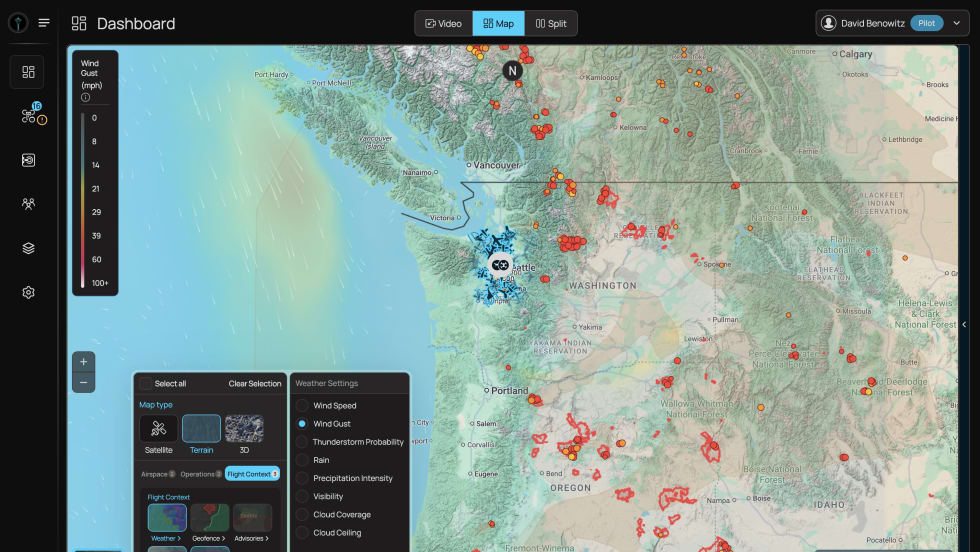
BRINC Drones Adds Free Wildfire and Smoke Tracking as Agencies Across America Battle Active Fires
New map layers give public safety agencies real-time fire detections and smoke conditions integrated directly into LiveOps at no additional cost.
Read More →
Hidden in Plain Sight: Fleet Compliance Risks
Your fleet may have the right policies, but are they being followed consistently? This practical guide highlights six hidden compliance risks that can undermine public sector and shared fleet operations and shares proven approaches to improve oversight, drive accountability, and maintain audit readiness.
Read More →
Dealing With Workplace Fraud in Fleets
Workplace fraud in government organizations can result in significant financial losses, but understanding its causes and implementing effective controls can help mitigate the risk.
Read More →
Mercury Associates Returns to Independent Ownership
New owners John Martin, Brad Smith, and Daniel Reichmann plan to expand Mercury’s analytical capabilities while continuing to grow the CFMO program.
Read More →
Fleet Technology Targets Inspections, EV Procurement, and Parts Sourcing
How new technology is addressing routine operational challenges, from vehicle inspections to cooperative purchasing.
Read More →
Murfreesboro Fire Rescue Orders Three New Aerial Ladder Trucks
As Murfreesboro's population grows, its fire fleet is growing with it. Three new aerial ladder trucks will replace existing frontline apparatus and equip a new ladder company planned for Station 12.
Read More →
Fleetio Launches PartsTech Integration, Helping Fleets Save up to 15 Minutes on Each Purchase Order
Integration brings parts sourcing and ordering into one connected Fleetio workflow to reduce administrative work.
Read More →
What’s Holding Your Fleet Back?
Catch up on the week with news around creating a more structured operation, examining an outdated garage, and more.
Read More →
When Better Communication Makes Fleets More Efficient
How government fleet operations can use routine communication to address underused vehicles while giving employees and customer departments a clearer way to raise concerns.
Read More →
How Dakota County Built a More Structured Fleet Operation
Kevin Schlangen shares how Dakota County’s fleet moved from reactive repairs and limited oversight to a more structured approach built around planning, training, and long-term cost control.
Read More →