





Similar Content: Keeping Snow and Ice Removal Equipment at the Ready
Fleets Prep for Big Winter Storms
Here's how a variety of government fleets are ensuring roads are safe.
February 1, 2021
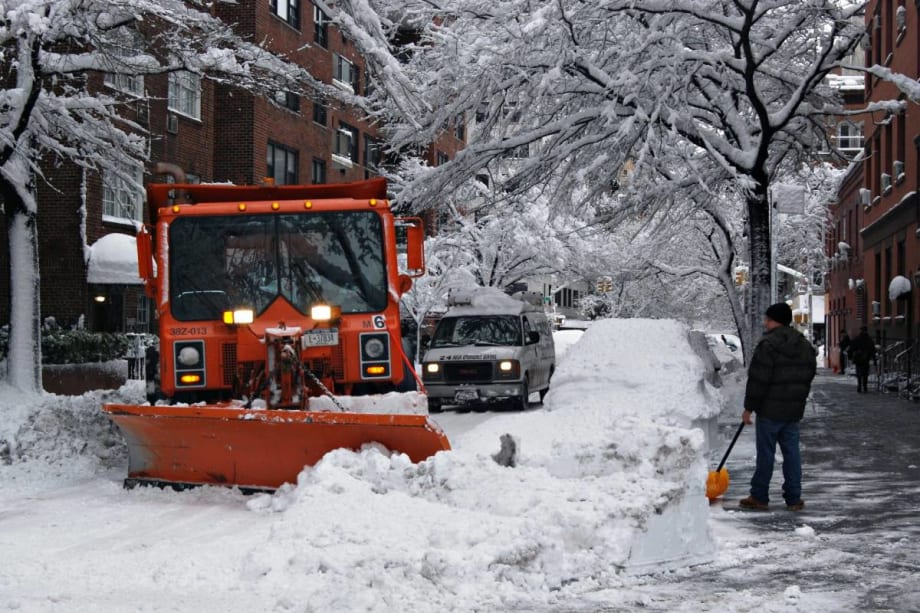
Here's how a variety of government fleets are ensuring roads are safe while non-essential workers are asked to remain inside (New York stock photo).
Photo: marc.cappelletti (CC BY-ND 2.0)
2 min to read
It’s that time of the year again, and winter storms are wreaking havoc in cities across the country. As such, government fleets are out in full force ensuring streets are clear and safe for workers who still need to brave the elements to keep essential services running.
New York City Mayor de Blasio has declared a state of emergency, and restricted all non-essential travel. Seven hundred fifteen salt spreaders and 2,000 plows are being used to clear roadways, with an additional 120 plows to join the fleet from other city agencies, as ABC 7 NY reported. Starting on Jan. 30, over 500 miles of roadway were brined and pre-treated by city sanitation. The New York City Department of Sanitation (DSNY) has been split into two 12-hour shifts to work around the clock. The city has over 270,000 tons of salt and 320,000 gallons of calcium chloride on hand.
Up to 18 inches is expected in much of Connecticut. Eversource Energy, a public utility holding company, said Jan. 31 that line and tree crews are positioned around the state to respond to damage or outages caused by the storm, the Hartford Courant reported. Out-of-state crews are also being brought in to help with restoring power.
Brooke Ebersole with the Ohio Department of Transportation (ODOT) said the department had about 200 plows ready, and patrols began the evening of Jan. 30. A total of 50 to 60 crews were dedicated to Columbus, and Frank Williams, administrator for infrastructure management, said the fleet department stayed open over the weekend to keep equipment up and running, according to NBC4i.
The City of Baltimore had 15,000 tons of salt and nearly 300 pieces of equipment plus contractor forces at the ready to handle stormy weather, FOX Baltimore reported.
Chicago city officials said 287 snowplows were deployed across the city ahead of the first flakes. A fleet of more than 300 trucks have been on the roads since the morning of Jan. 31, according to the Chicago Sun Times.
Looking to get ahead of the curve, snow plow drivers for the Seattle Department of Transportation (SDOT) started practicing routes on Jan. 25 to prepare for snowy weather. The “dry run” was part of a series of training and refresher courses SDOT drivers take each year, according to SDOT.
More Operations

What Can Disappear After a Fleet Crash?
This week, we look at drone footage, what fleets should document before repairs begin, and share a quick poll.

Does Your Government Fleet Handle Refuse and Waste Operations? Take Our Poll
Government Fleet wants to hear from public-sector fleet professionals about their responsibilities for refuse collection and waste management equipment.

Fleet Replacement Decisions, Waste Fleet Technology and the GFX Deadline
Is your next vehicle the right fit, can your records settle a missed pickup dispute, and what could your fleet teach others at GFX 2027?

Is Delaying Fleet Replacement Really Saving Money?
Could delaying replacement cost your fleet more than it saves? This week’s recap takes a closer look, plus an update on GFX 2027.

What Government Fleets Are Missing About Their True Costs
What are fleet budgets missing, and how can agencies use the data they already collect to make a stronger case for change?

Rethinking Fleet Decisions From the Budget Office to the Shop
This October we looked back at how public fleets are reconsidering familiar processes and using what they learn to make better decisions.

Who Owns the Message on a Refuse Truck?
Refuse trucks can carry public messages into neighborhoods, but keeping those messages current takes planning and clear responsibility.

Who Deserves Fleet Recognition and What Could You Teach at GFX?
Who helped shape your fleet career, and what have you learned that could help someone else?

What’s Haunting Public Sector Fleets?
Public sector fleet challenges rarely happen in isolation, and addressing one often means understanding how it connects to another.

Is Keeping Older Fleet Vehicles Really Saving Money?
Is keeping vehicles longer saving money, and what happens when a diagnostic test points to the wrong fix?