




Federal Judge Blocks Overtime Exemption Changes
A federal judge has issued an injunction, blocking the Department of Labor's proposed changes to the rules governing overtime. If passed, the changes would have extended overtime to 4.2 million employees.

Photo via Wikimedia

Photo via Wikimedia
A federal judge has issued an injunction, blocking the Department of Labor's proposed changes to the rules governing overtime. If passed, the changes would have extended overtime to 4.2 million employees.
Currently, administrative or professional employees making less than $23,660 annually must be paid time-and-a-half for hours worked over 40. Under the proposed change, the threshold would be raised to $47,892 annually, with the threshold re-evaluated and adjusted automatically every three years. These changes were expected to make a significant impact on small government fleets, where shop supervisors, lead technicians, assistant managers, service writers, parts managers, and others share this exempt classification and typically work in excess of a 40-hour workweek.
In his ruling, Federal Judge Amos Mazzant agreed with state plaintiffs that the provision to update the salary threshold every three years violates the Administrative Procedure Act, which requires a notice and comment period before changes are made.
The Department of Labor has said that it strongly disagrees with the decision and is currently considering its options, reports Fortune. The agency has the option to appeal, though the appeal could be dropped once President-elect Donald Trump takes office in January.
Although the injunction means that changes will not be made, many employers have already adjusted their pay structure in preparation, as the new provisions were set to begin in Dec. 1, reports the Wall Street Journal.
More Operations

A buyer's guide to fleet management software in 2027
Buying fleet management software in 2027 means looking beyond features and price. As fleet operations, technology and expectations evolve, this guide explores what today’s fleet professionals should consider when choosing a system that can deliver value now and adapt to what comes next.
Read More →
Hazard Alerts, Fleet Car Sales Rise and a New Shuttle Concept
Fleet car sales doubled, but the bigger picture tells a different story in this week’s roundup.
Read More →
How St. Johns County Turned Fleet Data Into Better Replacement Decisions
St. Johns County, Florida, had fleet data, but turning it into reliable decision guidance was another matter. Instead of starting over with a new fleet management system, the county connected existing tools and built a scoring system that gives managers an objective look at fleet health.
Read More →
Fleet Forward Conference Introduces One-Day Passes for 2026
New one-day registration lets fleet professionals attend Tuesday, Wednesday, or Thursday, with passes available for $249.
Read More →
ENC Unveils its ZAVIR Medium-Duty Shuttle
Two variants of the concept shuttles were revealed: a low-floor configuration and a high-floor configuration.
Read More →
Could Your Next Fleet Technician Start as an Intern?
What if your next technician hasn’t worked in a fleet shop yet? What fleets are doing to free up time.
Read More →
How Phoenix Is Building Its Next Generation of Fleet Technicians
With more than 8,000 vehicles and pieces of equipment to maintain, the City of Phoenix could not afford to wait for fully trained technicians to walk through the door. Instead, they revamped their entire workforce strategy and showed how public fleets can create their own talent pipeline while preparing existing employees for increasingly complex vehicles.
Read More →
What’s Slowing Your Fleet Down?
Could a change in how work gets done help your fleet return vehicles to service sooner?
Read More →
Can Public Fleets Trust the Data Driving Their Decisions?
Public fleets have more data than ever, but inconsistent records and missing information can still undermine maintenance, replacement, and cost decisions.
Read More →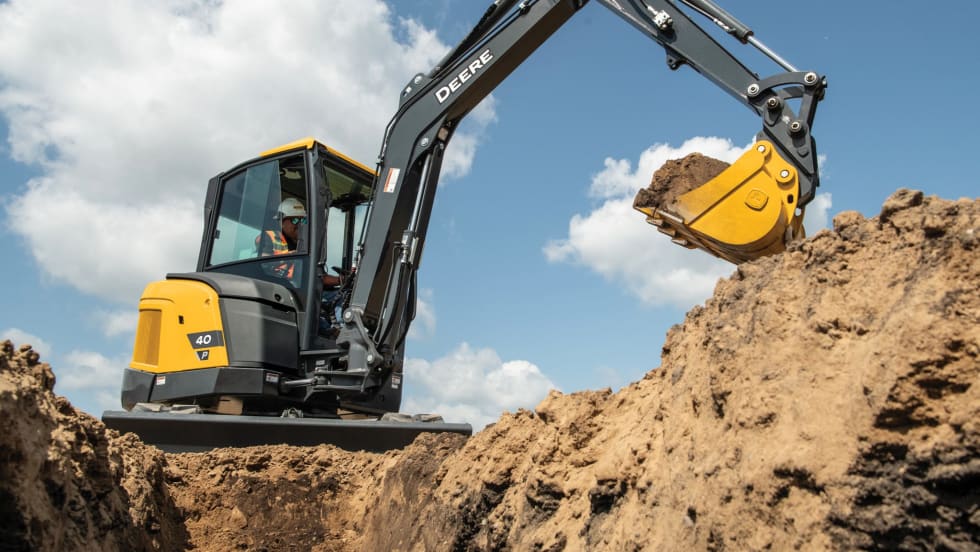
John Deere Introduces 40 P-Tier Compact Excavator
John Deere is adding a compact excavator designed for crews that need to move equipment between jobsites and handle multiple types of work with one machine. The 40 P-Tier weighs less than 10,000 pounds and offers configurable hydraulics, attachment options, and connected fleet-management capabilities.
Read More →