




Eight Compressed Natural Gas Fueling Stations Now Open to Public in New York
NEW YORK — Governor George E. Pataki announced a new public-private partnership between the state and Clean Energy — the largest provider of vehicular natural gas in North America — that will create a "clean fuel corridor" in New York by opening eight compressed natural gas (CNG) fueling stations across the state to the public for the first time.
NEW YORK — Governor George E. Pataki announced a new public-private partnership between the state and Clean Energy — the largest provider of vehicular natural gas in North America — that will create a "clean fuel corridor" in New York by opening eight compressed natural gas (CNG) fueling stations across the state to the public for the first time. The initiative will make CNG fuel more readily available and further promote the use of clean-fueled vehicles by local governments, schools, businesses, and other New Yorkers. The Governor was joined by Andrew Littlefair, president and CEO of Clean Energy, state and local officials, and industry representatives during a ribbon-cutting ceremony to mark the public opening of one new station, located at the Perry B. Duryea, Jr. State Office Building in Hauppauge, Suffolk County. Current law allows state-operated fueling stations to sell only to state vehicles. To extend fueling availability beyond state agencies and facilitate the use of clean-fueled vehicles in the state, New York recently entered into a partnership with Clean Energy to build a network of high volume, CNG stations on state-owned lands in major metropolitan areas or along heavily traveled routes. New York State's agreement with Clean Energy calls for the company to take over operations and management of seven existing, state-owned, high-volume CNG stations located throughout the state and to construct one new station. The eight stations recently opened to the general public and local governments and are available 24 hours a day, seven days a week. The agreement also allows consideration of additional sites in the future. According to Clean Energy, using natural gas is one of the best ways to reduce harmful air pollutants because natural gas burns cleaner than gasoline and other alternative fuels, reducing tailpipe emissions by up to 95 percent. In addition, factory-built natural gas vehicles produce emission levels lower than any other fuel except for hydrogen, even lower than some electric cars when power plant emissions are taken into account. New York State's Clean Fueled Vehicle Program was created in 1996 through Governor Pataki's Clean Water/Clean Air Bond Act. The program was established within OGS with the purpose of acquiring clean-fueled vehicles for state use and testing and evaluating new technologies. The program is operated by the Clean-Fueled Vehicle Council, which includes OGS and representatives from 16 agencies and the State University of New York. Beginning in model year 1997, the Federal Energy Policy Act of 1992 (EPAct) required State agencies to increase acquisitions of alternative-fueled vehicles for state fleets. New York State has exceeded these federally mandated requirements for the sixth consecutive year — in model year 2003 by nearly 14 percent. In 1995, the state owned almost no clean-fueled vehicles. New York State currently has close to 4,000 alternative-fueled vehicles in its fleet, using a variety of different fuels, such as CNG, ethanol, propane, electric, and hybrid vehicles. These vehicles make up almost 29 percent of the total vehicles in the state's fleet. By 2009, that number is expected to jump to 62 percent.
More Operations
Who Deserves Fleet Recognition and What Could You Teach at GFX?
Who helped shape your fleet career, and what have you learned that could help someone else?
Read More →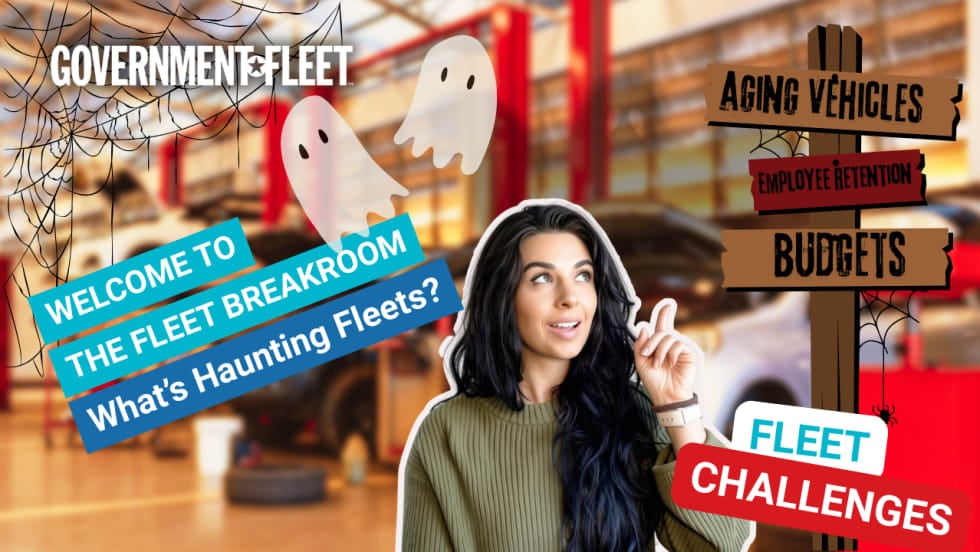
What’s Haunting Public Sector Fleets?
Public sector fleet challenges rarely happen in isolation, and addressing one often means understanding how it connects to another.
Read More →
Is Keeping Older Fleet Vehicles Really Saving Money?
Is keeping vehicles longer saving money, and what happens when a diagnostic test points to the wrong fix?
Read More →
How Smart Fleet Strategy Can Help Local Government Agencies Do More with Less
Keeping a vehicle longer may ease this year’s budget, but what does it cost the next one? A closer look at fleet decisions can reveal opportunities to reduce spending while protecting essential services.
Read More →
Connect with Government Fleet on LinkedIn
From industry news and fleet management strategies to conversations with peers, Government Fleet's LinkedIn page offers public-sector fleet professionals another way to stay informed and connected.
Read More →
Town of Queen Creek Named Most Successful Fleet Award Winner of Inaugural RTA Fleet Success Awards
Five fleets were honored at RTA Connect 2026 in Chicago for excellence across resource efficiency, intentional culture, risk management, and stakeholder satisfaction.
Read More →
A buyer's guide to fleet management software in 2027
Buying fleet management software in 2027 means looking beyond features and price. As fleet operations, technology and expectations evolve, this guide explores what today’s fleet professionals should consider when choosing a system that can deliver value now and adapt to what comes next.
Read More →
Hazard Alerts, Fleet Car Sales Rise and a New Shuttle Concept
Fleet car sales doubled, but the bigger picture tells a different story in this week’s roundup.
Read More →
How St. Johns County Turned Fleet Data Into Better Replacement Decisions
St. Johns County, Florida, had fleet data, but turning it into reliable decision guidance was another matter. Instead of starting over with a new fleet management system, the county connected existing tools and built a scoring system that gives managers an objective look at fleet health.
Read More →
Fleet Forward Conference Introduces One-Day Passes for 2026
New one-day registration lets fleet professionals attend Tuesday, Wednesday, or Thursday, with passes available for $249.
Read More →