




Colorado Fleets Offer Advice In Light of Flooding
The cities of Loveland and Longmont, Colo.'s fleet managers spoke with Government Fleet regarding their experiences with the recent Colorado floods, and provided advice for other agencies in emergency situations.
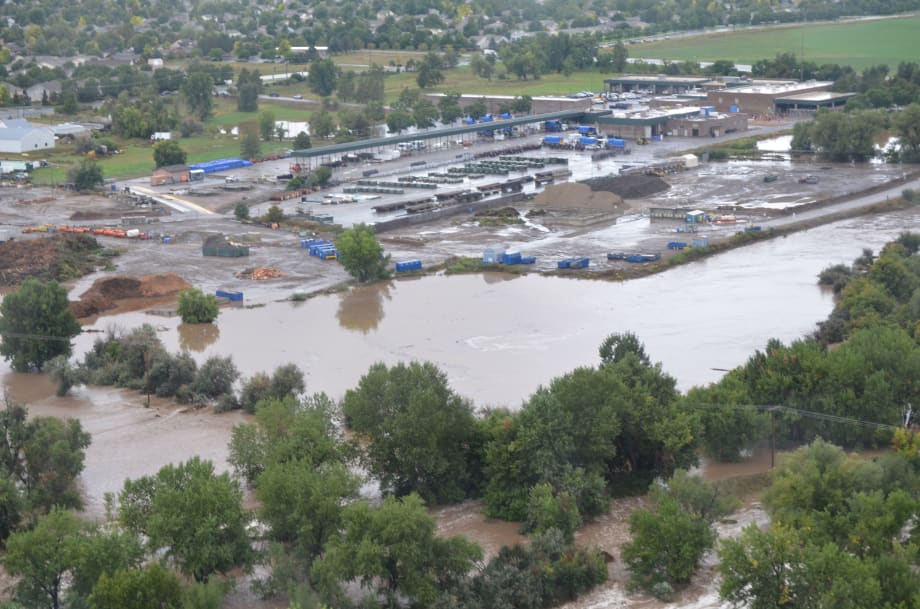
Flooding in the City of Loveland. Click this image for more photos. Photo courtesy of City of Loveland.
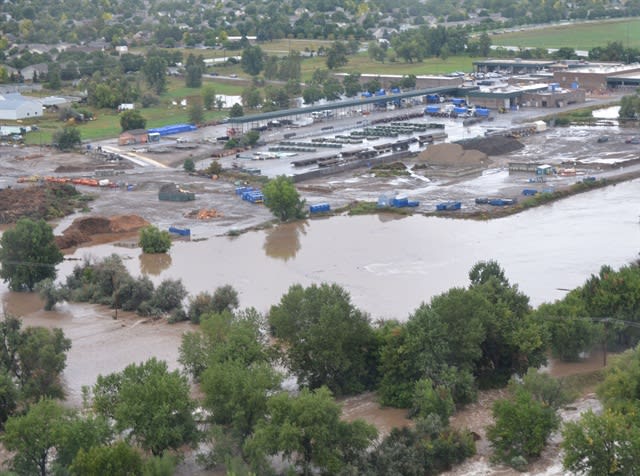
Flooding in the City of Loveland. Click this image for more photos. Photo courtesy of City of Loveland.
The cities of Loveland and Longmont, Colo.'s fleet managers spoke with Government Fleet regarding their experiences with the recent Colorado floods and provided advice for other agencies in emergency situations.
Rainfall in Colorado exceeded its annual average due to the flooding the state experienced during the week of Sept. 9. Preparation, well-trained staff, and communication are important components in order for fleets to endure emergencies such as this, said City of Loveland, Colo., Fleet Manager Stephen Kibler, ACFM, and City of Longmont, Colo., Fleet Manager Bruce Maysilles. Government Fleet spoke with both fleet managers about their reaction to the floods.
Prepare
It is crucial that fleets have an emergency preparedness plan that is updated annually, Kibler said. “Back in 1976, we lost 10% of our fleet during the Thompson Flood, but this time we lost 0%,” he said. In order to protect its fleet, the City of Loveland fleet staff watched the current conditions and paid attention to the warnings. “As soon as the warning came, all the vehicles and equipment stored in or near the flood plain were evacuated,” Kibler said.
Maysilles took notice of neighboring cities and based Longmont’s mobilization efforts on the other city warnings. “We knew we only had so much time, and we were fortunately able to stay ahead of the game.” Longmont City staff knew where the flood plains were enabling staff members to move the fleet to other safe facilities in town located on higher ground.
Two vehicles in the City of Longmont were a total loss from being submerged in water — a Support Services pick-up truck and a reserve fire truck. After a full evaluation of the fire truck, the City found the transmission, engine, electrical and other parts were completely damaged. The City has yet to determine the next step to repair or replace the vehicles.
Train
Both fleets noted they conduct an emergency exercise annually, which involves some kind of natural disaster training.
“We have a well-trained support staff and emergency vehicle technicians who have strong camaraderie,” Maysilles said. “Our staff uses the right assets for the right job, and they know when to stay away from the water.”
He added that the staff was cooperative, which helps ease the intensity of the situation when members know what they are doing.
Kibler also advises fleets to meet at beginning of each emergency shift to discuss the priorities. Additionally, providing assistance to other departments when they can is crucial. “One of the biggest problems during an emergency is that everyone starts working independently,” he said. “They don’t realize that we all work for the City of Loveland and all our resources and knowledge can be shared.”
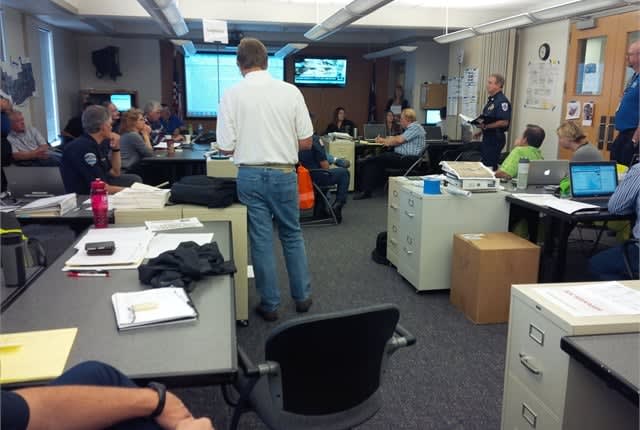
Loveland's Emergency Operations Center in action. Photo courtesy of City of Loveland.
Communicate
Fleets can avoid losing vehicles by making sure users, such as police and fire, know the limitations of the vehicles.
Kibler said that during the first three days of an emergency, all first responders are in life-saving mode and personal and equipment safety become a low priority to them.
“The first responder vehicles take the most beating,” Maysilles said. “We need to do a better job on educating fire and police on when not to take chances with significant assets.”
Since the initial warning was issued during regular business hours, the fleets were together with their team.
“We placed staff on-call at first notice, and then planned 12-hour round-clock shifts when the first flood warning was issued,” Kibler said.
In the case that warnings are issued after work, Kibler said fleets should maintain after-hours contact information including employee’s permission to “get ‘em up at 2a.m.” during an emergency.
“The City is in recovery mode, but we are in support mode,” Maysilles said. “We are here to take care of our city and provide equipment and vehicles when needed.”
The City of Boulder, Colo., and the City of Aurora, Colo., were not immediately available to comment.
By Kirsti Correa
More Maintenance

Freeing Technicians for Higher-Priority Repairs
Could paid interns help public fleets free up experienced technicians for more complex repairs?
Read More →
Stay ready, set and safer with verified fleet inspections
When fleet inspections aren’t verifiable, missed defects can quickly become downtime, safety risks, and service delays. This white paper shows government and municipal fleet leaders how digital inspections can improve accountability, catch issues earlier, and keep vehicles ready when they’re needed most.
Read More →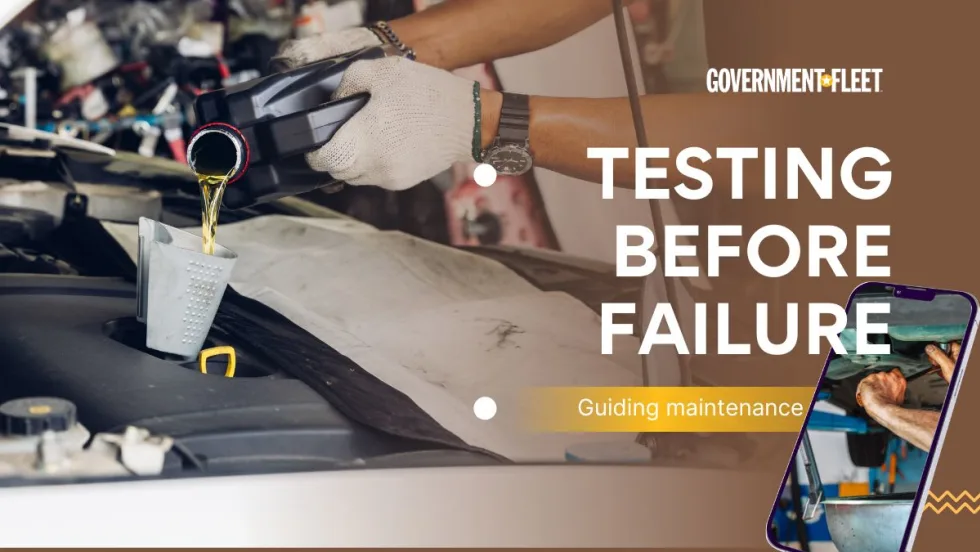
Using Oil Analysis to Help with Engine Losses
How a Texas city changed its lubrication practices and began tailoring preventive maintenance intervals after test results showed oil degradation and fuel dilution.
Read More →
Hidden in Plain Sight: Fleet Compliance Risks
Fleet compliance isn't just about having policies — it's about consistently enforcing them. This practical guide reveals six hidden compliance risks common in public sector and shared fleet operations and outlines proven strategies to improve visibility, accountability, and audit readiness.
Read More →
Is Your Fleet Garage Holding Back Your Operation? | The Fleet Breakroom
Norman Barrientos of Barrientos Design & Consulting explains how agencies can use operational data to show decision-makers why a replacement or major renovation is needed.
Read More →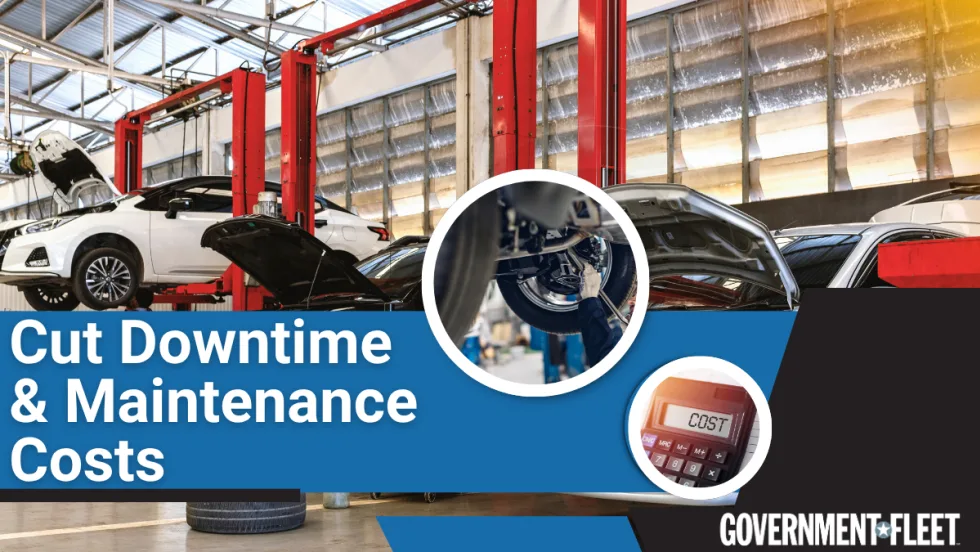
Reducing Long-Term Maintenance Costs and Downtime
Downtime is rarely caused by a single surprise failure but rather by an issue that builds over time through setbacks ranging from deferred maintenance to poor replacement planning. So what's the fix?
Read More →
The Future of Government Fleet Technicians with Mike Cleary
Insight on preparing for hybrid and electric vehicle service, what fleets need to know about recruiting technicians in a competitive market, and how to make the most of limited training budgets.
Read More →
Work Orders Are More Than Records. They're a Roadmap to Fleet Availability
What if your work orders could predict failures, uncover hidden costs, and boost fleet availability? Here's how leading fleets are using the data.
Read More →
Drive More Profit with Greater Fleet Uptime
Fleet downtime costs money. JASPER helps keep vehicles on the road with quality remanufactured components, fast nationwide delivery, and reliable solutions that boost uptime and profitability.
Read More →
Smart Seasonal Maintenance Tips for Government Fleets
Government fleets carry extra weight, and routes, schedules, and public trust depend on reliability. A systematic spring checklist keeps vehicles in service when agencies need them most.
Read More →